
Italian B&B Guide: What to Expect Before Booking
Planning your first stay in an Italian B&B? Services, facilities and operating rules can differ considerably between properties and regions.
This practical Italian B&B guide explains what to check about breakfast, bathrooms, privacy, parking, check-in, housekeeping and local requirements before booking.
Italian bed and breakfasts are often described as charming, authentic, and more “real” than hotels. Travel platforms show sunlit terraces, rustic furniture, homemade cakes, and smiling hosts.
Sometimes that image is accurate.
Very often, it’s incomplete.
If you are planning your first stay in an Italian B&B, there are important details that are rarely explained clearly. Not by booking platforms, not by social media, and not even by many travel blogs, which tend to romanticise the experience instead of explaining how it actually works.
The goal is to explain how Italian B&Bs really work, so expectations match reality from the start.
What “B&B” Means in Italy – and Why the Region Matters
In Italy, a bed and breakfast is a regulated accommodation category, but there is no single national service standard governing every B&B. Tourism legislation is largely regional, so requirements concerning room numbers, owner residence, breakfast, housekeeping and management can vary across Italy.
The name “B&B” therefore does not guarantee hotel-style reception, a particular breakfast menu, an independent entrance, private parking or the same housekeeping schedule everywhere.
Before booking, check the property’s description and conditions rather than relying on the accommodation label alone. Important details include:
- whether the host lives within the property
- which entrances and common spaces are shared
- whether the bathroom is en suite, reserved outside the room or shared
- the breakfast actually included
- reception and check-in times
- the stated cleaning and linen arrangements
Breakfast Expectations vs Italian Reality
Traditional Italian breakfast is often light and sweet, but what is included varies considerably between properties. A B&B may serve coffee or tea, bread, pastries, biscuits, yoghurt, fruit or packaged products, while some properties also offer eggs or other savoury options. Check the property’s description and recent guest photos rather than assuming a particular breakfast format.
In a large number of Italian B&Bs, breakfast means:
- espresso or moka coffee
- packaged croissants or biscuits
- bread, butter, jam
That’s all. No eggs. No savoury food. No hot buffet. This reflects Italian breakfast culture, which is light, quick, and sweet. Italians generally do not eat heavy breakfasts at home, and many hosts do not cook in the morning.
Some B&Bs do offer richer breakfasts with fresh products, but this is not automatic and should never be assumed.
If breakfast is important to you:
- check guest photos, not just descriptions
- read reviews that mention food specifically
- look for clear wording, not vague promises
Breakfast quality varies widely, even within the same town.
Privacy in Italian B&Bs: What You Should Know
Many Italian B&Bs are located inside the owner’s primary residence.
That can feel warm and authentic, or uncomfortable and intrusive, depending on what you expect.
Possible situations include:
- sharing the same entrance
- seeing the host several times per day
- hearing family life, phone calls, or TV
- hosts freely using common areas
Some travellers love this and feel “at home”.
Others feel they are constantly being observed.
Neither reaction is wrong. The problem is expectation mismatch.
If privacy is important to you:
- look for “independent entrance” or “separate guest area”
- avoid listings that are vague about shared spaces
- read negative reviews carefully; privacy complaints are often indirect
A simple rule: if a listing does not clearly explain shared spaces, assume they exist.
Check-In Rules: Why Flexibility Is Not Guaranteed
Unlike larger hotels, small B&Bs may not maintain a staffed reception throughout the day. Each property sets its own check-in window, and late arrival may require prior agreement or involve an additional charge. Confirm the procedure before travelling and inform the host promptly if your arrival time changes.
Typical check-in rules include:
- fixed time windows (for example 16:00–19:00)
- late arrival only by prior agreement
- extra fees for late check-in
This is not rudeness. It is logistics. Many hosts:
- live off-site
- work another job
- manage the B&B alone
If you arrive late without warning, you may:
- have to wait
- create serious inconvenience
- in extreme cases, miss check-in
Always:
- communicate your arrival time clearly
- inform the host if your train or flight is delayed
- ask what happens if plans change
In Italy, flexibility is often personal, not institutional.
Parking in Italy: Why “Free Parking” Can Be Misleading
The expression “free parking” does not explain whether the space is private, reserved or located on the property. It may describe on-site parking, street parking or a nearby public area. Check the exact location, whether reservation is required and whether the route crosses a ZTL.
When a B&B says “free parking”, it may mean:
- free street parking nearby
- a public area with no guarantee
- a shared space
It rarely means:
- reserved
- gated
- private inside the property
In historic towns, parking can be complicated by:
- limited traffic zones (ZTL)
- narrow streets
- local permits
If you are travelling by car, always ask:
- where exactly is parking
- is it inside the property or on the street
- can you reach it without risking fines
Parking details matter more than decoration — especially in Italy, where many historic towns enforce ZTL (Limited Traffic Zones). Entering a ZTL without authorisation can result in automatic fines sent months later, even if the road looks open or unmarked to foreign drivers.
If you are renting a car, it is essential to understand how ZTLs work, how they are enforced, and why “free parking” near a historic centre can still lead to penalties. We explain this clearly in our guide on driving and parking rules in Italy, including how to recognise ZTL signs, where tourists usually make mistakes, and how to avoid fines altogether.
? Read more: Driving and ZTL zones in Italy: what tourists must know.

Cleaning, Towels and Housekeeping in Italian B&Bs
Housekeeping requirements cannot be described with one nationwide rule. They are established through regional legislation and may also depend on whether the B&B is managed in entrepreneurial or non-entrepreneurial form.
For example, the current rules in Umbria distinguish between the two forms of management:
- Entrepreneurial B&Bs: daily room cleaning and a change of bed and bathroom linen at every change of guest and at least twice a week.
- Non-entrepreneurial B&Bs: cleaning and linen changes at every change of guest.
Environmental policies may allow linen to be changed on request when guests are clearly informed. Travellers should therefore check the property’s published housekeeping policy rather than assume that every Italian B&B follows the same schedule.
Room service, evening turndown and continuous in-room service are generally hotel services and should not be expected unless they are expressly offered.
Related guide: Types of accommodation in Italy: B&B, affittacamere, holiday apartment and hotel.
Language and Communication: Don’t Assume Fluent English
The language of an online listing does not necessarily indicate which languages are spoken at the property, because accommodation platforms may translate descriptions automatically. Check the languages listed or send a message before booking, particularly if you need detailed instructions about arrival, parking or house rules.
In reality:
- some hosts speak excellent English
- others rely mainly on translation tools
- phone communication may be difficult
- instructions may be given only in Italian
This is normal and not dishonest, but it can create stress if you are unprepared — especially when discussing arrival times, parking, or local rules.
A simple and effective test is to send a message before booking and see how clear and responsive the reply is. Good communication before arrival usually means fewer problems later.
A Note About Umbria and Language
In regions like Umbria, many small, non-professional or family-run B&Bs operate primarily for the domestic market. As a result, it is quite common for hosts to speak only Italian or have limited confidence in other languages. This does not reflect a lack of hospitality, but rather the local, informal nature of many accommodations in the region.
At Adagio Umbro, we communicate in English and make a point of providing clear, practical information before and during your stay. This includes guidance on arrival, parking, local rules, and how to navigate the area comfortably – particularly helpful for travellers visiting Italy for the first time.
Countryside B&Bs vs City B&Bs: Pros and Cons
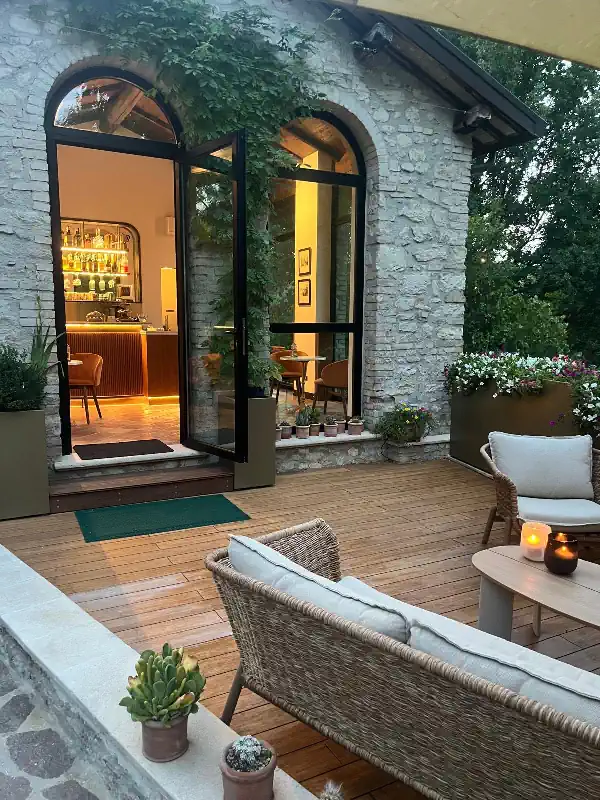
“Countryside” in Italy can mean very different things.
City B&Bs
- closer to attractions
- easier without a car
- smaller rooms
- parking difficulties
- more noise
Countryside B&Bs
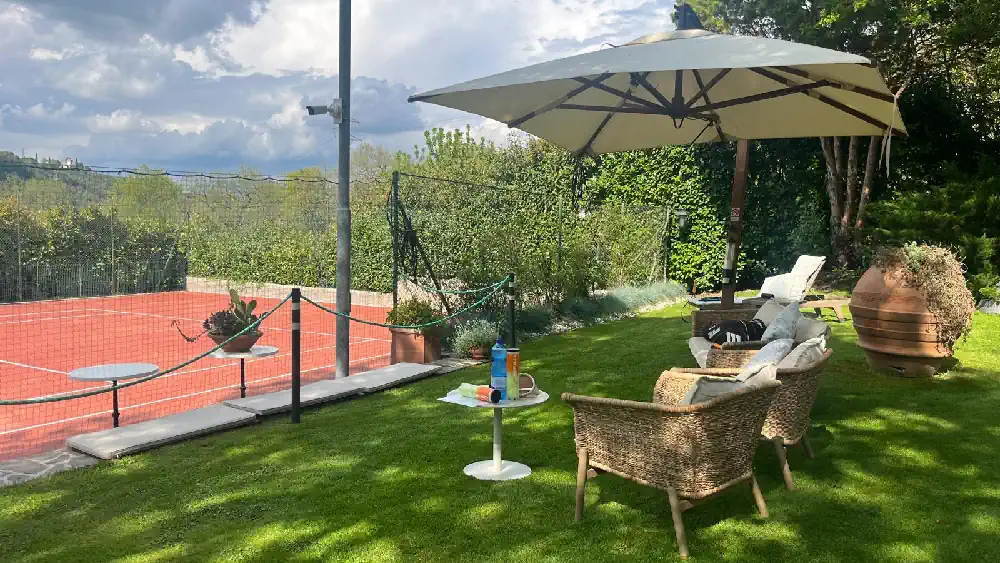
One of the main advantages of staying in a countryside B&B in Italy is access to outdoor space, something that is often limited or completely unavailable in historic city centres.
Many countryside B&Bs are located in former farmhouses, villas, or rural properties and may offer:
- gardens or green parks
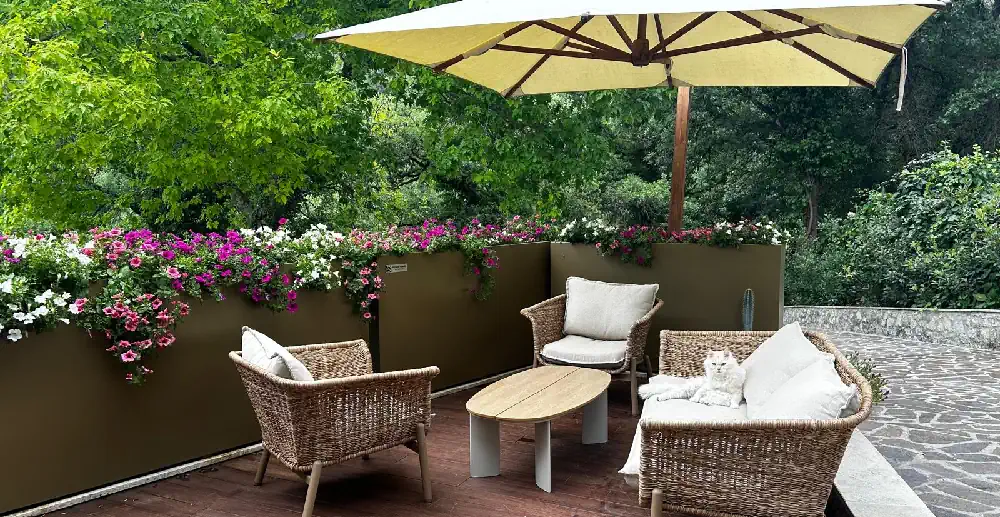
- outdoor seating areas
- barbecue or picnic spaces
- swimming pools (seasonal)
- sport facilities such as tennis courts or walking paths
These features are not guaranteed and vary widely from one property to another, but they are far more common in rural settings than in urban B&Bs. For travellers who value quiet surroundings, fresh air, and time spent outdoors, countryside accommodation often provides a more relaxed and flexible experience, especially for longer stays.
It is important to note that these facilities are usually part of the property itself, not shared public amenities, and their availability, rules of use, and seasonality should always be checked in advance.
A Countryside B&B with Clear Guest Information
Choosing countryside accommodation is easier when guests know exactly what is included and how the property works. This is particularly helpful for international travellers who may be unfamiliar with independently managed B&Bs in Italy.
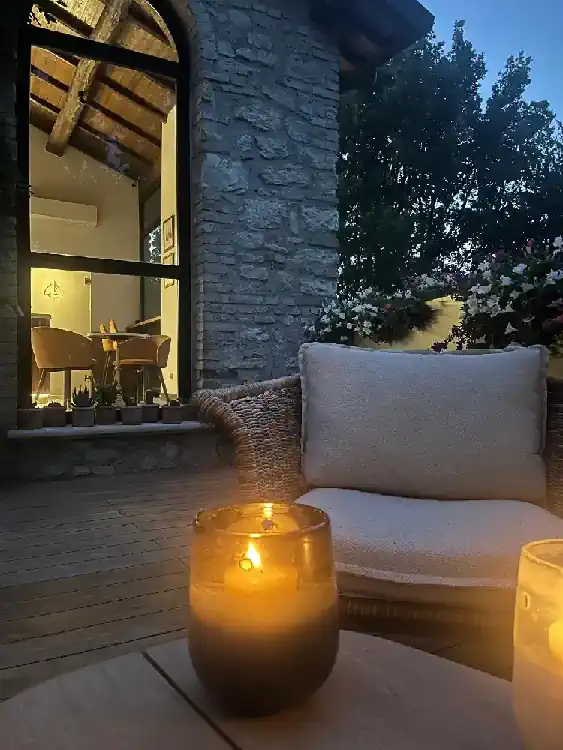
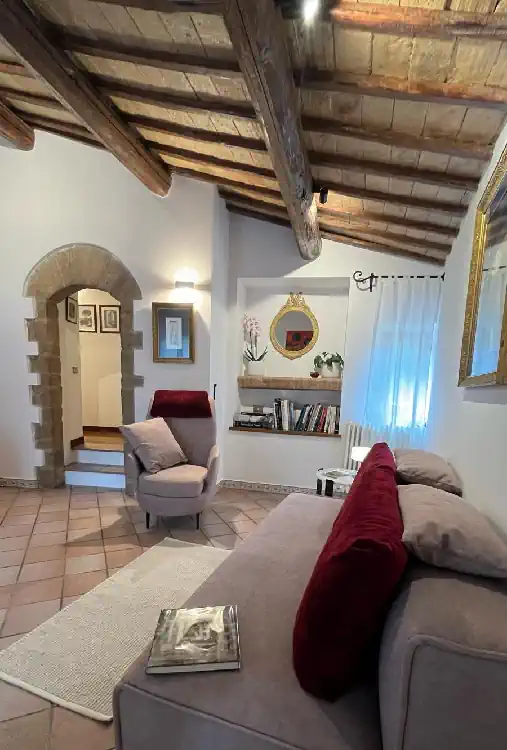
Adagio Umbro offers three guest rooms for up to five adults in the medieval tower of a historic villa, approximately 3 km from Spoleto’s historic centre. The stay includes breakfast, a private bathroom for each room, Wi-Fi and internal parking. Guests can also use shared indoor spaces, a dedicated corner for preparing or heating simple meals, green outdoor areas and the on-site tennis court by reservation.
Before arrival, guests receive clear information in English about check-in, breakfast, shared facilities, house rules and reaching Spoleto by car. The tower has several flights of stairs and no lift, so this is clearly communicated before booking.
This combination of historic character, countryside space and practical organisation makes Adagio Umbro particularly suitable for couples, solo travellers and quiet small groups using Spoleto as a base for exploring Umbria.
The Best Italian B&B Is the One That Suits Your Trip
A highly rated B&B is not automatically the right B&B for every traveller. Reviews can reveal whether previous guests were satisfied, but they cannot decide whether the location, atmosphere and practical arrangements suit the way you want to travel.
Before booking, look beyond the overall score and ask:
- Is the property in the historic centre or the countryside?
- Will you need a car?
- Is parking available on the property?
- Is the bathroom en suite, reserved or shared?
- Which indoor and outdoor areas are shared?
- Are there stairs or accessibility limitations?
- What does breakfast include?
- Do the check-in times and house rules suit your plans?
- Is the atmosphere social, private, lively or quiet?
These details are particularly useful for solo travellers, women travelling alone, couples and friends who want to understand how a small property works before arriving.
The number of rooms can also shape the stay. A three-room B&B will usually feel different from a large hotel: common areas may be less crowded and communication with the host more direct. However, a smaller property may also have limited reception hours, shared facilities or fewer hotel-style services. Neither model is inherently better; they serve different travel preferences.
Adagio Umbro accommodates up to five-six guests in three rooms within the medieval tower of a historic villa near Spoleto. It offers a countryside setting, breakfast, a bathroom reserved for each room, internal parking, shared guest spaces and optional tennis. The tower has several flights of stairs and no lift, while reaching and exploring the area is most convenient by car.
The right Italian B&B is therefore not simply the one with the highest rating. It is the one whose location, facilities, limitations and atmosphere are clearly described – and genuinely match your trip.
Practical Checklist Before Booking an Italian B&B
Before confirming a reservation, check:
- whether breakfast is included and what is normally served
- whether the bathroom is en suite, reserved outside the room or shared
- which entrances and common spaces are shared with the host or other guests
- whether parking is on the property, reserved, public or on the street
- whether the accommodation is inside or near a ZTL
- whether a car is recommended or necessary
- whether guests may use a kitchen or only specified appliances
- check-in procedures and late-arrival conditions
- stairs, lift availability and other accessibility limitations
- air conditioning and heating
- tourist tax and any additional charges
- cancellation and payment conditions
- pet rules, where relevant
- the property’s CIN shown on its website or listing
An official website can provide additional information, but it is not proof of service quality by itself. Compare the same dates, included services, payment conditions and cancellation rules before choosing between direct booking and an accommodation platform.
Considering a countryside B&B near Spoleto?
Adagio Umbro offers three guest rooms for up to five guests in the medieval tower of a historic villa, approximately 3 km from Spoleto’s historic centre. Each room has its own bathroom, with breakfast, internal parking, Wi-Fi, shared guest spaces, green outdoor areas and optional tennis by reservation.
The property is particularly suitable for adult travellers arriving by car, couples, solo travellers and quiet small groups. The tower has stairs and no lift, an important detail to consider before booking.
View rooms, availability and prices
Final Advice for First-Time Travellers to Italy
Italian B&Bs vary in location, facilities and service style because regional rules and individual property arrangements differ. The most reliable approach is to compare the description, recent reviews, included services, accessibility information and booking conditions before confirming your stay. A successful stay begins with clear expectations—not with assuming that every B&B operates like a hotel.
When expectations match reality, the experience is often excellent.
When they don’t, disappointment follows – unfairly, on both sides.
Understanding how Italian B&Bs actually work is the difference between frustration and a great stay.
For this reason, choosing a B&B is less about finding the “best-rated” place and more about finding one that clearly explains who it is for, how it works, and what it offers. Transparent communication, well-defined services, and realistic descriptions are often stronger indicators of a good experience than photos or star scores.
Travellers who take the time to understand accommodation types, regional habits, and hosting styles tend to enjoy Italy more — not because everything is perfect, but because nothing comes as a surprise. In the end, the most successful stays are not those without limitations, but those where expectations and reality are aligned from the start.
A Note for Travellers Exploring Central Italy
If you value quiet surroundings, clear rules, and a slower pace, countryside B&Bs near historic towns such as Spoleto often offer a more balanced experience than dense city centres, especially for longer stays.
Staying just outside historic towns allows travellers to enjoy more space, easier access by car, and a calmer daily rhythm, while still being close enough to explore cultural sites, restaurants, and events. This type of accommodation is particularly well suited to slow travel, extended weekends, and travellers who prefer to plan their days without the pressure of crowds, traffic restrictions, or constant noise.
In central Italy, countryside B&Bs are often chosen not for luxury, but for comfort, clarity, and quality of rest – elements that make a noticeable difference over several nights and contribute to a more authentic and sustainable travel experience.
FAQs – Italian B&Bs: What Travellers Often Ask
An Italian B&B is usually smaller, less standardised, and often part of a private home. Unlike hotels, B&Bs may have limited reception hours, simpler breakfast, and more personalised but informal hospitality.
Yes. In Italy, daily cleaning of guest rooms is legally required in B&Bs. This rule does not always apply to holiday apartments or room rentals, where cleaning during the stay may be limited or excluded.
Most Italian B&Bs serve a light, sweet breakfast such as coffee, croissants, biscuits, bread, butter, and jam. Hot or savoury options are not standard unless clearly stated.
Many Italian B&Bs are located inside the owner’s primary residence. Guests may share entrances or common areas unless the listing explicitly mentions an independent entrance or separate guest space.
Late check-in is not guaranteed. Most Italian B&Bs have fixed check-in windows and require prior agreement for late arrivals, sometimes with an additional fee.
“Free parking” often means street parking or a nearby public area, not a reserved private space. In historic towns, parking can be complicated by ZTL (Limited Traffic Zones) and local restrictions.
English proficiency varies widely. Some hosts speak fluent English, while others rely on translation tools. It is recommended to contact the host before booking to assess communication clarity.
Countryside B&Bs often offer more space, outdoor areas, and quieter surroundings, while city B&Bs are closer to attractions and easier without a car. The best choice depends on travel style and length of stay.
Check whether a car is recommended, where parking is located, which spaces are shared, whether there are stairs or a lift, what breakfast includes and whether outdoor facilities are seasonal or require reservation.
Booking directly allows travellers to ask the property specific questions and may provide different rates or conditions. Compare the total price, included services, payment terms and cancellation policy for the same dates before choosing between direct booking and a platform
Stay Connected
For more updates, photos, and stories from Adagio Umbro, follow us on our social media channels: