What to See in Spoleto: A Complete Guide to History, Culture, and Timeless Beauty
Wondering what to see in Spoleto? This hilltop town in Umbria combines Roman ruins, medieval streets and panoramic viewpoints that can be explored in a single day without rushing.
In this guide, you’ll find the top attractions, a practical walking route, and a few quieter experiences just outside the centre to make your visit more complete.
“Spoleto is the most beautiful discovery I made in Italy […], there is such a wealth of beauty almost unknown, mountains, valleys, forests of oaks, monasteries, waterfalls!” — Hermann Hesse (1911)
Spoleto is one of Umbria’s most charming cities, a place where Roman ruins, medieval fortresses, Renaissance art, and peaceful landscapes coexist in perfect harmony. Visitors are welcomed by a historic centre full of character, panoramic viewpoints, and cultural sites that reveal more than two thousand years of Italian history.
Whether you are planning a day trip or a longer stay, this guide will help you explore Spoleto’s most iconic landmarks and quiet corners. From the Rocca Albornoziana to the Cathedral, from the Roman Theatre to the Ponte delle Torri, Spoleto offers an authentic atmosphere that rewards travellers who slow down and enjoy its stories.
After exploring the main landmarks, many visitors also look for simple outdoor experiences near Spoleto to complete the day.
How to Visit Spoleto in One Day
If you are visiting Spoleto in one day, start from the Rocca Albornoziana and the Duomo, then continue toward Ponte delle Torri, Piazza del Mercato, the Roman Theatre and the quieter streets around the city walls. Spoleto is best explored slowly, but the main landmarks can be visited in a well-planned day.
For easier access to the historic centre, use the city’s underground escalators and main parking areas instead of driving through narrow streets. Read the Spoleto parking and underground escalators guide →
Looking for something active after sightseeing?Discover a quiet outdoor experience just minutes from Spoleto: Escape the crowds: book a private outdoor experience near Spoleto →
This experience is ideal for:
- couples looking for a quiet activity after sightseeing
- travellers who prefer private spaces over busy clubs
- visitors staying in Umbria for 2-3 days
If you only have one day in Spoleto, follow this simple route to see the main landmarks without unnecessary detours. The city is compact, but planning the order helps you avoid steep climbs and wasted time.
- Start at Rocca Albornoziana – panoramic views over the valley
- Walk to Ponte delle Torri – the most iconic viewpoint
- Descend to the Cathedral (Duomo) – art and architecture
- Continue to Piazza del Mercato – cafés and local atmosphere
- Visit the Roman Theatre – ancient Spoleto
- Explore the city walls and quieter streets
To reach the historic centre easily, park outside the old town and use the underground escalators. See how parking and escalators work →
After visiting the centre, many travellers look for a quieter place to relax.
Just a few minutes from Spoleto, you can switch from historic streets to open countryside and enjoy a simple outdoor experience.
→ Check the private tennis experience near Spoleto
La Rocca Albornoziana – The Fortress Above the City
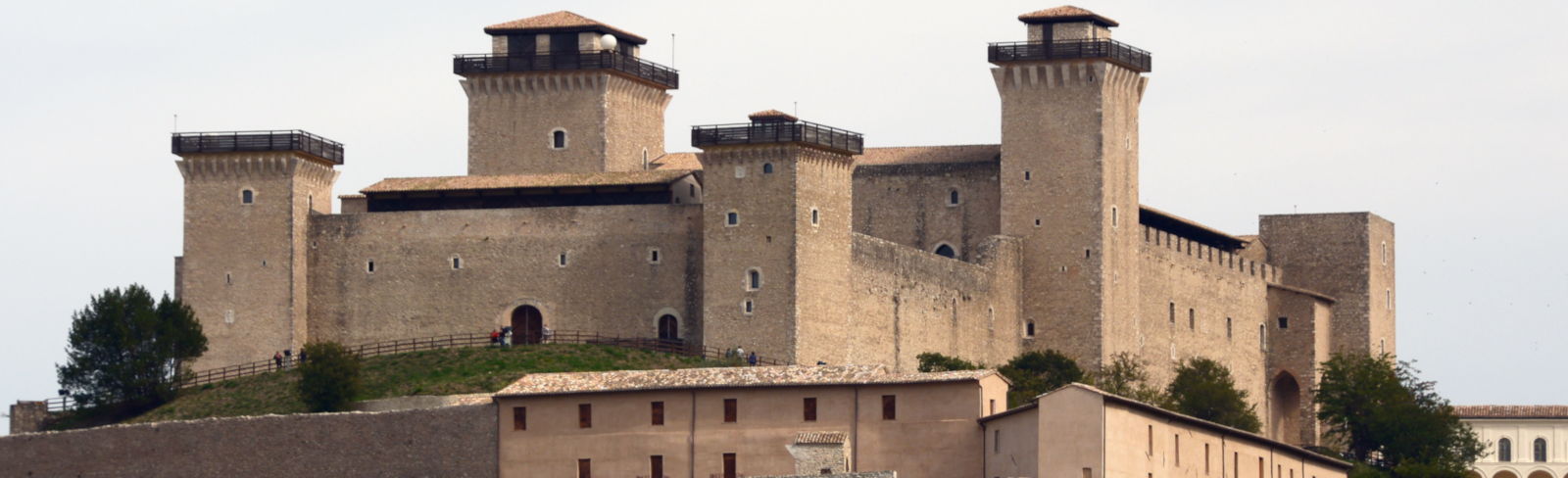
Nothing dominates Spoleto quite like the Rocca Albornoziana, standing proudly at the top of Monte Sant’Elia. Built in the mid-14th century under Cardinal Egidio Albornoz and designed by architect Matteo Gattaponi, the fortress was intended to reestablish the power of the Papal State after the return from Avignon to Rome. From below, its imposing walls and towers form an unmistakable profile — a symbol of strength that still sets the tone of the city.

The Rocca has a rectangular layout fortified by six towers and divided internally by two main courtyards. The Cortile delle Armi, once used by soldiers, has a strong medieval character, while the Cortile d’Onore reveals the elegance of the governors who lived there. Two popes, Boniface IX and Nicholas V, even took refuge in the Rocca during the plague years in Rome.


Inside, the Salone d’Onore is one of the most impressive spaces: a vast ceremonial hall that once hosted diplomatic gatherings and great banquets. Over time, the fortress changed roles dramatically — from military garrison to prison between 1817 and 1982 – until it was restored and turned into the National Museum of the Duchy of Spoleto.
A visit to the Rocca is a journey across centuries, but it is also a moment to enjoy one of Umbria’s most spectacular views. From the panoramic terrace, the city unfolds like a living tapestry: roofs, bell towers, winding streets, and the hills rolling in every direction.
The Cathedral of Spoleto – A Masterpiece of Faith and Art
Walking down from the Rocca, visitors soon reach Piazza del Duomo, one of the most beautiful and iconic squares in Italy. At its centre stands the Cathedral of Santa Maria Assunta, known simply as the Duomo — an extraordinary example of Romanesque architecture enriched by Renaissance details.
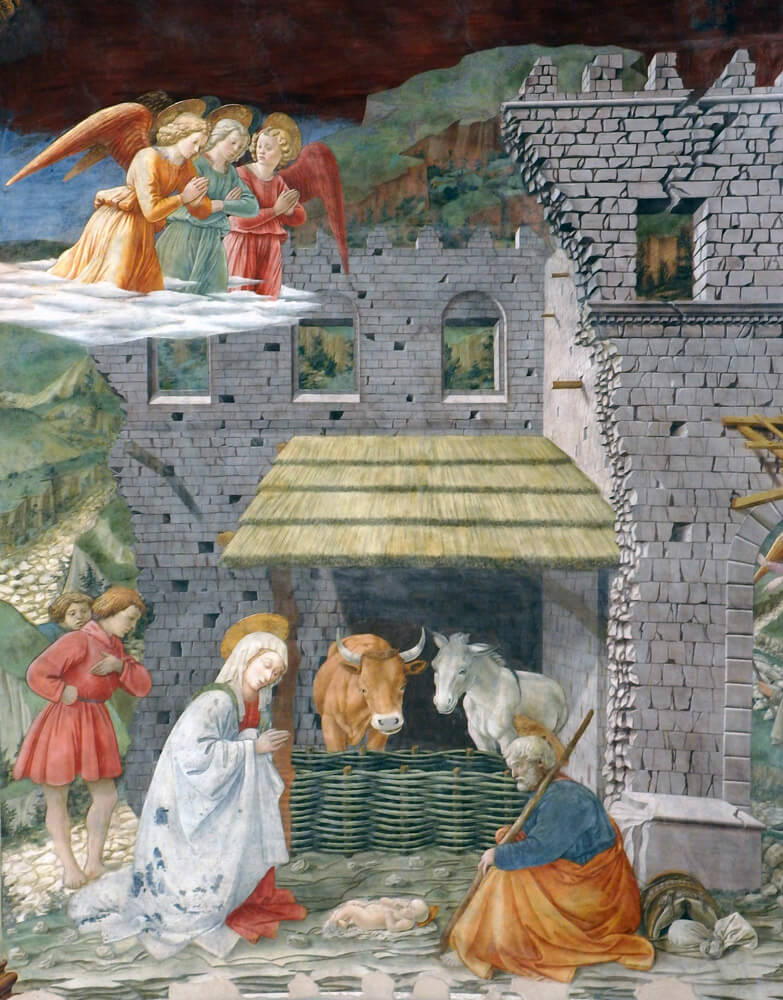


The façade immediately captures the eye with its large rose window, elegant arches, and the 12th-century mosaic attributed to the Florentine artist Filippo Lippi. Inside, travellers will find a treasure: Lippi’s fresco cycle, one of the greatest works of the Italian Renaissance, depicting the life of the Virgin Mary. These frescoes alone justify a visit.
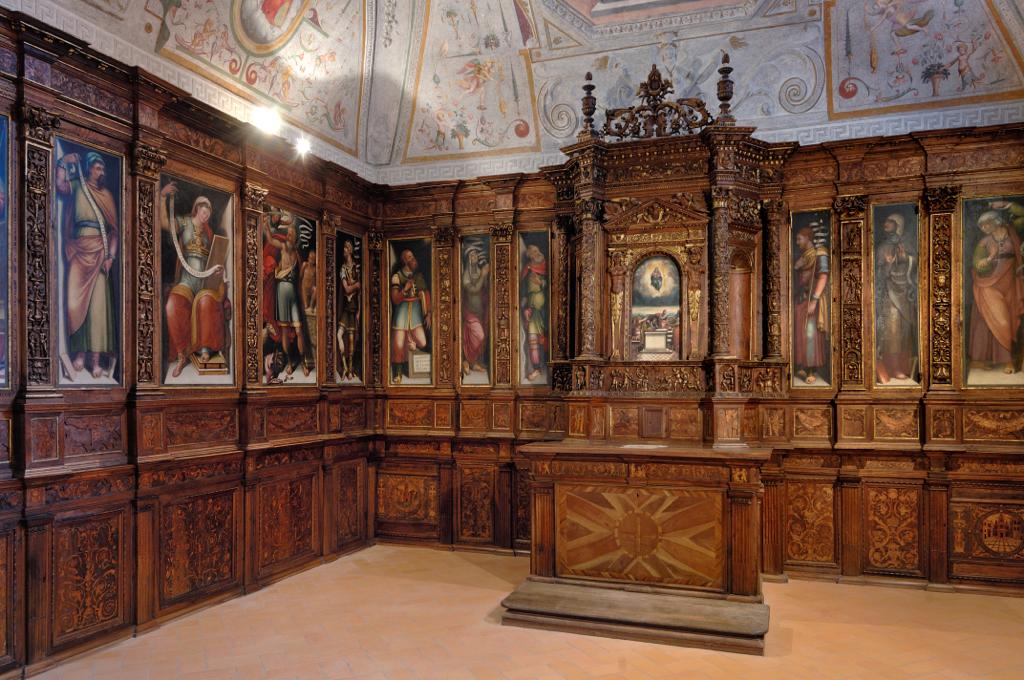
Other highlights include the Chapel of the Relics, artworks from different centuries, and the peaceful atmosphere that fills the entire church. The piazza often hosts concerts and events during the famous Festival dei Due Mondi, making it one of the most atmospheric cultural spaces in Umbria.
Ponte delle Torri – The Bridge of Towers
Perhaps the most iconic landmark of Spoleto is the Ponte delle Torri, a monumental aqueduct-bridge that spans the deep Tessino Valley. With its ten arches and a length of nearly 230 meters, it stands 80 meters above the ground, connecting the hill of the Rocca to the sacred woods of Monteluco.

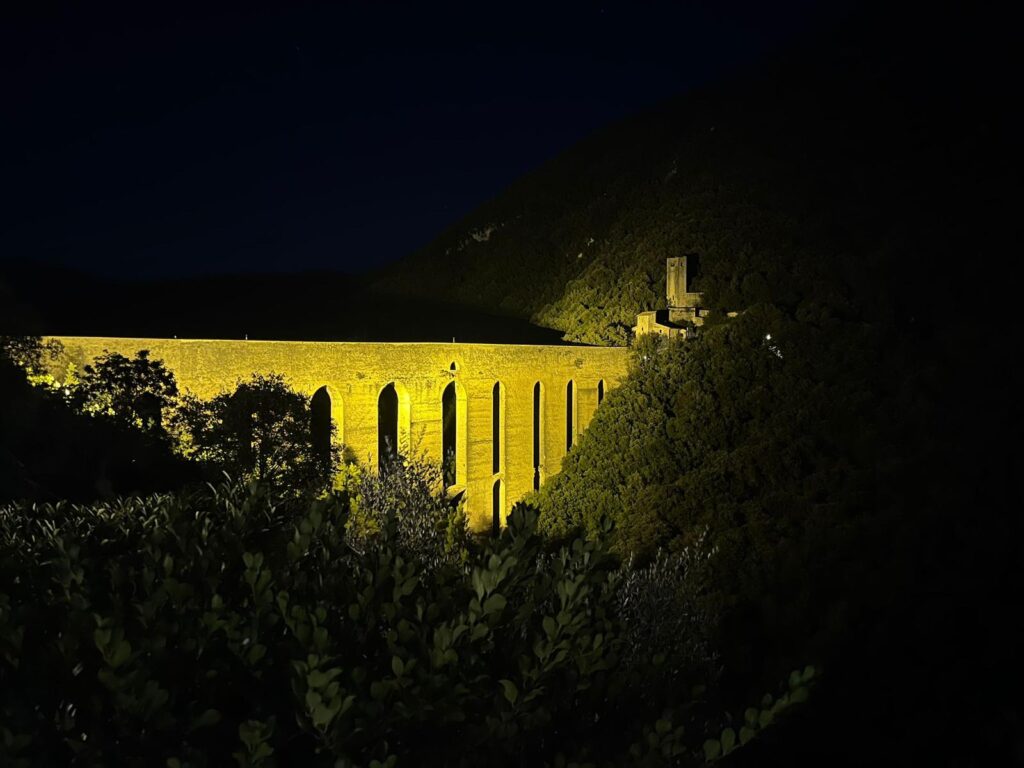
Although the bridge dates to the 14th century, scholars believe it rises on Roman foundations, adding even more layers to its historical importance. For centuries, the bridge served both as an aqueduct and as a pedestrian route toward Monteluco, where monks lived in hermitages hidden among oak trees.
Even when closed for safety work, the surrounding paths and viewpoints remain open, offering some of the most breathtaking panoramas in central Italy. Travellers often describe the area around Ponte delle Torri as one of the most unforgettable postcard moments of Umbria.
After visiting Ponte delle Torri, many travellers look for a quiet place to continue the day. Just a few minutes from the historic centre, you can switch to open countryside and enjoy a private outdoor experience in Umbria. Explore the experience →
The Roman Theatre – Ancient Roots Still Alive
Among Spoleto’s archaeological treasures, the Roman Theatre stands out for its beauty, state of preservation, and cultural relevance. Built in the 1st century AD, it could seat up to 2,000 spectators and was part of a much larger Roman complex that defined ancient Spoletium.
Rediscovered during 19th-century excavations, the theatre has been carefully restored. Today visitors can explore its semicircular seating, the remains of the stage, and the architectural elements that demonstrate the mastery of Roman construction.
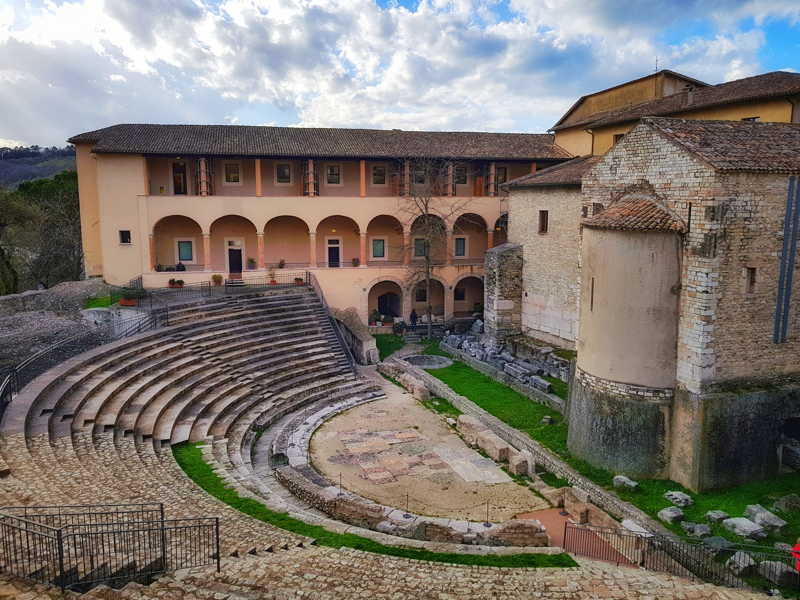

What makes the theatre unique is that it is not merely a ruin:
every summer, it comes to life again as one of the main venues of the Festival dei Due Mondi, hosting concerts, plays, and dance performances.
This dialogue between ancient stones and contemporary art creates one of the most magical atmospheres in Italy.
Beside the theatre, the Archaeological Museum of Spoleto displays mosaics, statues, pottery, and everyday objects that reveal what life looked like in Roman times.
Church of San Salvatore – A UNESCO Treasure
A short walk from the historic centre leads to the Church of San Salvatore, one of the most fascinating religious monuments in Umbria. Since 2011 it has been part of the UNESCO serial site “Longobards in Italy: Places of Power”, which includes only seven locations across the country.


San Salvatore is unique because it preserves a rare blend of early Christian layout (4th–5th century) and Lombard architectural elements (8th century). Its exterior is sober, almost austere, but once inside, visitors find monumental Roman columns reused as part of the structure, refined stone decorations, and an apse where classical and medieval motifs blend harmoniously.
This church is not only a monument — it is a spiritual place where centuries of worship, silence, and devotion can still be felt.
Arco di Druso and Piazza del Mercato – The Heart of Everyday Spoleto
Back in the historic centre, two landmarks reveal the city’s character as both ancient and lively.
The Arco di Druso, dating to 23 AD, was built in honour of Drusus and Germanicus, sons of Emperor Tiberius. It once formed the monumental entrance to the Roman forum, the heart of civic life. Today, although partially preserved, it continues to showcase the elegance of classical architecture.


Only a few steps away lies Piazza del Mercato, one of Spoleto’s most vibrant squares. Its Renaissance fountain has been a source of fresh water for centuries and remains a favourite spot for locals. Surrounded by cafés, artisan shops, and historic buildings, the square offers an authentic glimpse into daily life — perfect for an espresso break or a leisurely walk.
Textile and Costume Museum – The Art of Weaving Through Centuries
Hidden inside the former Monastery of San Nicolò, the Museo del Tessile e del Costume reveals a lesser-known but fascinating aspect of Spoleto’s cultural heritage. The museum preserves textiles, garments, embroidery, and fabrics dating from the 15th to the 20th century, showcasing the evolution of craftsmanship and fashion in the region.
Visitors will discover medieval and Renaissance fabrics, traditional Umbrian weaving techniques, and beautiful garments that reflect social identity, status, and artistic taste. The monastery setting enhances the experience, offering quiet cloisters and peaceful halls filled with history.
For travelers who enjoy culture beyond the “usual itinerary,” this museum is a rare and rewarding find.
The City Walls – A Walk Through Time
Spoleto’s ancient city walls, built by the Romans and reinforced during the Middle Ages, still embrace the historic centre. Walking along these fortifications offers a unique way to see the city from above, passing towers, gates, and panoramic stretches of path.
But the beauty of Spoleto is not found only in its monuments. It is also hidden in the details of its streets: a sudden medieval arch, a Renaissance window frame, a Roman fragment built into a modern house, or a quiet courtyard where time seems to stop.
Travelers who walk slowly, wander without a fixed plan, and follow their curiosity will discover a town rich in layers and stories.


After Spoleto: A Quieter Experience Just Outside the City
After walking through Spoleto’s historic centre, many visitors look for something different – not another monument, but space, silence and a slower rhythm.
Just 3 km from the city, the landscape opens into hills and countryside where you can pause and reset.
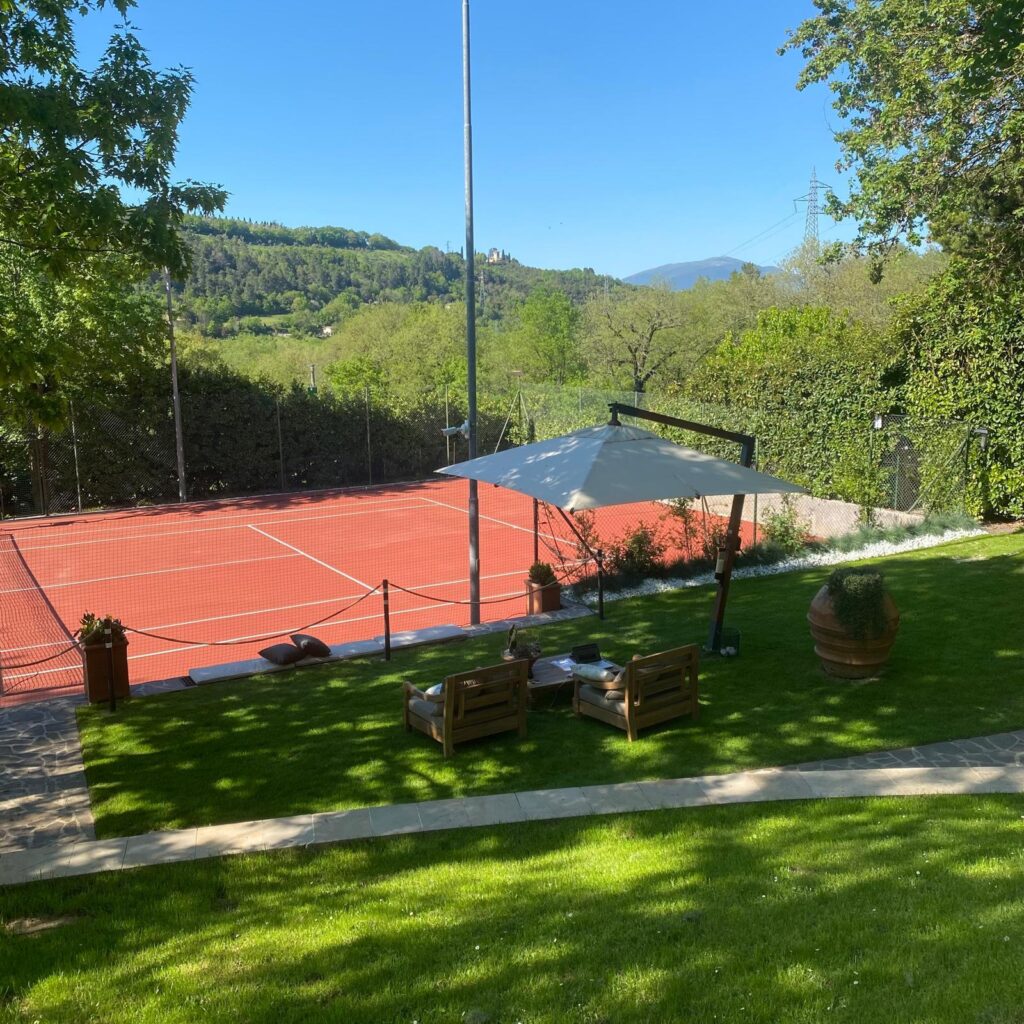
At Adagio Umbro, you can book a private outdoor experience in a historic villa setting.
- Private tennis court
- No membership required
- Quiet atmosphere, away from crowds
Easy access from Spoleto
This is a simple way to complete your day – combining culture in the morning with open space and movement in the afternoon.
→ Escape the centre: book a private outdoor experience near Spoleto
Why Spoleto Captivates Travellers
Spoleto is not the kind of city you rush through.
It is a place meant to be explored slowly – a destination where every corner reveals a piece of Italy’s long history.
Travellers appreciate Spoleto for its:
- untouched medieval atmosphere
- extraordinary art and cultural heritage
- unique architectural landmarks
- nature and panoramic views
- vibrant local life
- traditional Umbrian cuisine
- peaceful, authentic rhythm far from mass tourism
Whether you are visiting for one day or several, Spoleto leaves a lasting impression. From the Rocca’s skyline to the silence of San Salvatore, from Roman ruins to Renaissance masterpieces, the city feels like a living museum — but one that welcomes you warmly, with cafés, local markets, and friendly people.
Frequently Asked Questions About Visiting Spoleto
Yes, Spoleto is one of Umbria’s most beautiful cities, known for its Roman ruins, medieval architecture, and peaceful atmosphere. It is ideal for travellers who enjoy history, culture, and nature.
One full day is enough to see the main attractions, but two days allow for a more relaxed visit, including museums, panoramic walks, and the nearby Monteluco forest.
The Rocca Albornoziana, the Cathedral (Duomo), Ponte delle Torri, Roman Theatre, San Salvatore (UNESCO), Piazza del Mercato, and the ancient city walls are the most visited sights.
Spoleto is best explored on foot. The historic centre is walkable, though it has many ups and downs. Free escalators connect the lower and upper parts of the city.
Yes. Spoleto is considered very safe, including for solo women travellers. The centre is quiet, friendly, and easy to navigate.
The main convenient car parks are: Spoleto Sferisterio, Spoleto Posterna (with escalators leading to the old town), and Ponzianina. Parking inside the historic centre is limited.
The viewpoints and walking paths around the bridge are open, but access may vary depending on restoration works. The panoramic routes still offer excellent views.
Spring and autumn are ideal for pleasant weather and fewer crowds. June–July is popular thanks to the Festival dei Due Mondi.
It is an internationally renowned performing arts festival held every summer, featuring music, theatre, opera, and dance across multiple venues in Spoleto.
Most restaurants close between lunch and dinner. Dinner usually starts around 19:30–20:00. Cafés are open throughout the day.
Yes. Spoleto has a train station with direct connections to Rome, Florence, Perugia, and Assisi.
Local specialties include strangozzi pasta, black truffles, porchetta, lentils from Castelluccio, traditional olive oil, and Umbrian wines such as Sagrantino and Trebbiano Spoletino.
The Monteluco forest offers peaceful walking paths, hermitages, and panoramic viewpoints. The area around Ponte delle Torri is also perfect for scenic walks.
Yes. At Adagio Umbro, visitors can book a private tennis court without any membership or club affiliation. It’s located just a few minutes from the historic centre, making it an easy activity after visiting Spoleto.
Absolutely. Its central location makes it ideal for day trips to Assisi, Spello, Montefalco, Trevi, Norcia, Bevagna, and the Valnerina.
Yes. One day is enough to see the main sights of Spoleto, including the Rocca Albornoziana, the Duomo, Ponte delle Torri, the Roman Theatre, Piazza del Mercato and the historic centre. Staying longer allows a slower visit with museums, Monteluco and countryside experiences nearby.
What Is Umbria Known For? The Complete Guide to Italy’s Green Heart Read more →
Stay Connected
For more updates, photos, and stories from Adagio Umbro, follow us on our social media channels: