Tuscany vs Umbria: Which Is Better? Why Add Spoleto to Your Italy Itinerary
Is Tuscany better than Umbria for travellers? Both regions offer stunning landscapes and historic towns, but Umbria – especially Spoleto – often delivers a quieter, more authentic Italian experience with fewer crowds and better value.
This guide compares Tuscany and Umbria across landscapes, culture, food, prices and travel experience, helping you decide where to spend your time in central Italy.
Tuscany needs no introduction. It is one of the most famous regions in the world, known for Florence, Siena, Chianti wine, and the classic postcard landscapes of rolling hills and cypress-lined roads.
But that fame has a cost: crowds, higher prices, difficult parking, long queues, and a level of tourism that often feels more international than Italian.
Many travellers searching for “Tuscany vs Umbria which is better” eventually realise that combining both regions – with a base in Umbria – offers the best balance of experience and comfort.
Umbria, Tuscany’s quieter neighbour, offers something different – a more authentic, balanced and slower version of central Italy, where landscapes are just as beautiful, medieval towns are just as impressive, and the atmosphere is genuinely peaceful.
And within Umbria, Spoleto stands out as one of the region’s cultural and historical capitals, without ever feeling overcrowded.
This guide compares Tuscany and Umbria across landscapes, culture, food, prices and travel experience – and explains why adding Spoleto to your itinerary creates a more balanced and rewarding trip.
For travellers planning a central Italy itinerary between Rome and Florence, Spoleto is one of the most practical bases to explore Umbria while still keeping Tuscany within easy reach.
Landscapes: Tuscany’s Iconic Views vs Umbria’s Natural Balance
Tuscany gives you the cinematic images you see in movies: perfectly aligned cypress trees, sunlit vineyards, long golden hills. These landscapes are world-famous — and often photographed by crowds.
What Umbria is known for is different from Tuscany’s postcard image. The region is greener, more mountainous and more varied. The region is greener, more mountainous and more varied. Instead of carefully manicured hills, Umbria offers deep forests, olive groves, natural springs and medieval villages that look almost untouched.
Why travellers prefer Umbria
- More nature, fewer crowds
- Better conditions for hiking and outdoor activities
- Views that feel authentic, not staged
- More wildlife and protected areas
Spoleto’s landscape is particularly striking: the Monteluco forest, the Clitunno springs nearby, mountain paths, medieval bridges, and panoramic viewpoints everywhere.
If Tuscany is the perfect postcard, Umbria is the perfect reality — beautiful, raw and not over-edited.
Culture & History: Renaissance Icons vs Ancient Layers
Tuscany is rich in Renaissance art: Michelangelo, Brunelleschi, Botticelli. You visit Florence or Pisa to see the masterpieces you studied in school, but you also face queues and timed entrances.
Umbria, on the other hand, feels more “narrative”: the history is layered — Roman, medieval, Lombard, Gothic, and Renaissance all together. The cultural identity is older and more diverse.
Why Spoleto stands out
Spoleto is one of Italy’s oldest cities, with:
- A Roman amphitheatre
- The medieval Duomo with frescoes by Filippo Lippi
- The Rocca Albornoziana fortress
- One of Italy’s most iconic bridges: the Ponte delle Torri
- A historic centre that feels alive and not commercial
The atmosphere is cultural but relaxed. You explore freely, without lines or pressure.
Food & Wine: Iconic Tuscan Labels vs Umbrian Authenticity
Tuscany is globally famous for wine — Chianti, Montalcino, Bolgheri — but because of its fame, wine tastings and restaurants can be expensive and heavily touristic.
Umbrian food is less known internationally, but often more surprising for travellers: truffle dishes, saffron, olive oil, handmade pasta, lentils, cacciagione (game meat), and traditional slow-cooked recipes.
Price comparison
- Tuscany: Higher prices, especially in Chianti, Val d’Orcia, and Florence.
- Umbria: Better quality-to-price ratio, more local ingredients, smaller family-run trattorias.
In Spoleto, you can eat extremely well without paying “tourist-level” prices. Umbrian wine regions like Montefalco (Sagrantino) are world-class yet still reasonably priced and less crowded.
Did you know?
- Vineyard surface area in Umbria: 13,000 hectares, of which 30% is in mountainous areas and 70% on hillsides.
- Wine production in Umbria: 900,000 hectolitres, consisting of 45% DOP wines, 44% IGP wines, 53% red and rosé wines, and 47% white wines.
- Wine designations of origin in Umbria: 2 DOCG, 13 DOC, and 6 IGT.


Travel Experience: Tuscany’s Fame vs Umbria’s Peace
Tuscany gives you a glamorous, high-energy trip: world-famous museums, luxury hotels, and busy cities.
Umbria gives you serenity: slow travel, authentic connections, and towns that don’t feel like attractions.
Travellers who want a more human, personal Italian experience almost always prefer Umbria after visiting both.
Why Umbria is more relaxing
- Fewer tourists year-round
- Quiet medieval villages still lived in by locals
- Nature everywhere
- Easier to park, walk and explore
- More value for money
Spoleto represents this balance perfectly — cultural yet calm.
Prices: Tuscany’s Premium Cost vs Umbria’s Smart Alternative


Tuscany is beautiful, but also expensive:
- Hotels often priced for luxury or international demand
- Parking costs multiply quickly
- Entry fees increase year after year
- Restaurants charge more because they can
Umbria remains refreshingly accessible:
- Better hotel rates
- More free parking
- Lower restaurant prices
- Less “tourist economics”
For travellers planning a longer Italy trip, Umbria allows you to enjoy more while spending less.
According to official tourism statistics from Regione Umbria, the first quarter of 2025 recorded 389,572 arrivals and 980,492 overnight stays in the region, with foreign tourism growing strongly: +24.4% in arrivals and +32.6% in overnight stays compared to 2024. This trend confirms what many travellers have already discovered: Umbria offers the same beauty and historical depth as Tuscany, but in a more authentic and affordable way.
What makes this growth remarkable is that it’s not driven by mass tourism, but by a new type of traveller — people looking for quiet landscapes, genuine food, smaller cultural cities, and better value for money. As prices continue to rise sharply in the most famous Italian destinations, Umbria feels increasingly attractive: the region combines space, nature and history without the inflated costs.
So while Tuscany remains a classic choice, Umbria is becoming Italy’s “hidden gem” that is no longer so hidden. The rising numbers show that travellers are finally recognizing its balance between beauty and affordability. For anyone planning a longer trip, this shift makes Umbria a smarter, calmer and more rewarding base from which to explore central Italy.
Driving & Accessibility: The Tuscany Challenge vs Umbria Comfort
Driving in Tuscany can be stressful, especially in high season:
- ZTL zones everywhere (fines for entering restricted areas)
- Narrow streets
- Limited parking
- Heavy traffic around Florence and Siena
Umbria offers a more manageable driving experience:
- Far fewer ZTL traps
- Wider country roads
- Less traffic
- Parking usually simple and affordable
Spoleto is particularly easy: parking and escalators in Spoleto make the historic centre accessible without stress.
Because of Tuscany’s strict ZTL rules and limited parking, many visitors prefer to learn the basics before picking up the car. This detailed guide on driving in Italy helps travellers avoid fines and understand road markings, making the transition to quieter Umbrian roads much more relaxed.
Crowd Levels: Global Fame vs Local Charm
Tuscany’s popularity means:
- Long queues
- Overbooked restaurants
- Museums requiring advance reservations
- Difficulty finding authentic spaces
Umbria is the opposite:
- You rarely wait in line
- Restaurants welcome you without pressure
- You meet locals, not crowds
- The atmosphere feels real, not curated for tourism
Spoleto is one of the few cultural cities in Italy where “high season” still feels pleasant.

Why Add Spoleto to Your Itinerary — Even If You Already Chose Tuscany
Located between Rome and Florence, Spoleto is one of the most accessible historic towns in Umbria, making it an ideal base for exploring both regions during an Italian road trip.
Most travellers do a classic Italian trip: Rome → Florence → Venice.
Adding Spoleto is the best way to experience Italy with balance. You get artistry, history, nature and calm — a combination Tuscany often cannot offer anymore due to its popularity.
Spoleto offers:
- A real medieval city untouched by mass tourism
- Beautiful landscapes but quieter than Tuscany
- UNESCO-level history
- Great food without inflated pricing
- Easy logistics for drivers
- A central position perfect for day trips (Assisi, Trevi, Montefalco, Marmore Falls)
It is a destination where travellers breathe, slow down and experience Italy with their senses, not just their cameras.
When comparing Tuscany and Umbria, accommodation style is often overlooked. Many travellers staying in Umbria choose small B&Bs rather than hotels, especially in and around towns like Spoleto. These stays can be rewarding, but they follow local rules and habits that are not always obvious to first-time visitors.
Before booking, it’s worth reading what nobody tells you about Italian B&Bs, so expectations match reality.
Active Holidays in Umbria: Why Spoleto Works for Culture, Nature and Tennis
One of the biggest advantages of visiting Umbria is the access to outdoor activities. Known as the “Green Heart of Italy”, the region is filled with forests, rolling hills, rivers and scenic trails that make it ideal for travellers who enjoy nature and active exploration.
Planning an active day near Spoleto?
Combine a visit to Spoleto’s historic centre with a quiet tennis session in the Umbrian countryside, just a few minutes from town. Book a private tennis court near Spoleto →
Unlike some of the busier countryside areas of Tuscany, Umbrian landscapes often feel quiet and uncrowded. Visitors can spend the morning exploring medieval towns and the afternoon hiking through forests, cycling between vineyards or relaxing in peaceful countryside settings.
Popular outdoor experiences near Spoleto
- Hiking in the ancient Monteluco Forest above Spoleto
- Walking sections of the Via di Francesco, the pilgrimage trail connecting Assisi and Spoleto
- Cycling through olive groves and vineyards around Trevi and Montefalco
- Exploring natural sites like the Clitunno Springs and the famous Marmore Waterfall
- Enjoying relaxed outdoor sports such as tennis and picnics in the Umbrian countryside
Many travellers enjoy adding a relaxed tennis session to their itinerary before or after visiting Spoleto’s historic centre.

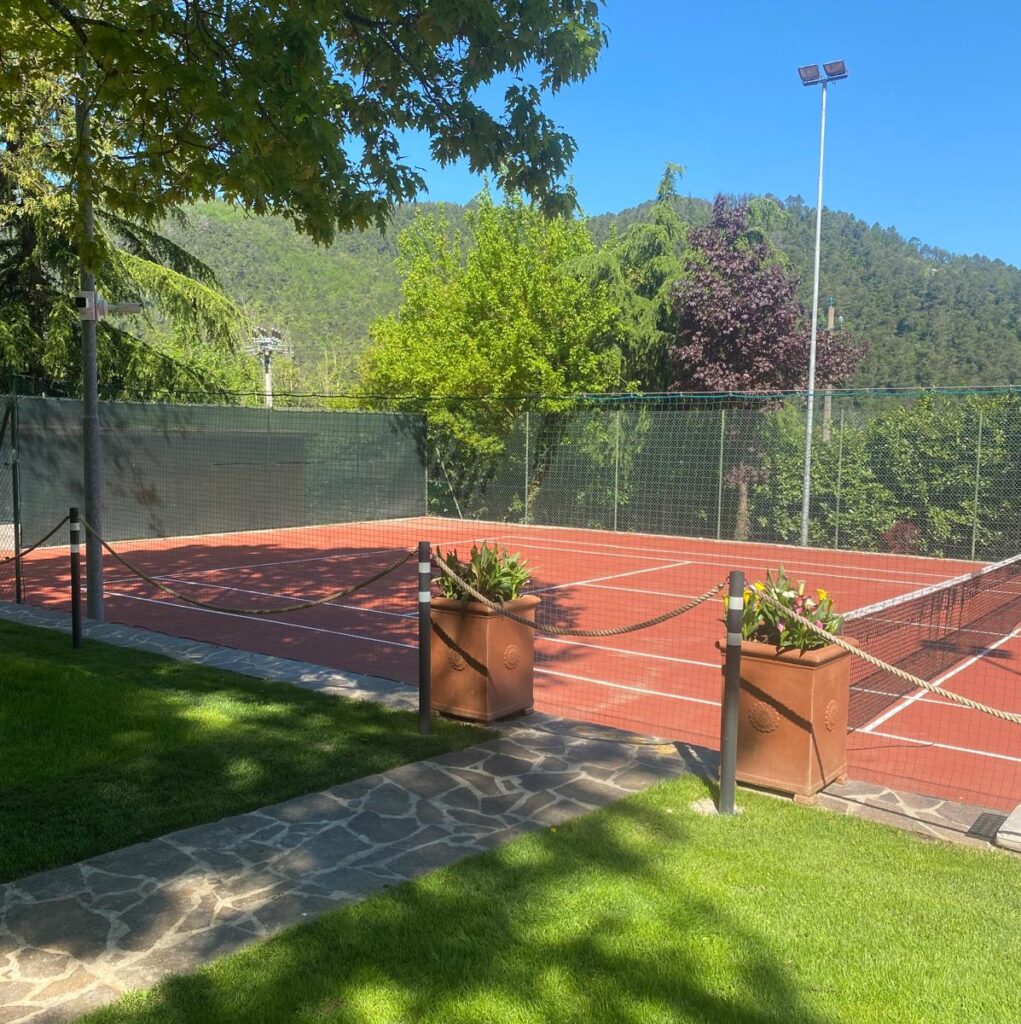
For travellers who enjoy combining sightseeing with outdoor leisure, Spoleto is also a great place to play tennis surrounded by nature. Just a few minutes from the historic centre, visitors can book a private tennis court near Spoleto in Umbria at a medieval villa and enjoy a peaceful match in the Umbrian hills – a relaxing way to experience the landscape beyond the cities.
This combination of culture, nature and outdoor activities is one of the reasons more travellers are choosing Umbria as a base for exploring central Italy.
Who Should Choose Tuscany, Who Should Choose Umbria?
Choose Tuscany if you want:
- Renaissance art and iconic museums
- Luxury hotels and famous restaurants
- International environments
- Iconic bucket-list spots
Choose Umbria if you want:
- Peace, nature and slow travel
- Medieval towns without crowds
- Authentic food and wine
- A more intimate Italian experience
Tuscany vs Umbria at a glance
| Category | Tuscany | Umbria |
| Landscape | Iconic rolling hills, vineyards, cypress roads | Greener hills, forests, mountains and quieter countryside |
| Crowds | High in Florence, Siena, Val d’Orcia and Chianti | Lower, especially in smaller towns like Spoleto |
| Prices | Often higher in famous tourist areas | Better value for food, parking and accommodation |
| Best for | Renaissance art, famous museums, luxury travel | Slow travel, nature, medieval towns and active holidays |
Most travellers benefit from mixing the two – but staying at least a few nights in Umbria changes the trip completely.
One of the greatest advantages for travellers is that you don’t need to choose between Tuscany and Umbria at all. The regions are neighbours, and many of Tuscany’s most iconic destinations — Siena, Cortona, Montepulciano, Val d’Orcia and even Florence — are within comfortable driving distance from central Umbria. This means you can stay in Umbria, enjoy lower prices, quiet landscapes and easier parking, while still exploring Tuscany’s famous cities and vineyards on relaxed day trips. It’s the perfect combination for visitors who want culture without stress.
Basing yourself in Umbria also gives you more flexibility. Instead of staying in heavily touristic areas, you sleep in a calm countryside setting, eat authentic food, and experience a more genuine Italian atmosphere. Then, when you decide to visit Tuscany, you reach it rested, unhurried and without fighting for parking spaces at dawn.
Many travellers who try this approach end up saying the same thing: staying in Umbria gives you the beauty of both regions, but with a calmer rhythm and better value. It’s an ideal strategy for longer trips, road trips, or anyone who wants to enjoy the Renaissance highlights of Tuscany while returning each evening to the peace and authenticity of Umbrian life.
If you’re planning a trip through central Italy, consider spending at least two or three nights in Umbria. It allows you to explore Spoleto, Assisi, Montefalco and the Umbrian countryside while still reaching Tuscany easily for day trips.
Easy Day Trip from Rome: Why Spoleto Works
For travellers based in Rome, Spoleto is one of the easiest ways to experience a quieter side of central Italy without long travel times. Located around 1.5–2 hours away by car or train, it offers a complete contrast to the capital – less crowded, more relaxed and surrounded by nature.
Many visitors choose to escape Rome for a day or a short stay, combining cultural exploration with slower experiences like walking, local food and time outdoors.
Because of its position, Spoleto works perfectly as a transition point between Rome and Tuscany, allowing you to explore both regions while avoiding the pressure of staying in heavily touristic areas.
For those who want to combine culture with relaxation, the area also offers simple outdoor experiences – from walking in nature to enjoying quiet moments in the countryside just outside the city.
Final Verdict: Tuscany vs Umbria
Tuscany gives you beauty everyone knows.
Umbria gives you beauty only you truly experience.
Tuscany gives you beauty everyone knows.
Umbria gives you beauty only you truly experience.
What makes Umbria especially rewarding is its balance: culture, nature, smaller towns, better prices and easy access to outdoor activities. Spoleto brings all of this together in one place, making it an excellent base for a calmer and more complete central Italy itinerary.
And Spoleto is the perfect introduction to that quieter, deeper Italy – a place where the landscape is green, the history is ancient, and the rhythm is slow. For many travellers, it becomes the unexpected highlight of their entire itinerary.
Tuscany is famous. Umbria is quieter, greener and often more rewarding for travellers who want culture without pressure. Spoleto combines history, nature, food and outdoor activities, making it one of the most balanced bases for exploring central Italy.
From Hotels to Farm Stays, Discover the Best Options. Read more →
Stay Connected
For more updates, photos, and stories from Adagio Umbro, follow us on our social media channels: