What to Do in Umbria in Autumn:
Olive Oil, Nature, and Timeless Villages

The Magic of Autumn in the Green Heart of Italy

When the heat of summer fades, Umbria reveals its most enchanting season. Autumn paints the hills in shades of gold, amber, and olive green. The air fills with the scent of wood smoke, chestnuts, and freshly pressed olive oil.

For travellers seeking authentic Italian experiences — without crowds — autumn is the perfect time to explore the Green Heart of Italy. Hidden between Tuscany and Lazio, Umbria offers a slower rhythm, genuine hospitality, and a deep connection to nature and tradition.

Whether you’re drawn by art, food, or outdoor adventures, this region transforms into a living postcard from October to November — and makes for an unforgettable journey.


Discover the Olive Harvest: The Essence of Umbria

Autumn in Umbria means one thing above all — the olive oil harvest. This is when families gather in the groves, olives are handpicked, and local frantoi (olive mills) come alive with activity.

If you visit during this season, you’ll experience the unique fragrance of freshly pressed olio nuovo — the new extra virgin olive oil — a vibrant green nectar that tastes of artichoke, herbs, and history.

Don’t miss the Frantoi Aperti® Festival (October 18 – November 16, 2025) — a month-long celebration across Umbrian villages, open olive mills, and medieval towns.

Here you can:

  • Watch the olive oil pressing process.
  • Taste warm bread dipped in the new oil.
  • Join guided tours and cultural events among the olive trees.
  • Enjoy concerts, art exhibitions, and traditional dinners known as Cene Oleocentriche

Take a Journey on the Olive Oil Train

A new and unforgettable experience arrives this autumn — the Espresso Assisi – Frantoi Aperti® , Italy’s special tourist train dedicated to the olive oil harvest. Please note that this special tourist service is organized by FS Treni Turistici Italiani, part of the official Trenitalia Group. The Espresso Assisi – Frantoi Aperti® train may not appear among the standard Trenitalia routes, as it operates as a dedicated seasonal experience.

Running every Sunday from October 19 to November 16, 2025, this scenic route connects Rome to Arezzo, stopping in Terni, Spoleto, Foligno, Spello, Assisi, and Perugia.

It’s not just a train — it’s a moving festival. You’ll travel through landscapes of olive groves and hilltop towns, meet local producers, and discover the art of olive oil along the way.

Map of Umbria showing DOP olive oil production areas and main towns including Spoleto, Trevi, Assisi, Giano dell’Umbria, and Lake Trasimeno.
Map of Umbria highlighting the five DOP olive oil subzones — Colli Assisi–Spoleto, Colli Martani, Colli Amerini, Colli del Trasimeno, and Colli Orvietani.

Travellers can enjoy onboard tastings, guided visits to mills, and cultural stops in historic towns.

? Travel Tip: Travel tip: Book early to benefit from the TTI SPECIAL 25 offer — a 25% discount for limited seats on the FS Treni Turistici Italiani website

? Explore Umbria’s Timeless Villages

Umbria’s villages are jewels of stone and silence. In autumn, they glow under soft light, surrounded by misty hills and vineyards turning red. Here are some of the most evocative places to visit:

Spoleto

Ponte delle Torri, admire the Cathedral of Santa Maria Assunta, and enjoy quiet evenings filled with local flavors.

Adagio Umbro, located near Spoleto, offers the perfect base to explore the heart of Umbria while enjoying peace and nature.

Assisi

Spiritual and serene, Assisi shines even brighter in autumn. Visit the Basilica of St. Francis, wander the medieval lanes, and enjoy panoramic views of the Umbrian Valley glowing in gold.

Trevi

Known as the “City of Olive Oil,” Trevi is surrounded by endless terraces of Moraiolo olives. Visit in early November for olive-themed walks, tastings, and traditional feasts.

Spello

Famous for its stone-paved alleys and pink limestone houses, Spello is one of Italy’s most picturesque towns. The views of olive groves from its medieval walls are unforgettable.

Montefalco

Home to the rich Sagrantino wine and host of the opening event for Frantoi Aperti®. Don’t miss the “Visioni Oleocentriche” art exhibition and concert at the Church of San Francesco.


The Taste of Umbria’s Heritage: From Grove to Gold

In Umbria, olive oil is more than a product — it’s a way of life deeply rooted in the region’s hills and traditions. Every autumn, as olives turn from green to gold, over 5.5 million olive trees paint the landscape in shimmering silver tones. Across 27,000 hectares of olive groves, farmers have tended their trees for generations, creating an oil so distinct it earned the DOP Umbria (Protected Designation of Origin) label — a mark of quality recognized throughout Europe.

Producing olive oil in Umbria is a meticulous craft that blends tradition with nature’s rhythm. Depending on the season, the region yields between 30,000 and 60,000 tons of olives, pressed in more than 270 family-run mills scattered across valleys and hill towns. Each bottle of DOP Umbria oil tells a story of landscape and labor — of early mornings in the groves, hands stained with fruit, and the unmistakable fragrance of freshly pressed olive oil that fills the air each November

To preserve its authenticity, the DOP Umbria designation divides the region into five subzones, each with its own identity and flavor. The Colli Amerini and Colli Orvietani produce delicate, balanced oils; the Colli Martani, near Giano dell’Umbria and Bevagna, are known for their herbal notes; around Lake Trasimeno, the rare Dolce Agogia olive gives a soft, fresh aroma; while the expansive Colli Assisi–Spoleto area — home to Trevi, Spoleto, and Assisi — yields a bold, peppery oil rich in antioxidants. Together, they form a mosaic of taste that reflects Umbria’s landscapes and centuries of passion for olive cultivation.

Did you know? In Trevi you can visit the Museum of the Olive Civilization (Museo della Civiltà dell’Ulivo), dedicated to olive cultivation and DOP Umbria EVO oil. Read our guide →


Enjoy Autumn Flavors: From Truffles to Chestnuts

Umbria’s autumn table is a celebration of nature’s bounty. Every town offers a chance to taste local delicacies:

  • Black truffles from Norcia and Spoleto
  • Chestnuts and mushrooms from the Monti Martani and Valnerina forests
  • Red wines like Montefalco Sagrantino and Rosso di Torgiano
  • Pecorino cheese, strangozzi pasta, and hearty lentil soups from Castelluccio

Visit local food markets or small osterie to experience real Umbrian cuisine — rustic, seasonal, and deeply satisfying.


Walk, Hike & Breathe the Landscape

For nature lovers, autumn is the best time to explore Umbria’s countryside. The weather is mild, the trails quiet, and the views spectacular.

  • Via di Francesco: Follow the footsteps of Saint Francis on the ancient pilgrim trail connecting Spoleto to Assisi. This section of the route winds through olive groves, cypress-lined paths, and small sanctuaries where the saint once prayed. It’s one of Umbria’s most spiritual and scenic walks, offering moments of silence, panoramic views, and a deep sense of peace.
  • Valnerina: Discover hidden monasteries, waterfalls, and ancient forests along the Nera River valley — a paradise for hikers and photographers.
  • Monti Martani Trails: Gentle hills covered with vineyards and olive trees — ideal for slow hiking, photography, and enjoying the changing autumn colors.

You can also join guided walks during Frantoi Aperti®, where art, music, and nature blend into unique outdoor experiences celebrating the olive harvest.


Stay in the Heart of the Olive Hills

Choosing where to stay in Umbria can define your entire experience. If you’re looking for peace, nature, and authenticity — the countryside near Spoleto is one of the most beautiful and strategic areas.

Framed by oak forests and medieval hill towns, Adagio Umbro offers a calm and authentic stay in the heart of Umbria.

Imagine waking up to birdsong, enjoying breakfast under the trees, and visiting villages only minutes away. Even while the B&B is currently being renovated, Adagio Umbro’s website already welcomes travellers with stories, itineraries, and local insights — helping you plan your next Umbrian escape.

? Bookmark Adagio Umbro — your future home in Umbria, where authenticity meets comfort.

Capture the Soul of Slow Travel

Autumn in Umbria isn’t about rushing between attractions — it’s about living the moment. It’s walking through quiet streets at sunset, talking to olive farmers, and tasting oil that was pressed just hours before.

This is slow travel at its finest — where experiences matter more than checklists. Every path leads to something real: a conversation, a flavor, a memory.


Plan Your Autumn Escape to Umbria

Whether you arrive by car, by train, or someday aboard the Espresso Assisi, autumn in Umbria offers everything the modern traveller seeks — authenticity, beauty, and connection.

As you explore, let your senses guide you: the golden light, the earthy aroma of olive oil, and the sound of church bells in the distance.

And when the day ends, remember — this land rewards those who slow down and listen.

You might also like: Types of Accommodation in Italy | Hotels, B&Bs, Holiday Homes, Guesthouses & Farm Stays Read more →

Stay Connected

For more updates, photos, and stories from Adagio Umbro, follow us on our social media channels:
Don Matteo in Spoleto: Discover the Filming Locations and the Best Things to Do in Autumn 2025 in Umbria

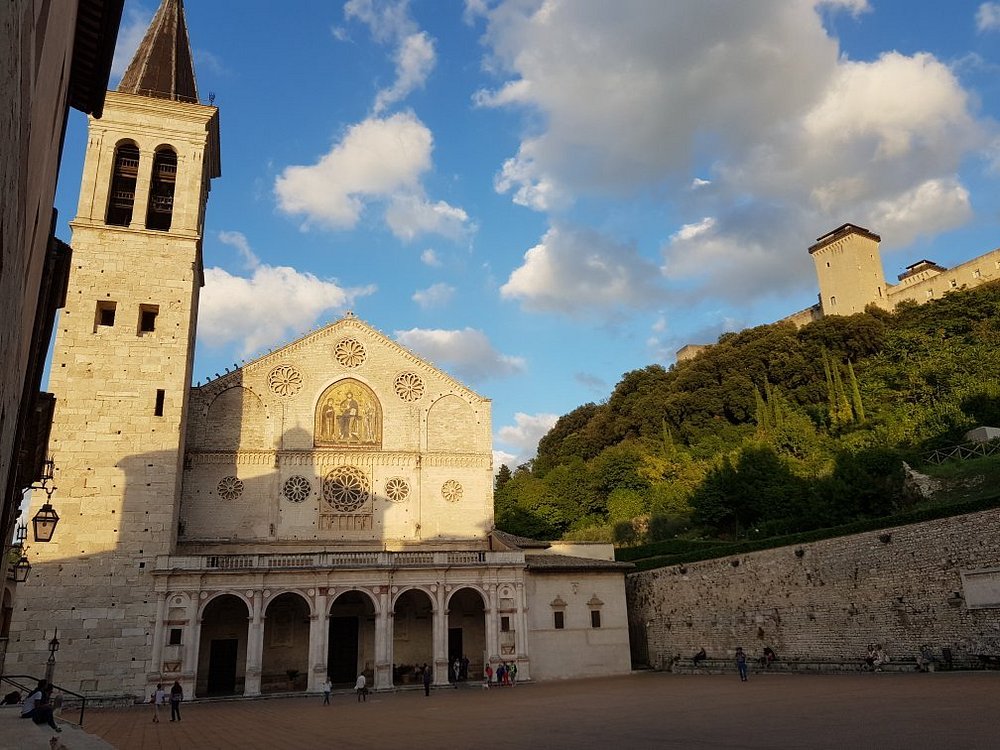
Piazza del Duomo in Spoleto, the main square often featured in Don Matteo
Piazza del Duomo, Spoleto — the series’ most iconic backdrop.

Spoleto, Umbria — There is a special thrill in turning a corner and recognizing a view you have seen on screen. In Spoleto, that happens often. Italy’s beloved TV series Don Matteo made the city’s stone streets, sunlit piazzas, and medieval silhouettes famous well beyond Italy. Whether you are already a fan or you have never heard of the show, this guide will help you walk the filming locations and plan the best things to do in September in Umbria — from wine tastings to scenic hikes and slow afternoons in historic squares.

What Is Don Matteo — and Why Do Italians Love It?

Don Matteo is a long-running Italian series that blends detective stories with warmth, humor, and community life. For two decades the role of the wise, bicycle-riding priest was played by Terence Hill; in recent seasons the story continues with Raoul Bova, keeping the heart of the series intact. The result is comfort viewing with a moral core — equal parts mystery-of-the-week and portraits of everyday kindness, set against the beauty of Umbrian towns. Episodes often begin with a crime or misunderstanding, but they end with clarity, compassion, and a gentle reminder that small choices matter.

For international travelers, the appeal is twofold: the Italian atmosphere (morning coffee at the bar, neighbors chatting in the piazza, narrow streets where everyone knows your name) and the visual poetry of places like Spoleto. The landscapes are real; you can visit them, walk them, and stand exactly where a scene unfolded. This article shows you where to go and how to weave those places into an autumn umbrian itinerary.

Why Spoleto?

Beginning with Season 9, the production moved from Gubbio to Spoleto, whose historic center gives the series a luminous stage. Spoleto seems made for cinema: a Roman amphitheater, medieval lanes that rise and fold, stone staircases, and wide squares where golden light gathers at sunset. Here, architecture does not just appear in the background — it feels like a character with its own personality. Directors love how arches frame faces, how staircases create movement, and how pale stone reflects the Umbrian sky.

Filming Locations You Can Actually Visit

1) Piazza del Duomo: The Open-Air Set

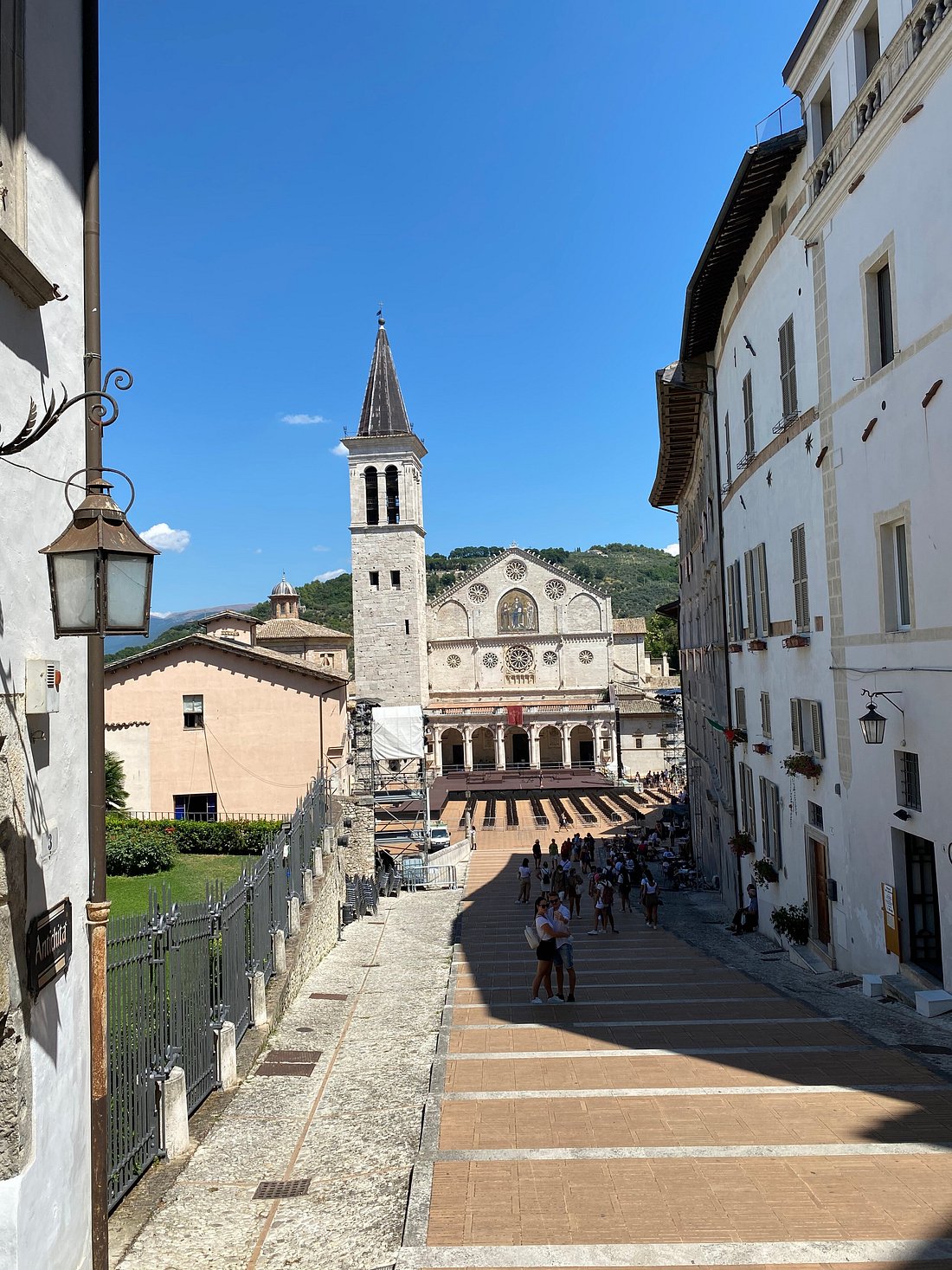
Many scenes unfold in Piazza del Duomo, an elegant square framed by the Cathedral and palazzi. It is the pulsing heart of the Spoleto you will recognize from the screen. The square’s natural slope and dramatic staircase create camera-ready angles in every direction; visit late afternoon for soft light and a gentle breeze that carries the city’s evening chatter. Sit for an espresso, watch families drift across the stones, and imagine the crew setting up a dolly shot at dawn.

Scalinata and Piazza del Duomo steps in Spoleto
The grand staircase down to Piazza del Duomo — a favorite establishing shot.

2) Don Matteo’s Church: Sant’Eufemia

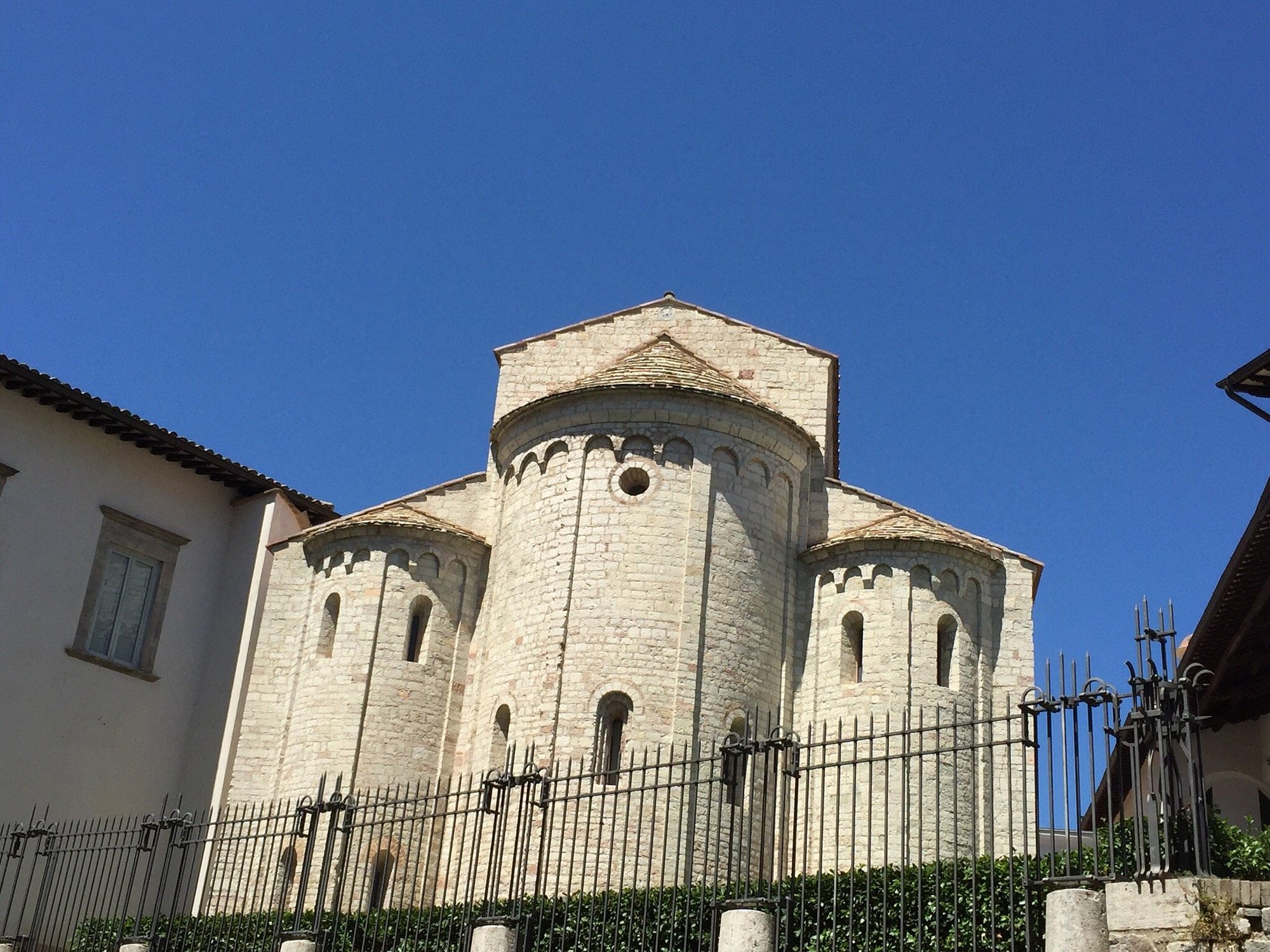
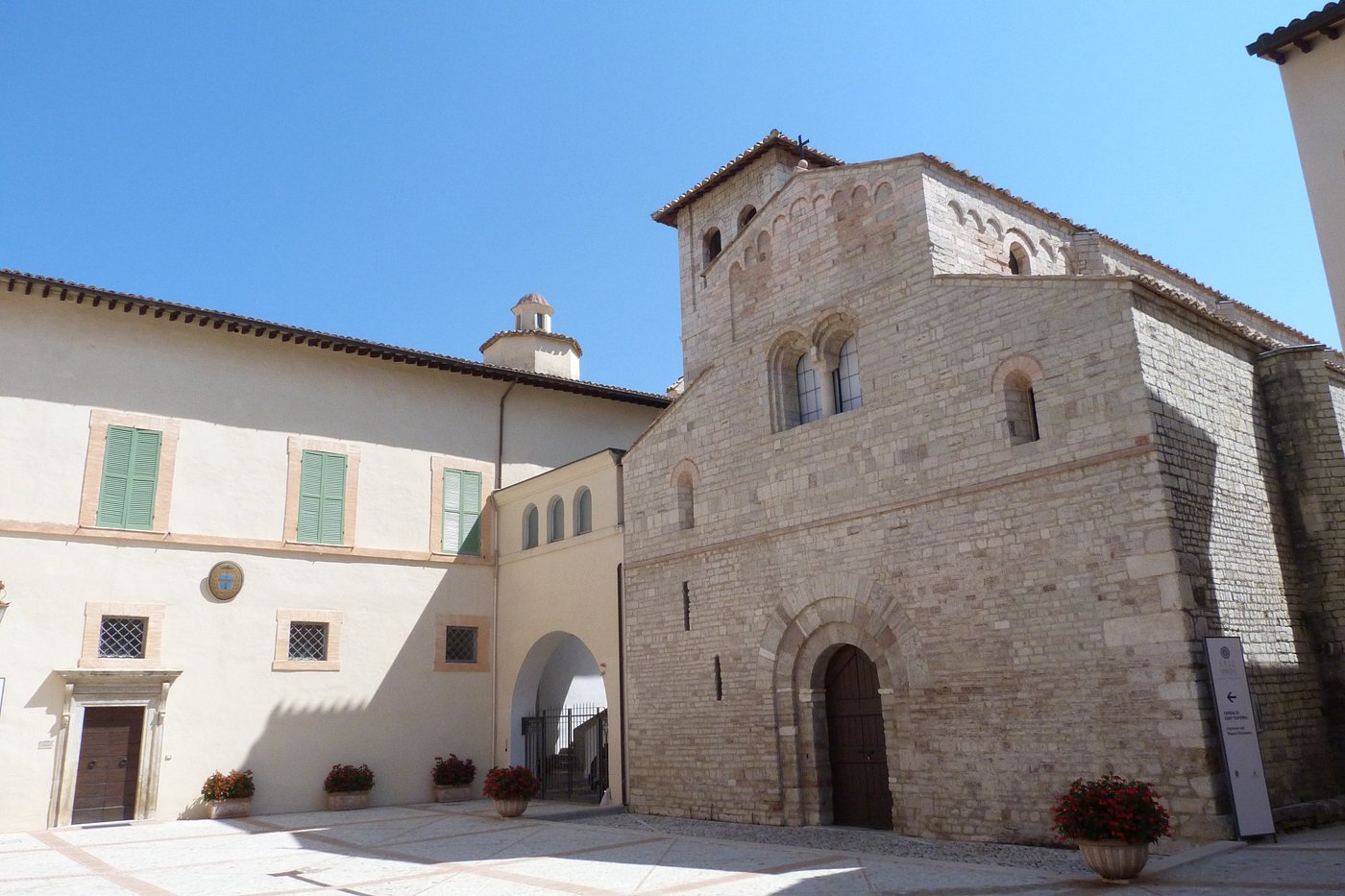
In the series, the parish church is Chiesa di Sant’Eufemia, a 12th-century Romanesque gem tucked a short stroll from the Duomo. Its sober stone, narrow windows, and quiet courtyard give scenes an intimate, timeless mood. Step inside to admire the austere nave, then step back out and look carefully at the walls and tiny arches. It is easy to imagine microphones hidden just out of frame and the whispered “Action” that transformed the church into a set.

Façade of Sant’Eufemia church in Spoleto used as Don Matteo’s parish
Sant’Eufemia — a Romanesque sanctuary that doubles as the parish in the series.
Façade of Sant’Eufemia church in Spoleto used as Don Matteo’s parish

3) Palazzo Bufalini: Carabinieri (Exterior)

Look across Piazza del Duomo to Palazzo Bufalini. In the show, this elegant façade stands in for the Carabinieri station. It is a beautiful coincidence: a 16th–17th-century residence repurposed on screen as a hub of investigations, gossip, and Cecchini’s quips. You will spot it in wide shots where the square opens like a stage.

4) Ponte delle Torri & Rocca Albornoziana

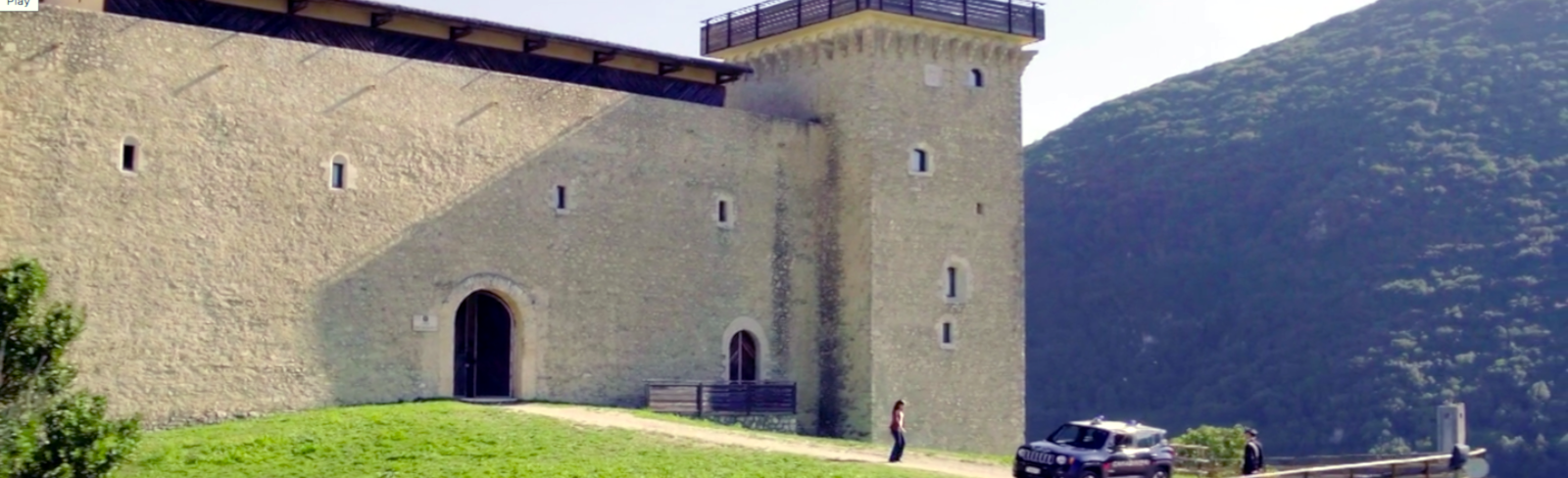
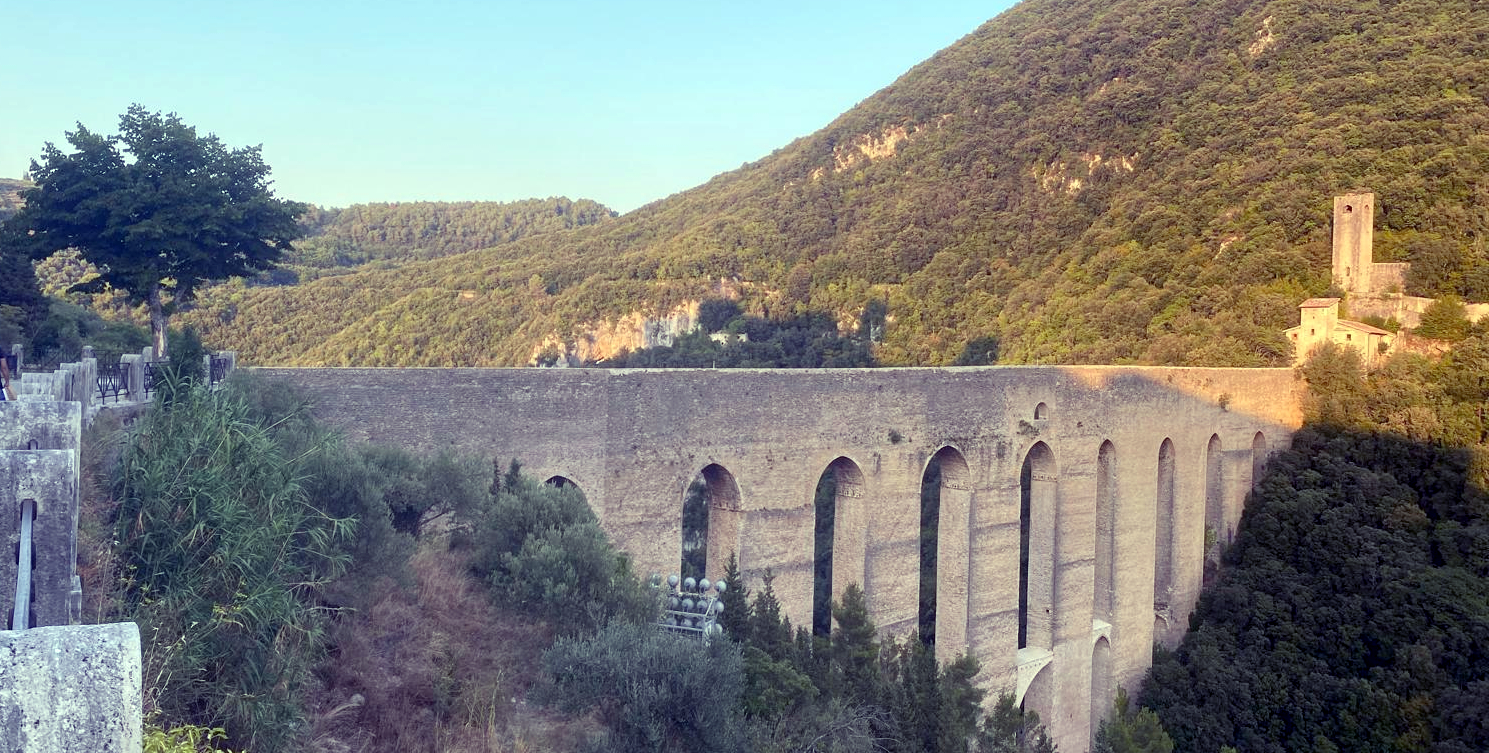
When the camera pulls back, it often lingers on Spoleto’s skyline: the Ponte delle Torri, a towering medieval bridge, leading the eye to the fortress of Rocca Albornoziana. Today, the bridge is a spectacular place for a stroll with valley views and photo opportunities at every step — a reminder that in Umbria, nature and architecture perform together. If you enjoy photography, aim for the warm light just before sunset.

Ponte delle Torri in Spoleto with dramatic valley views
Ponte delle Torri — a dramatic walkway to the Rocca and a frequent cutaway shot.

5) Streets You Will Recognize on Foot

Bring this list along for a self-guided stroll. You may catch a déjà vu moment on Corso Garibaldi, Via dell’Arringo, Via delle Mura, Via del Visiale, or Vicolo della Basilica. They thread the historic center like backstage corridors between scenes. Do not rush. Spoleto rewards slow walking, short pauses, and looking up.

How to Recreate the TV Walk (90 Minutes)

  • Start at Rocca Albornoziana for a panorama that orients you.
  • Descend to the Ponte delle Torri and cross for valley views.
  • Continue to Piazza del Duomo via the scenic staircase.
  • Slip into Sant’Eufemia for a quiet pause.
  • Finish with a slow wander along Vicolo della Basilica and coffee in the square.

Tip: film crews love early mornings and late afternoons. If you chance upon a set, keep a respectful distance and enjoy the atmosphere — Spoleto residents are used to sharing their city with cameras.

Behind the Scenes & Fun Facts

  • The baton pass: After two decades as Don Matteo, Terence Hill made his final on-screen bow and the story continued with Raoul Bova, bringing fresh energy while preserving the series’ gentle spirit.
  • The bike: The priest’s bicycle is almost a supporting character — a symbol of humility, mobility, and small-town closeness. Spotting it leaning against stone walls is part of the fun.
  • Spoleto as a co-star: The city is not just a backdrop. Directors frame long shots to let arches, staircases, and sunlit stone do emotional storytelling.
  • From Gubbio to Spoleto: The move in Season 9 refreshed the show’s look without losing its Umbrian identity — proof that one region can offer many faces.

Autumn in Umbria: Why This Month Is Perfect

September-November bring that sweet travel balance: golden weather, calmer streets after August, and the start of the wine harvest. Days are warm, evenings are pleasantly cool — perfect for outdoor lunches and evening strolls. Vineyards stir with activity, hill towns glow in soft light, and local calendars fill with harvest weekends and open-cellar tastings.

Wine-Harvest Weekends (Vendemmia)

Across Umbria, wineries host special open-cellar days in September. In the valley between Spoleto, Montefalco, and Bevagna, producers of Sagrantino and Grechetto invite visitors for tours, grape-picking experiences, and sunset tastings. It is the ideal way to add a rural chapter to your Spoleto city break. Book ahead for weekends and ask about designated drivers or transfer options if you plan multiple tastings.

Glasses and bottles of Montefalco Sagrantino wine from Umbria
Montefalco Sagrantino, Trebbiano Spoleto — powerful, deeply colored, and proudly Umbrian.

Scenic Walks & Easy Hikes

With summer heat easing, September is ideal for nature walks. From Spoleto you can trace forest paths around the Rocca, follow aqueduct lines above the valley, or drive 30–40 minutes to rolling trails near Trevi’s olive groves and the Montefalco vineyards. Pack light layers, water, and a small picnic — in Umbria, the best table is often a stone wall with a view. If you are traveling with friends, choose loop routes so everyone can walk at their own pace and still end together in the piazza.

Culture, Food, and Evening Piazzas

Spoleto’s cultural rhythm never really stops. Between major festivals, you will find opera, chamber music, and visiting exhibitions. The everyday rituals are just as rewarding: the evening passeggiata, espresso at the counter, a plate of stringozzi with local oil, and a glass of Sagrantino or Trebbiano Spoletino. Reserve dinner outdoors if the forecast is clear and enjoy the soft light reflected off limestone facades. Ask for seasonal specials: figs, late-summer tomatoes, pecorino with honey, and early new-press olive oils in tastings.

Things to Do in September in Spoleto (Shortlist)

  • Walk the Don Matteo route (Duomo → Sant’Eufemia → historic streets → Ponte delle Torri).
  • Plan a winery afternoon in Montefalco or Bevagna — tastings, cellar tours, vineyard views.
  • Climb to the Rocca for a history hit plus sunset photos of the city.
  • Try seasonal flavors — figs, pecorino, honey, Sagrantino and Trebbiano Spoletino.
  • Take a slow tennis break at Adagio Umbro — a peaceful reset between sightseeing days.

Practical Tips for International Travelers

  • Getting there: Spoleto sits on the Rome–Perugia rail line (about 1h45 from Rome by regional train). A rental car is handy if you plan winery visits or countryside walks.
  • Weather & packing: Expect warm days and cooler nights. Bring breathable layers, comfortable walking shoes for cobbles, a light jacket, and sun protection.
  • Timing: Vineyards are liveliest on September weekends; book tastings ahead. Weekdays are quieter in town squares and museums.
  • Respect on set: If filming is in progress, follow crew directions and enjoy the magic from the sidelines.

A Movie Moment, Then a Real One

The charm of Don Matteo is not just the cases solved but the sense of belonging — neighbors who wave from balconies, baristas who know your order, a city that welcomes you as if you have lived here for years. Spoleto turns that feeling into a real itinerary: a morning at the Duomo, a shaded lane to Sant’Eufemia, a slow coffee, then a walk to the bridge with a pocket of grapes from the market. In September, when the countryside hums with harvest, it is especially easy to feel the soft rhythm of Umbrian days.

View across Montefalco vineyards near Spoleto in Umbria
Vineyards near Montefalco — perfect for a harvest-season afternoon from Spoleto.

Plan Your Day: Map It Out

Drop pins for: Piazza del Duomo, Sant’Eufemia, Palazzo Bufalini, Rocca Albornoziana, and Ponte delle Torri. Add a winery stop near Montefalco or Bevagna. If you are short on time, limit yourself to the historic center and the bridge — you will still recognize the show’s signature angles everywhere you turn.


Stay Slow, Stay Local

After a day of filming locations and vineyard horizons, choose a base that keeps you close to nature. At Adagio Umbro, you can pause in a green garden, stretch after travel on the tennis court, and plan tomorrow’s wander through Umbria’s hill towns. It is not a hotel lobby scene — it is your quiet chapter in the story.

Image credits: Piazza del Duomo & staircase, Sant’Eufemia, Ponte delle Torri, Montefalco vineyards, Sagrantino wine — photos from Wikimedia Commons (CC or permitted use). All images are used for editorial purposes to illustrate locations and travel inspiration.

Map Your Don Matteo Walk

Use this mini map to follow the most recognizable filming spots in Spoleto — from Piazza del Duomo and Sant’Eufemia to the Rocca and the stunning Ponte delle Torri.

Quick Pins (Open in Google Maps)

When you plan what to see in Spoleto, think beyond the iconic Piazza del Duomo, the Ponte delle Torri and the Rocca Albornoziana. This Umbrian town is a perfect starting point for day trips, especially if you are coming from Rome by car or train — Spoleto is less than two hours away, making it one of the most rewarding places near Rome for culture and slow travel. Here you can balance history with leisure: stroll the medieval streets, taste local wines, then relax in the green hills just outside the city. If you are wondering what to do in Spoleto between visits to churches, museums, and small trattorie, add a break of sport and nature to your itinerary. At Adagio Umbro, our tennis court with picnic service offers the chance to pause in a peaceful setting surrounded by Umbrian countryside. We welcome curious travelers who want to experience the region at a slower rhythm — whether you play a friendly match, enjoy a picnic with fresh air, or simply rest after sightseeing. Booking is simple, and once you reserve your time we will provide all the details: from easy parking information to confirmation of opening hours and tips for nearby walks or hidden spots in the hills. Our aim is to make your stay stress-free, so you can focus on discovery and enjoyment. With Spoleto’s treasures at your feet and the Umbrian landscape around you, the best memories often come from mixing local culture with quiet outdoor moments. Plan your September trip now and let us help you create the balance between sightseeing and relaxation.

Tip: For the best light and fewer crowds, start late afternoon at the Rocca, walk the Ponte delle Torri, then descend to Piazza del Duomo and Sant’Eufemia.

Chiesa, Duomo, Cathedral or Basilica? Learn the real meaning of Italy’s sacred sites and explore the most iconic churches from Spoleto to Assisi. Read more →


Stay Connected

For more updates, photos, and stories from Adagio Umbro, follow us on our social media channels:
What Is Umbria Known For? Food, Hill Towns, Wine and Nature

Umbria is best known for its medieval hill towns, UNESCO heritage, green landscapes, religious history and regional food traditions. Visitors come for places such as Spoleto, Assisi, Orvieto and Perugia, as well as truffles, olive oil, local wines and outdoor experiences.

Located in central Italy, Umbria offers a quieter alternative to the country’s most heavily visited regions and is particularly suitable for travellers exploring by car.

What Is Umbria Best Known For?

Umbria is best known for its medieval hill towns, green countryside, religious heritage, black truffles, olive oil and distinctive regional wines. Often called the Green Heart of Italy, this landlocked region includes celebrated destinations such as Assisi, Spoleto, Orvieto and Perugia, together with quieter villages, wooded hills and long-established food traditions.

But Umbria is not simply a less crowded alternative to Tuscany. Its identity has been shaped by pilgrimage routes, agriculture, fortified towns and communities where everyday life still follows the landscape and the seasons. This guide explains what Umbria is famous for while also sharing practical observations from near Spoleto – including some details that standard tourism guides often overlook.

Visitors dining at communal tables during a local sagra in Umbria

Umbria at a Glance

  • Medieval hill towns and historic architecture
  • Assisi and the legacy of Saint Francis
  • Black truffles and the food traditions of Norcia
  • Extra-virgin olive oil and local wines
  • Forested hills, mountains and rural landscapes
  • Festivals, walking routes and slow travel

Why Umbria Stands Out Among Italian Regions

Located in central Italy, Umbria is often called the Green Heart of Italy because of its wooded hills, valleys, olive groves and rural landscapes. It is the only Italian region that has neither a coastline nor an international border. Although it shares some visual similarities with neighbouring Tuscany, Umbria has its own history, cuisine and cultural identity – and many areas receive fewer international visitors than Italy’s most heavily promoted destinations.

The landscape also explains the distinctive position of many Umbrian towns. Historic centres such as Orvieto, Todi, Narni, Trevi and Spello rise on hills, ridges or rocky outcrops, while Spoleto developed against the slopes of the Apennines. Elevated locations offered wider views of the surrounding territory and, particularly during periods of conflict, made settlements easier to defend. Today, the result is a region of dramatic viewpoints, fortified walls and steep streets – but also stairs, slopes and uneven stone surfaces that travellers should expect as a normal part of exploring Umbria.

Umbria’s character comes from this close relationship between landscape and settlement. Medieval architecture, agricultural traditions and contemporary daily life exist side by side rather than as separate tourist attractions. Visitors come for Assisi, Perugia and Orvieto, but places such as Spoleto, Bevagna, Montefalco and the Valnerina reveal a quieter and more varied side of central Italy.

Many visitors to Umbria are returning travellers to Italy, looking beyond the country’s best-known destinations for a slower and less crowded experience.

Map of Umbria showing its main tourist towns

Ancient Cities and Medieval Hill Towns

Umbria’s landscape is dotted with timeworn hilltop towns, each with its own history:

  • Assisi: The birthplace of Saint Francis and Umbria’s best-known pilgrimage destination, recognised for the Basilica of San Francesco, medieval art and its UNESCO-listed historic and cultural landscape.
  • Perugia: mbria’s regional capital, known for its Etruscan heritage, medieval centre, historic universities and Umbria Jazz
  • Orvieto: A hill town built on a volcanic plateau, known for its cathedral, underground passages and the 16th-century Pozzo di San Patrizio.
  • Spoleto: A historic city with Roman remains, medieval architecture, the Rocca Albornoziana and the Festival dei Due Mondi.
  • Trevi: A hilltop town surrounded by olive groves, known for its medieval character, extra-virgin olive oil and the Museo della Civiltà dell’Ulivo, which explores the region’s long tradition of olive cultivation and oil production.
  • Todi: A hill town overlooking the Tiber Valley, known for Piazza del Popolo, medieval civic buildings and the Renaissance church of Santa Maria della Consolazione.
  • Montefalco: A walled hill town known for panoramic views, Sagrantino wine and frescoes by Benozzo Gozzoli in the Museo di San Francesco.
  • Narni: A historic hill town above the Nera Valley, known for its medieval centre, Roman heritage and the guided Narni Underground route. It can be combined with Carsulae, San Gemini or Marmore Falls.
Front view of the ornate façade of Orvieto Cathedral
The richly decorated front façade of Orvieto Cathedral, featuring mosaics, sculptures and Gothic architectural details.
Interior of St Patrick’s Well in Orvieto
The interior of St Patrick’s Well in Orvieto, with its double-helix staircases descending around the central shaft.
Panoramic view of Assisi and the Umbrian landscape
Assisi rises above the Umbrian countryside, reflecting the region’s hill towns, historic architecture and green landscapes.

UNESCO World Heritage Sites in Umbria

Umbria is represented in two UNESCO World Heritage properties. The best known is Assisi, recognised for the Basilica of San Francesco, its medieval art, Franciscan sites and surrounding cultural landscape. The second is the serial property Longobards in Italy: Places of the Power (568–774 AD), which includes important early medieval monuments in Spoleto and nearby Campello sul Clitunno.

Assisi and Its Franciscan Sites

Assisi was added to the UNESCO World Heritage List in 2000. The designation includes the Basilica of San Francesco and other places associated with Saint Francis, as well as the historic town and its relationship with the surrounding landscape. Beyond its religious importance, Assisi contains major works by medieval artists including Giotto, Cimabue, Pietro Lorenzetti and Simone Martini.

The Lombard Heritage of Spoleto

Spoleto was once the capital of an important Lombard duchy. The Church of San Salvatore in Spoleto forms part of the UNESCO property Longobards in Italy: Places of the Power, inscribed in 2011. Its architecture combines Classical Roman, early Christian, Byzantine and Lombard influences, illustrating the cultural transition from antiquity to the European Middle Ages.

Basilica of San Salvatore, UNESCO-listed church in Spoleto
The Basilica of San Salvatore in Spoleto forms part of the UNESCO World Heritage property “Longobards in Italy: Places of the Power.”

The Tempietto del Clitunno

The same UNESCO property includes the Tempietto del Clitunno at Campello sul Clitunno, a small early medieval Christian building designed to resemble a Classical Roman temple. Together, the Tempietto and San Salvatore reveal why the Spoleto area is so important for understanding Lombard history in central Italy.

Tempietto del Clitunno, UNESCO-listed monument near Spoleto
The Tempietto del Clitunno near Campello sul Clitunno forms part of the UNESCO World Heritage property “Longobards in Italy: Places of the Power.”
Interior of the Tempietto del Clitunno near Spoleto
The interior of the Tempietto del Clitunno, an early medieval monument included in the UNESCO World Heritage property “Longobards in Italy: Places of the Power.”

Travellers staying near Spoleto can connect these two Lombard monuments in one local itinerary and visit Assisi separately as a day trip. Before travelling, check current access and opening information on the official websites, as restoration work and visiting conditions may change.

Piazza del Comune in the historic centre of Assisi
Piazza del Comune, the central historic square of Assisi, surrounded by medieval buildings and important landmarks.

What About Orvieto Cathedral?

Orvieto Cathedral is not currently a UNESCO World Heritage Site, but it remains one of Umbria’s most significant monuments. Construction began in 1290, and the cathedral is celebrated for its richly decorated façade, mosaics and the Chapel of San Brizio, whose fresco cycle includes major works by Luca Signorelli. Rising above the surrounding landscape on Orvieto’s volcanic plateau, it is also one of the clearest examples of how Umbria’s architecture and dramatic hilltop geography are closely connected.

What Standard Umbria Guides Often Do Not Tell You

Umbria rewards slower travel, but its geography and historic town planning can surprise first-time visitors. A little preparation makes a considerable difference – especially when choosing accommodation, planning day trips or travelling during the warmer months.

  • Hills, stairs and uneven surfaces are normal. Many Umbrian historic centres were built on hills, ridges or rocky outcrops. Steep streets, stone steps and uneven paving are part of their character, but they can be tiring for travellers with limited mobility, heavy luggage or unsuitable footwear.
  • A car is often the easiest way to explore the countryside. Trains connect several larger towns, but rural accommodation, small villages, walking routes and vineyards may be difficult to reach by public transport. Travellers without a car should check connections carefully before deciding where to stay.
  • Historic centres frequently have ZTL restrictions. A Zona a Traffico Limitato restricts unauthorised vehicle access, often using cameras to record number plates. Never follow navigation software into a historic centre without checking the signs, permitted hours and parking arrangements.
  • Five towns in one day is not a realistic Umbria experience. Distances may look short on a map, but winding roads, parking and walking uphill take time. One substantial town – or two nearby smaller places – is usually a more enjoyable day plan.
  • Summer sightseeing requires sensible timing. July and August afternoons can be very hot, particularly on exposed streets and climbs. Begin outdoor visits earlier, allow time for lunch and rest, and return outside during the cooler late afternoon or evening.
  • Spring and autumn are often more comfortable for walking. Temperatures are generally better suited to town exploration and countryside routes, although rain, trail conditions and shorter daylight hours should still be considered.
  • “Central” does not always mean accessible. Before reserving accommodation, check the distance from parking, the number of stairs, availability of a lift and whether the property can be reached by car. This is especially important when travelling with reduced mobility or substantial luggage.
  • Spoleto changes during the Festival dei Due Mondi. The festival brings performances, visitors and a much livelier atmosphere to the city. Accommodation and restaurants may fill earlier, while traffic, parking and access around performance venues can become more complicated. Travellers seeking the festival should reserve well in advance; those expecting an especially quiet stay should check the event dates before booking.

These details are not reasons to avoid Umbria. They explain how to experience it more comfortably: plan fewer stops, verify access before arrival and leave enough time to enjoy each place rather than treating the region as a checklist.

Natural Landscapes Beyond the Hill Towns

Umbria is also known for the Apennine landscapes of the Valnerina, the Monti Sibillini, Lake Trasimeno and Marmore Falls near Terni. Around Spoleto, wooded hills, olive groves and former railway routes create opportunities for walking and cycling, while the Valnerina provides access to mountain villages, rivers and outdoor activities. Conditions vary considerably by season, so walking routes, weather and access should be checked before departure.

Cascata delle Marmore waterfall in Umbria near Spoleto with multi-level cascades and surrounding greenery
Cascata delle Marmore near Terni, a monumental artificial waterfall and a popular destination for walking and outdoor visits in southern Umbria.

Why Umbria Is Popular for Active Holidays

Umbria’s mountains, wooded hills and network of countryside routes also make the region popular with travellers who prefer active holidays. Walking, hiking and cycling can be combined with visits to medieval towns, local food experiences and outdoor activities near Spoleto. Explore our practical guide to active holidays in Umbria, including walking routes, cycling and tennis.

Food and Culinary Traditions of Umbria

Umbrian cuisine is based on seasonal ingredients, agriculture and recipes traditionally associated with rural life. Its flavours are generally earthy and uncomplicated, with truffles, legumes, cured meats, cheese, olive oil and locally produced wine playing an important role.

  • Black truffles from the areas around Norcia, Spoleto and the Valnerina, commonly served with pasta, eggs, meat or toasted bread.
  • Castelluccio lentils, prized for their small size and delicate skin. They can be suitable for vegetarians and vegans, although visitors should ask whether a dish has been prepared with meat or meat stock.
  • Prosciutto di Norcia and other cured meats, together with local pecorino and other regional cheeses.
  • Extra-virgin olive oil produced from the olive groves surrounding Spoleto and other parts of Umbria.
  • Traditional local dishes such as strangozzi pasta, soups made with legumes or farro, grilled meats and torta al testo, an Umbrian flatbread served with different fillings.

The region’s food is closely connected to its landscape and seasons, so menus often change according to the availability of truffles, vegetables and other local produce. Vegetarians can usually find dishes based on lentils, beans, farro and vegetables, but it is sensible to confirm how soups and sauces are prepared.

Truffle tasting at Tipico restaurant near Spoleto

If you are looking for a traditional restaurant near Spoleto, we recommend Tipico: Cucina & Trebbiano Spoletino. The restaurant serves Umbrian dishes and offers an opportunity to discover local wines, including Trebbiano Spoletino. As menus and opening times can change, booking directly with the restaurant is advisable.

From November to January, during the local truffle-hunting season, Tipico traditionally organises tasting lunches featuring seasonal truffles, Umbrian dishes and local wines. Dates and menus vary each year, so advance booking is recommended.

Tipico is a local partner of Adagio Umbro and is located approximately five minutes away on foot, reached by a short countryside walk beneath mature oak trees. Guests staying at Adagio Umbro can ask us for current information and assistance with reserving a table or a seasonal truffle-tasting lunch.

Map of Umbria showing its principal wine-producing areas

Wines to Try in Umbria

Umbria produces distinctive wines from both local and widely cultivated grape varieties. The areas around Montefalco, Spoleto, Torgiano and Orvieto are particularly useful reference points for visitors planning winery visits or choosing local wines in restaurants.

  • Trebbiano Spoletino: a native white grape associated with the Spoleto and Montefalco area, producing wines that can range from fresh and floral to more structured styles.
  • Montefalco Sagrantino DOCG: a powerful, tannic red wine made from Sagrantino grapes and generally suited to ageing.
  • Montefalco Rosso DOC: a more approachable red blend, commonly based on Sangiovese with other permitted varieties.
  • Orvieto DOC: a white wine produced around Orvieto, traditionally based on Grechetto and Procanico.
  • Torgiano Rosso Riserva DOCG: a structured red wine produced in the Torgiano area, primarily from Sangiovese.

Winery visits and tastings often require advance reservation, particularly outside the main tourism season. Travellers should also designate a driver or arrange transport when planning several tastings.

What Is a Sagra? How to Find Local Food Festivals in Umbria

International travellers searching for food festivals in Italy may unknowingly miss some of the most interesting local events. This is because they are often advertised only by the Italian word sagra, even on posters, signs and local event pages.

There is no exact English translation of sagra. “Local food festival” is the closest and simplest description, but a sagra is also a community celebration connected to the traditions of a particular village or area. The singular is sagra and the plural is sagre.

When you see Sagra del, Sagra della or Sagra degli followed by the name of a food, it generally means a festival dedicated to that speciality. For example:

  • Sagra del Tartufo – truffle festival
  • Sagra della Castagna – chestnut festival
  • Sagra degli Gnocchi – gnocchi festival
  • Sagra della Torta al Testo – festival dedicated to the traditional Umbrian flatbread

Many sagre are organised by local associations, Pro Loco groups and residents. Temporary kitchens and communal tables appear in village squares, sports grounds and small country towns, serving dishes closely connected to the surrounding area.

Sagre in Umbria: Local Festivals Travellers Should Know About

If you are travelling in Italy, there is one word worth learning before you arrive: sagra. The plural is sagre, and these traditional local festivals offer one of the most direct ways to experience Italian culture beyond the main tourist attractions.

A sagra is usually a community festival celebrating a local food, agricultural product, seasonal tradition or regional recipe. Many are organised by local associations, Pro Loco groups and residents rather than created primarily for tourists. Temporary kitchens and long communal tables appear in village squares, sports grounds and small country towns, serving dishes closely connected to the surrounding area.

In Umbria, sagre are particularly significant because food, agriculture and village life remain closely connected. From late spring through autumn – and especially during summer – you may find festivals dedicated to truffles, mushrooms, lentils, chestnuts, olive oil, wine, grilled meats, handmade pasta or a recipe found only in that particular village.

For international travellers, attending a sagra can be one of the most interesting answers to what to do in Umbria. You may taste dishes rarely found on tourist menus, sit beside local families, listen to live music and discover villages that do not normally appear in conventional Italy itineraries.

Do not expect every sagra to be polished or designed for international visitors – that is part of its appeal. Menus may be available only in Italian, kitchens often open in the evening, and ordering or payment arrangements vary between events. Check the programme before travelling, arrive early at popular festivals and carry some cash in case smaller stands do not accept cards. A car is usually the easiest way to reach rural events.

At Adagio Umbro, we collect interesting events, festivals and sagre around Spoleto and Umbria to help travellers discover what is happening during their visit.

Explore upcoming events and sagre in Umbria →

How to Search for Sagre in Umbria

Local events are not always promoted in English. When searching online, try these Italian phrases:

  • sagre in Umbria
  • sagre vicino a Spoleto – sagre near Spoleto
  • sagre questo weekend in Umbria – sagre in Umbria this weekend
  • eventi enogastronomici in Umbria – food and wine events in Umbria
  • feste paesane in Umbria – village festivals in Umbria

Festivals and Celebrations Found Across Umbria

Umbria hosts several internationally recognised cultural and traditional events. Dates change annually, and accommodation may become limited during the principal festival periods.

  • Festival dei Due Mondi: an international performing-arts festival held in Spoleto, with theatre, music, dance and visual arts.
  • Umbria Jazz: a major jazz festival held principally in Perugia during summer.
  • Infiorate di Spello: elaborate floral compositions created through the streets of Spello for the feast of Corpus Christi.

Religion and Spiritual Pilgrimage in Umbria

Umbria’s religious heritage is closely associated with Saint Francis, Saint Clare and Saint Benedict. Pilgrimage routes, monasteries, hermitages and historic churches form an important part of the region’s cultural landscape.

This spiritual dimension adds depth to Umbria’s already profound charm.

Oak Trees in Umbria: Symbols of Strength and Continuity

Oak trees are a characteristic part of the Umbrian landscape, appearing in woodlands, fields and around historic rural properties. Their broad canopies provide shade, while old trees create valuable habitats for birds, insects and other wildlife. For centuries, oaks have also formed part of the region’s agricultural and pastoral landscape.

Using Spoleto as a Base for Exploring Umbria

Adagio Umbro B&B accommodation in a historic countryside villa near Spoleto, Umbria

Spoleto is a practical base for travellers who want to explore central and southern Umbria without changing accommodation every night. The city is well positioned for day trips into the Valnerina, known for its mountains, villages and walking routes, as well as towards the vineyards and historic towns of Montefalco and Bevagna.

Foligno and Spello can also be combined in a day trip, while Spoleto itself deserves sufficient time for its Roman remains, medieval streets, cathedral, fortress and walking routes. Travelling by car usually provides the greatest flexibility, particularly for countryside destinations and smaller villages with limited public transport.

For travellers who prefer a calm countryside stay outside Spoleto’s historic centre, Adagio Umbro is approximately 3 km from the centre. The B&B has three guest rooms, each with its own private bathroom, as well as breakfast, internal parking and extensive fenced grounds. It is particularly suited to couples, solo travellers and quiet small groups exploring Umbria by car.


Private tennis court in Umbria countryside near Spoleto surrounded by green landscape

Already Staying Elsewhere?

Adagio Umbro’s outdoor tennis court can also be reserved separately by visitors who are not staying at the B&B. Advance reservation is required, and racquets and balls are available.

Frequently Asked Questions About Visiting Umbria

What is Umbria most famous for?

Umbria is best known for its medieval hill towns, green landscapes, religious heritage and regional food traditions. Assisi, Spoleto, Orvieto, Perugia and Gubbio are among its principal destinations. The region is also associated with truffles, extra-virgin olive oil, cured meats and wines such as Montefalco Sagrantino and Trebbiano Spoletino

Is Umbria worth visiting?

Yes. Umbria is particularly suitable for travellers interested in historic towns, art, food, nature and slower travel. It generally feels less dominated by mass tourism than Italy’s most visited regions, although places such as Assisi and Orvieto can become busy during weekends, festivals and the main summer season.

How many days do you need in Umbria?

Three or four days are sufficient for one part of Umbria, while five to seven days allow a more relaxed regional itinerary. A short stay could combine Spoleto, Assisi and Spello. With additional time, travellers can include Montefalco, Bevagna, Perugia, Orvieto, the Valnerina or Marmore Falls without spending every day changing accommodation.

What are the best towns to visit in Umbria for a first trip?

Spoleto, Assisi, Spello, Perugia and Orvieto provide a good introduction to Umbria. Spoleto combines Roman, medieval and cultural heritage; Assisi is known for its Franciscan sites; Spello for its historic streets and frescoes; Perugia for museums and Etruscan history; and Orvieto for its cathedral and underground heritage.

Do you need a car to explore Umbria?

A car is strongly recommended for exploring Umbria beyond its principal towns. Trains connect destinations such as Spoleto, Assisi, Perugia and Orvieto, but many villages, wineries, walking routes and countryside accommodations are difficult to reach by public transport. Drivers should check parking arrangements and avoid entering restricted ZTL areas in historic centres.

What is the best time of year to visit Umbria?

April to June and September to October usually offer comfortable conditions for sightseeing, walking and driving between towns. July and August bring festivals and longer days but can be hot, while autumn is associated with wine, olive oil and truffle traditions. Winter is quieter, although some attractions, restaurants and rural services may have reduced opening hours.

What food and wine is Umbria known for?

Umbrian cuisine is known for black truffles, extra-virgin olive oil, legumes, cured meats, grilled meats and simple pasta dishes based on local ingredients. Regional wines include Montefalco Sagrantino DOCG, Montefalco Rosso DOC, Trebbiano Spoletino, Orvieto DOC and Torgiano Rosso Riserva DOCG.

Where is the best place to stay in Umbria?

The best place to stay depends on the planned itinerary. Perugia suits travellers interested in a larger city, Assisi is convenient for pilgrimage and heritage visits, and Orvieto works well for northern Lazio and southwestern Umbria. Spoleto is a practical base for exploring central and southern Umbria, including Spello, Montefalco, the Valnerina and Marmore Falls. Travellers arriving by car may prefer countryside accommodation outside the historic centre, with parking and easier road access.

What is a sagra in Italy?

A sagra is a traditional Italian community festival, often dedicated to a local food, agricultural product, regional recipe or seasonal tradition. The closest English translation is “local food festival” or “village festival”, although a sagra may also include communal dining, music, dancing and other activities. The plural is sagre. In Umbria, these festivals are especially common from late spring through autumn.

How can visitors find sagre and food festivals in Umbria?

Many local festivals are advertised only in Italian, so travellers should search for phrases such as sagre in Umbria, sagre vicino a Spoleto or eventi enogastronomici in Umbria. Dates and programmes change each year and should be checked before travelling. Adagio Umbro also collects selected events, festivals and sagre around Spoleto and Umbria for visitors planning their stay.


Stay Connected

For more updates, photos, and stories from Adagio Umbro, follow us on our social media channels:
Written and reviewed by the hosts of Adagio Umbro near Spoleto. Last reviewed: August 2026. Destination details, event dates and access conditions may change; consult official websites before travelling.

Adagio Umbro: Historic Estate and Private Residence in Umbria near Spoleto

Adagio Umbro is a countryside B&B approximately 3 km from Spoleto, set within the historic rural landscape of Sustrico and Le Palazze.

Its three guest rooms are arranged in the tower of a medieval-origin casale and include private bathrooms, breakfast, internal parking and optional tennis.

This article traces the history of the property and Le Palazze through archival records, historic photographs, local memory and the building’s more recent transformation into guest accommodation.

Just outside Spoleto, in the quiet rural area of Sustrico, stands the estate now known as Adagio Umbro. Surrounded by open countryside, olive trees, and historic routes that have connected central Italy for centuries, the property reflects the layered identity of Umbria itself – where history, landscape, and daily life have always been closely linked.

Today, Adagio Umbro is becoming a private residence Bed and Breakfast in Umbria with a tennis court, combining its historic character with a contemporary approach to hospitality. Located a few minutes from the historic centre of Spoleto and within comfortable reach of Assisi, it offers an alternative to more crowded destinations – defined by space, quiet, and independence.

A Historic Estate in the Spoleto Countryside

The area of Sustrico appears in historical references to the rural territory surrounding Spoleto, reflecting its role as part of a network of small settlements connected to the city. Properties in this area developed gradually, shaped by agricultural life, local administration, and proximity to the Via Flaminia.

Estates like Adagio Umbro were not isolated constructions, but part of a broader landscape of cultivated land, working buildings, and evolving residences. Over time, these structures adapted – changing function while maintaining their connection to the territory.

The Leti Family and the Landscape of Spoleto

From the 16th century, the Leti family, a noble lineage active in Spoleto, is associated with properties in the surrounding countryside. Historical references place the family in this area, where estates developed as rural residences connected to both agricultural and social life.

Members of the Leti family, including figures involved in ecclesiastical and cultural life, reflect the broader role such families played in shaping the Umbrian landscape. While detailed documentation of individual interventions on this specific property remains limited, their presence contributed to the development of estates in the area over several centuries.

From Rural Estate to Contemporary Residence

Like many historic properties in Umbria, the estate evolved through different uses over time – adapting to changing needs while preserving its structural identity. Agricultural functions, domestic spaces, and community use were all part of its history.

Today, the restoration of Adagio Umbro follows a clear principle: to maintain the character of the original structure while preparing it for a new role. Stone walls, spatial layout, and the relationship with the surrounding landscape remain central to the experience of the property.

A Private Residence in Umbria with Tennis Court

Adagio Umbro is now developing as a private residence in Umbria with a tennis court, where outdoor space is not an addition, but part of the identity of the estate. The setting allows for a different rhythm of stay – one defined by privacy, nature, and flexibility.

For travellers searching for a villa with tennis court near Assisi or a quieter alternative near Spoleto, the surrounding countryside offers a more balanced experience. Here, distance from busy centres becomes part of the value of the stay.

The tennis court is already open and available by prior booking, offering a private outdoor experience away from public sports facilities. You can view details here: tennis court rental in Spoleto →

Staying in Umbria: A Different Approach

Spoleto is one of Umbria’s most complete destinations, offering history, architecture, and access to the surrounding countryside. From here, travellers can explore nearby towns such as Assisi, Trevi, and Montefalco, while avoiding the intensity of more crowded locations.

You can also explore the outdoor side of the region in our guide to active holidays in Umbria with hiking, cycling, and tennis near Spoleto →

Adagio Umbro is located in the countryside just outside Spoleto, along the historic Via Flaminia. The setting is easily accessible, yet distinctly separate from the urban environment – offering space, quiet, and a more private way to experience Umbria.

Gallery


Stay Connected

For more updates, photos, and stories from Adagio Umbro, follow us on our social media channels:
Things to Do in Spoleto in One Day: A Practical Walking Itinerary

“Spoleto is the most beautiful discovery I made in Italy […], there is such a wealth of beauty almost unknown, mountains, valleys, forests of oaks, monasteries, waterfalls!”
— Hermann Hesse (1911)

Updated April 2026 – practical visitor guide to Spoleto parking, underground escalators and historic centre access.

Spoleto is one of Umbria’s most atmospheric towns – a place where Roman arches, medieval streets, forest trails, and panoramic views blend into one unforgettable day. If you have only 24 hours, this guide gives you the perfect itinerary: a mix of art, history, nature, food, and a relaxing tennis-and-picnic escape just 3 km from the city centre.

Whether you’re coming from Rome, Florence, Perugia, or travelling across Umbria by car, this itinerary helps you enjoy Spoleto without rushing, discovering its soul step by step.

Parking and Underground Escalators in Spoleto

Avoid driving into Spoleto’s historic centre, where ZTL restrictions apply. Leave your car at Posterna, Spoletosfera or Ponzianina and use the underground moving walkways, escalators and lifts to reach the main attractions. For parking recommendations, routes and practical access information, read our complete guide to parking and underground escalators in Spoleto.

Morning: Art, History and Quiet Streets

Start at Spoleto’s Duomo – A Romanesque Jewel

Begin your morning at the Cathedral of Santa Maria Assunta, one of the most impressive Romanesque churches in central Italy. Standing in its elegant piazza, with the surrounding hills framing the view, you immediately feel the calm beauty of Umbria.

Inside, don’t miss the cycle of frescoes by Filippo Lippi — a rare masterpiece that attracts art lovers from all over Europe. The rose window, mosaics, and the soft light entering from the nave make this church a peaceful start to your Spoleto day.

Visit the Roman Theatre & Archaeological Museum

The adjoining National Archaeological Museum completes the visit: mosaics, artefacts, sculptures, and everyday objects show the life of ancient Spoletans. It’s a compact, well-organised museum — perfect for a morning cultural stop.

Just a short walk from the Duomo lies the Roman Theatre, still used for cultural events and concerts. Standing among its ancient stones gives a real sense of how important Spoleto was in Roman times.

A visit here also gives you a deeper understanding of Spoleto’s strategic importance in central Italy. The museum displays items recovered from necropolises, ancient villas and sanctuaries across the region, making it one of the most fascinating archaeological stops in Umbria. For travellers who love Roman history but prefer compact, curated collections instead of large overwhelming museums, this is the ideal place to spend 30–45 minutes discovering the everyday life, beliefs and craftsmanship of ancient Umbria.

Roman Theatre of Spoleto – ancient archaeological site in Umbria, Italy
The Roman Theatre of Spoleto, one of Umbria’s most important archaeological sites, dating back to the 1st century AD
Torre dell’Olio Spoleto medieval tower boiling oil legend
The Torre dell’Olio, Spoleto’s tallest medieval tower, famous for the legend of boiling oil used to defend the city.

Torre dell’Olio – The Tower of Boiling Oil

Continue your walk towards Torre dell’Olio, Spoleto’s tallest tower (45.5 metres) and one of the town’s most intriguing landmarks. The tower is privately owned and cannot be visited inside, but the exterior and its legend are reason enough to stop.

The story goes back to the Second Punic War in 217 BC, when Hannibal’s troops attempted to storm Spoleto. Defenders are said to have poured boiling oil from this very tower, forcing the army to retreat through Porta Fuga — today still known as the “Escape Gate.”

International travellers love this stop:

  • US visitors describe it like a scene from medieval films
  • British tourists compare it to castle defences in Wales
  • German visitors call it the Ölturm
  • Dutch visitors say Olietoren, appreciating its strategic design

According to local tradition, the Torre dell’Olio played a crucial role during Spoleto’s defence in the Second Punic War in 217 BC. When Hannibal and his Carthaginian army attempted to break into the fortified town, the defenders reportedly poured boiling oil from the top of this tower, forcing the invaders to retreat towards Porta Fuga – a gate that still carries the name “Escape Gate” today. This legendary episode has made the Torre dell’Olio one of Spoleto’s most fascinating historic landmarks, linking the medieval skyline with one of the most dramatic moments in ancient Italian history.

Coffee Break at Pasticceria Tebro

After exploring Spoleto’s historic core, reward yourself with an espresso and a pastry at Pasticceria Tebro, the oldest pastry shop in town. Try a slice of crostata, seasonal biscuits, or a classic cornetto. It’s a simple Umbrian moment — and a very good one.


Midday: Spoleto’s Most Iconic Views

Walk Up to Rocca Albornoziana

The Rocca Albornoziana, Spoleto’s fortress, sits on a hill overlooking the entire valley. The walk up is gentle, scenic, and fully worth the effort.

Inside the fortress you’ll find centuries of history: papal rooms, courtyards, and a view that stretches from the city rooftops across the Umbrian countryside. This is one of the best panoramic spots in Spoleto.

Cross the Ponte delle Torri

From the Rocca, follow the path to the Ponte delle Torri — a dramatic stone aqueduct suspended between two wooded hills. Even though interior access is restricted for safety reasons, the exterior view is breathtaking and remains one of Umbria’s most photographed sights.

The bridge connects the town to the Monteluco forest area, inviting you to continue exploring if time allows.

Nature Walk Around the Bridge

Take a short walk along the trails surrounding the Ponte delle Torri. These paths are peaceful, shaded, and ideal for nature lovers. You’ll hear birds, see old stone walls, and feel the tranquillity of Umbrian landscapes.

This peaceful moment is the perfect bridge (literally) between the cultural part of the day and the relaxing afternoon ahead.


Afternoon: Tennis, Nature & Picnic at Adagio Umbro (3 km from Spoleto)

Still have energy after walking Spoleto?

You can continue exploring – or switch to something quieter and more private. → Discover outdoor experiences near Spoleto

After visiting Spoleto, many travellers look for something different. Not another monument – but space, silence and a slower rhythm. Just a few minutes from the historic centre, you can switch to open countryside and enjoy a private outdoor experience. → See how it works

Why Choose Adagio Umbro?

Set among hills and oak trees, Adagio Umbro offers a mix of sport, nature and privacy — ideal for couples, families with teens, and travellers who want a quiet, premium experience. There are no crowds, no noise, just space to relax at your own pace.

Tennis in Nature

The on-site Mapei tennis court is surrounded by views and silence. Even beginners love it, and rackets are available upon request. It’s a refreshing Umbrian experience — and a great way to reset the mind after a morning of walking.

Picnic in a Private Area

Bring your own picnic lunch or snacks and enjoy:

  • shaded seating
  • outdoor furniture
  • board games
  • Starlink Wi-Fi
  • a peaceful green park

Alcohol is not encouraged, keeping the atmosphere calm.

Reserved Time = Total Privacy

When you book, the tennis court and picnic area are reserved just for you.
This makes the experience far more intimate than a typical tourist stop.

Useful Booking Info

Adagio Umbro is open Friday–Sunday from 8:00 to 21:00, and on weekdays by appointment. Free parking is available on site. Booking is easy through WhatsApp, email or the online system.


Evening: Back to Spoleto for Food, Walks & Gelato

Evening Walk in the Historic Centre

As the day cools down, head back to Spoleto for a quiet walk among its medieval streets. The city becomes soft and golden, with lanterns lighting up the stone buildings — a perfect moment for photos.

Aperitivo with a View

For aperitivo, Terrace Gattapone offers one of the nicest atmospheres in the centre. Order a Spritz, wine or a non-alcoholic drink and enjoy the view of the valley.

Gelato Under the Stars

Finish your day with artisanal gelato from one of Spoleto’s traditional gelaterias. Flavours like pistachio, stracciatella and nocciola are always popular.


Where to Eat: Best Local Cuisine

If you’re staying near Adagio Umbro or exploring the peaceful countryside just outside Spoleto, Ristorante Valle Rosa is an excellent choice for authentic Umbrian dishes. Conveniently located only 5 minutes by foot from Adagio Umbro, it’s the perfect place to enjoy a comforting meal after tennis or a nature walk. Expect black truffle pasta, seasonal antipasti, locally sourced meats and a curated selection of Umbrian wines served in a warm, rustic atmosphere.

Need help booking a table? Adagio Umbro can assist you with reservations.

Getting to Spoleto

Spoleto is well connected by:

  • Train: from Rome, Florence, Perugia
  • Car: via the SS3 Flaminia road
  • Bus: regional routes across Umbria

The historic centre is walkable, but expect hills and stone paths. Renting a car is recommended for exploring the countryside at your own pace.

What to Pack for Your Day in Spoleto

Bring comfortable walking shoes, a refillable water bottle, sunscreen, a light jacket for evening, and a positive mood. Spoleto is easy-going, safe and perfect for spontaneous exploration.

If You Have More Time

Add one of these Umbrian gems to your trip:

  • Montefalco — wine and panoramic streets
  • Trevi — olive groves and hillside charm
  • Campello sul Clitunno — UNESCO-listed Tempietto
  • Bevagna — medieval squares and excellent food

For dinner near Clitunno, Ristorante Benedetti is a favourite for warm hospitality and traditional Umbrian dishes.


Staying Longer in Spoleto

One day is enough to see Spoleto’s principal landmarks, but staying for two or three nights gives you time to explore Monteluco, the former Spoleto-Norcia railway, the surrounding countryside and nearby Umbrian hill towns. Travellers staying longer can choose Adagio Umbro, a countryside 3 room B&B in a historic private villa with medieval origins, approximately 3 km from Spoleto’s historic centre, with breakfast, internal parking and tennis included for overnight guests by reservation. For more outdoor ideas, read our guide to active holidays in Umbria, or book a private tennis session near Spoleto even if you are not staying at the B&B.

FAQs: Visiting Spoleto in One Day

Can you really see Spoleto in one day?

Yes. With the right itinerary, you can enjoy art, history, nature and great food in 24 hours.

Best season to visit?

March–June and September–November offer ideal weather and fewer crowds.

How far is Adagio Umbro from Spoleto centre?

Only 3 km — less than 10 minutes by car. Parking is free.

Can I bring food to Adagio Umbro?

Yes. Feel free to bring your own snacks or picnic meal.

Is Spoleto worth visiting?

Yes. Spoleto is one of Umbria’s most atmospheric towns, known for its Roman monuments, medieval streets, panoramic views and easy access to nature trails. It’s ideal for travellers who enjoy history, food and quiet scenic walks.

How many days do you need in Spoleto?

One full day lets you see the main highlights, but two days allow you to enjoy more museums, churches, local food, panoramic walks and nearby villages like Trevi or Montefalco.

What is Spoleto famous for?

Spoleto is known for its Roman Theatre, Duomo with frescoes by Filippo Lippi, Rocca Albornoz fortress, Ponte delle Torri aqueduct, medieval festivals and the world-famous Festival dei Due Mondi.

How do you get to Spoleto from Rome?

Train is the easiest option: regional trains take about 1h 45m from Roma Termini. By car, drive the A1 motorway and exit at Orte, then follow the SS3 Flaminia towards Spoleto.

Is Spoleto good for nature lovers?

Yes. Spoleto is surrounded by forests, hills and walking paths. You can hike around the Ponte delle Torri, visit Monteluco forest, or enjoy countryside experiences like picnics and outdoor sports.

Can you drive in Spoleto’s city centre?

The historic centre has restricted ZTL zones. Visitors should park outside the ZTL and walk or use escalators. Always check ZTL hours before entering with a car.

Are there good restaurants near Spoleto?

Yes. You’ll find excellent trattorias and restaurants both in the centre and around the countryside. Ristorante Valle Rosa, only 5 minutes on foot from Adagio Umbro, is a top choice for authentic Umbrian cuisine.

What are the must-see attractions in Spoleto?

Top highlights include the Duomo, Roman Theatre, Rocca Albornoz, Ponte delle Torri, Piazza del Mercato and the medieval streets leading up to Monteluco.

Can I visit Spoleto as a day trip from Rome or Florence?

Yes. Spoleto is a popular day trip destination thanks to its efficient train connections and easy walks between monuments.

Where to stay near Spoleto for a relaxing experience?

Travellers who prefer quiet nature, privacy and outdoor activities can stay at Adagio Umbro, a countryside retreat with a tennis court and picnic area just 3 km from the city centre.

What nearby Umbrian towns can I visit from Spoleto?

Within a short drive you can explore Trevi, Montefalco, Campello sul Clitunno, Bevagna, and the Valnerina valley — all beautiful and rich in culture, food and history.

Conclusion: A Perfect Day in Spoleto

Spoleto offers everything that travellers love about Umbria: timeless architecture, breathtaking landscapes, delicious food and a slower, more meaningful rhythm of life.

Whether you’re travelling solo, as a couple, or with friends, Spoleto delivers a beautiful Italian experience you won’t forget.

If you’re planning a longer stay in Umbria or travelling across Italy, choosing the right type of accommodation can make your trip even more enjoyable. From countryside B&Bs and boutique stays to agriturismi and small guesthouses, every option offers a different kind of experience. To understand the differences and pick the best solution for your holiday, explore our complete guide to Italian lodging. It’s a helpful resource for first-time visitors and international travellers looking for comfort, authenticity and clear explanations before booking.

You might also like:
Driving in Italy: Essential Tips Every Tourist Must Know Before Renting a Car Read more →

Stay Connected

For more updates, photos, and stories from Adagio Umbro, follow us on our social media channels:
What’s the Difference Between a Chiesa, Duomo, Cattedrale, and Basilica?

While exploring the breathtaking towns and hills of Umbria, you’ve likely come across signs pointing to a Chiesa, Duomo, Cattedrale, or Basilica. But what do these words really mean? Are they just synonyms for “church,” or do they indicate something more? Let’s decode these fascinating terms and explore their unique meanings, with real-life examples you can visit across Umbria.

? Historical Origins

The term basilica originated in Ancient Rome, describing large public buildings used for gatherings, law courts, and commerce. Early Christians adopted these architectural forms for worship. The word cathedral comes from the Latin cathedra, meaning “bishop’s chair,” signifying the seat of ecclesiastical authority. Duomo stems from domus, meaning “house of God.”

? Chiesa – The General Term for Church

Chiesa simply means “church” in Italian and refers to any Christian place of worship. It can be a tiny countryside chapel or a large city church. Every town in Umbria has several chiese, often centuries old and filled with local artworks and history.

? Example in Umbria: Chiesa di San Gregorio Maggiore in Spoleto – an ancient Romanesque church with medieval frescoes and a peaceful cloister.

⛪ Duomo – The Principal Church of a City

A Duomo is the main church of a city or town. It usually coincides with the Cattedrale (Cathedral), but not always. The term “duomo” comes from the Latin domus, meaning “house (of God).” It is a civic and religious symbol, often lavishly decorated.

? Example in Umbria: Duomo di Spoleto (Cattedrale di Santa Maria Assunta) – a masterpiece of Romanesque architecture set against the scenic hills of Spoleto.

? Did you know? Not every Duomo is a Cattedrale. For instance, the Duomo of Florence became a Cathedral only after it was designated the bishop’s seat.

? Cattedrale – Where the Bishop Resides

A Cattedrale is officially the seat of a bishop. That’s what distinguishes it from other churches: the presence of the bishop’s chair or cathedra. Every diocese has one cattedrale, and it is usually also referred to as the Duomo in common speech.

? Example in Umbria: Cattedrale di San Lorenzo in Perugia – a Gothic-style cathedral with beautiful frescoes and underground Roman ruins.

?️ Basilica – Honored by the Pope

A Basilica is a title of honor given by the Pope to churches of historical, spiritual, or architectural significance. Basilicas can be major (like those in Rome) or minor (like many across Italy). They often hold important relics, host pilgrimages, or play a vital role in the Church’s history.

? Example in Umbria: Basilica di San Francesco in Assisi – the world-famous sanctuary housing the tomb of Saint Francis, a UNESCO World Heritage site and spiritual heart of Umbria.

? Religious and Cultural Events to Experience in Umbria

Whether you’re drawn to ancient rituals, spiritual celebrations, or world-class performances under the stars, Umbria offers a vibrant calendar of events throughout the year. Below are some of the most meaningful and entertaining festivals — both religious and cultural — that you can enjoy during your visit.

? Religious Festivals

  • Festa di San Costanzo (January, Perugia): Celebrated at the Cattedrale di San Lorenzo, this feast honors one of Perugia’s patron saints with a religious procession and traditional sweet buns called torcolo di San Costanzo.
  • Calendimaggio (May, Assisi): Though rooted in medieval tradition, this spring festival honors the spirit of renewal and Saint Francis with music, parades, and competitions between the city’s ancient districts near the Basilica di San Francesco.
  • Corpus Domini (June, Spello): Famous for the Infiorate, this celebration features breathtaking floral carpets laid throughout the streets for a solemn Eucharistic procession. Local churches host special masses and blessings.

? Cultural Summer Events

  • Festival dei Due Mondi (June–July, Spoleto): One of Europe’s most acclaimed performing arts festivals. Enjoy opera, ballet, classical concerts, and modern theatre in stunning venues including the Duomo di Spoleto.
  • Umbria Jazz (July, Perugia): A must for music lovers. The city comes alive with international jazz artists, open-air stages, and pop-up performances throughout the medieval streets.
  • Palio dei Terzieri (August, Città della Pieve): Step back into the Renaissance during this historic archery tournament and medieval pageant. The town transforms with flags, costumes, and traditional food stalls.

? Visit with Respect – Tips for Entering Churches

  • Wear modest clothing (cover shoulders and knees).
  • Keep silent or speak softly inside sacred areas.
  • Ask permission before taking photos, especially during services.
  • Switch phones to silent mode.

? Vocabulary Across Languages

English Italian German Dutch
Church Chiesa Kirche Kerk
Cathedral Cattedrale Kathedrale Kathedraal
Duomo Duomo Domkirche Hoofdkerk
Basilica Basilica Basilika Basiliek

? Summary Table

Term Meaning Example in Umbria
Chiesa Any Christian church Church of St. Peter extra moenia
Duomo Main church of a town or city Duomo di Spoleto
Cattedrale Church that is the bishop’s seat San Lorenzo, Perugia
Basilica Church granted special status by the Pope San Francesco, Assisi

Still have questions or want to know more? Reach out to us anytime — we love hearing from curious guests and helping you uncover the stories behind every stone in Umbria.


Stay Connected

For more updates, photos, and stories from Adagio Umbro, follow us on our social media channels:
Why Visit Trevi in Umbria: Olive Groves, Medieval Streets and Authentic Italian Atmosphere

Trevi is one of the most scenic hill towns in Umbria, known for olive groves, panoramic views and quiet medieval streets away from mass tourism.

Located near Spoleto, Montefalco and Assisi, Trevi is ideal for travelers looking for authentic Italy, local traditions, countryside walks and slower travel experiences.

Trevi is one of those places in Italy that reveals itself slowly. Perched on a hill in the heart of Umbria, the town is surrounded by olive groves, peaceful countryside landscapes and panoramic terraces overlooking the Valle Umbra.

Unlike heavily visited destinations, Trevi preserves a quieter rhythm of life where medieval streets, local cafés and historic stone buildings still shape the atmosphere of everyday Italy. Visitors come here to experience a more authentic side of the country – one connected to nature, olive oil traditions and slow travel.

Its location between Spoleto, Montefalco and Assisi also makes Trevi an excellent stop during a wider Umbrian itinerary, especially for travelers exploring central Italy by car and looking for a calmer alternative to the most crowded Italian routes.

Where Is Trevi in Umbria?

Trevi is a hilltop town in central Umbria, located between Spoleto and Foligno in the province of Perugia. Set on the slopes of Monte Serano and surrounded by olive groves, the town overlooks the Valle Umbra with wide panoramic views across one of the most beautiful countryside landscapes in the region.

For travelers searching where Trevi is on the map, it sits in a strategic position for exploring Umbria by car. Spoleto is about 20 minutes away, Montefalco is nearby, and Assisi can be reached in less than an hour, making Trevi an easy day trip or a peaceful stop during a wider Umbrian itinerary.

Trevi is especially interesting for visitors coming from Rome who want to discover a quieter side of central Italy. Compared with more famous Tuscan towns, Trevi feels less crowded and more intimate, offering medieval streets, olive landscapes and authentic local atmosphere without the pressure of mass tourism. For a broader route nearby, you can also explore our complete guide to visiting Spoleto.

Where to Park in Trevi

Parking in Trevi is usually quite practical compared with many historic towns in central Italy. Visitors arriving by car can drive up the hill toward the historic centre and follow Google Maps or local parking signs. This is useful for international drivers, because Trevi may look difficult to access from a distance, but in reality the approach is relatively simple if you follow the main road uphill.

Near the upper part of the town, there are convenient parking areas close to the historic centre, including free and paid options depending on availability and season. One of the most useful areas is around Piazza Garibaldi, which allows visitors to leave the car and continue on foot through the old streets, panoramic viewpoints and cultural sites.

As always in Italy, check road signs carefully before entering narrow streets or parking areas, because local traffic rules may change. However, for travelers exploring Umbria by car, Trevi is generally a comfortable stop: you do not need to park far away in the valley, and reaching the historic centre is easier than many visitors expect.

Why More Travelers Are Discovering Trevi and Umbria

Trevi is becoming more relevant for a simple reason: many travelers are no longer looking only for the most famous places in Italy. They want quieter towns, local food traditions, countryside landscapes and a slower rhythm of travel. Umbria fits this demand very well, especially for visitors who want authentic Italian atmosphere without the intensity of mass tourism.

According to recent regional tourism data, Umbria recorded strong growth in international tourism in early 2025, with foreign arrivals and overnight stays increasing significantly compared with the same period of the previous year. This confirms a clear trend: international visitors are showing growing interest in the region, not only for major destinations such as Assisi or Perugia, but also for smaller hill towns and countryside itineraries.

The same data shows important visitor flows from markets such as the United States, Germany, the Netherlands and Great Britain – countries where slow travel, food tourism, walking routes and less crowded destinations are especially attractive. For these travelers, Trevi offers exactly what many now search for in Italy: olive groves, medieval streets, panoramic views, local traditions and a calm atmosphere that feels genuine rather than staged.

This is why Trevi should not be seen only as a short stop between Spoleto and Montefalco. It is part of a wider shift toward slower, more meaningful travel in Umbria – the kind of place where the landscape, the food and the silence become part of the experience.

The Atmosphere of Trevi: Slow Italy Without Crowds

The real beauty of Trevi is not only in what you see, but in how the town makes you move. Here, travel becomes slower almost naturally. Stone alleys rise through the historic centre, flower balconies soften the old façades, and small local cafés invite you to stop rather than simply pass through.

Trevi is not a place that asks to be consumed quickly. There are no long queues, no aggressive tourist rhythm, no feeling that you must rush from one attraction to another. Instead, the town offers a quieter version of Italy: church bells echoing between medieval walls, warm evening light on pale stone, and views that open suddenly over the Umbrian valley.

For travelers tired of crowded itineraries and over-photographed destinations, Trevi feels like a different kind of discovery. It gives you the atmosphere many people hope to find in Italy, but do not always experience in the most famous places: silence, authenticity, local life and time to notice details.

This is why Trevi belongs naturally to the world of slow tourism in Italy. It is one of those quiet towns in Umbria where the experience is not built around spectacle, but around presence – walking, observing, tasting, breathing and letting the place reveal itself slowly.

Trevi and the Olive Oil Tradition of Umbria

Trevi is deeply connected to olive oil. The hills around the town are covered with olive groves that have shaped not only the landscape, but also the local economy, food culture and identity of this part of Umbria. For many visitors, the first impression of Trevi is visual: silver-green olive trees climbing the slopes, stone terraces, country roads and views that explain why this area is so strongly associated with extra virgin olive oil.

Olive oil culture in Umbria is not just a culinary detail. Historically, it has influenced agriculture, family traditions, local recipes, seasonal work and the way people live with the land. In Trevi, this tradition becomes especially visible during the harvest season, when the production of new extra virgin olive oil brings together farmers, mills, tastings and local food experiences.

One of the best-known moments to experience this atmosphere is Festivol, Trevi’s event dedicated to olive oil, local gastronomy, tastings, walks, music and cultural activities linked to the olive landscape. The official programme usually includes oil tastings, local food markets, guided walks among the olive trees and visits connected to local producers.

Visitors interested in food tourism should also visit the Museo della Civiltà dell’Ulivo, dedicated to olive oil culture and olive cultivation. The museum helps explain why olive oil is not simply a product here, but a historical language of Umbria itself.

Best Time to Visit Trevi for Olive Oil Season

The best time to visit Trevi for olive oil tourism is autumn, especially around the olive harvest and the period of the new oil. This is when the landscape, local food and cultural events feel most strongly connected.

What to See in Trevi

Trevi is a small town, but it offers enough history, art and atmosphere to make a visit meaningful rather than superficial. The best way to explore it is slowly, moving between museums, panoramic viewpoints, historic streets and quiet cultural spaces.

San Francesco Museum Complex

The San Francesco Museum Complex is one of the most important cultural stops in Trevi. Housed in a former religious complex, it brings together art, history and local identity in a setting that feels calm and intimate. Visitors enjoy it because it gives context to the town: Trevi is not only a beautiful hilltop village, but a place with deep artistic and spiritual roots.

Museum of Olive Oil Civilization

Inside the same cultural area, the Museum of Olive Oil Civilization is especially relevant for anyone interested in food tourism and local traditions. It explains how olive cultivation shaped everyday life, agriculture and the economy of Trevi. This is a practical and interesting stop before walking through the surrounding olive landscapes, because it helps visitors understand what they are actually seeing.

Villa Fabri and Panoramic Views

Villa Fabri is one of the most scenic places in Trevi. Its terraces open onto wide views of the Umbrian valley, making it a good stop for photography, quiet walking and a pause between museum visits and the historic centre. Visitors usually appreciate it for the combination of architecture, garden atmosphere and panoramic perspective.

Historic Streets and Piazzas

Some of the best things to see in Trevi are not single monuments, but the streets themselves. The old town is made for wandering: stone alleys, small squares, arches, balconies and sudden viewpoints create the feeling of a place still connected to daily local life. This is where Trevi’s slower atmosphere becomes most visible.

Clitunno Theater

The Clitunno Theater adds another layer to Trevi’s cultural identity. It is a small and elegant historic theatre, interesting for visitors who enjoy local architecture and less obvious cultural places. Access may depend on opening times or appointments, so it is better to check locally before planning the visit around it.

Walks, Nature and Outdoor Experiences Around Trevi

Trevi is not only a place to visit for history and olive oil. It is also a good destination for travelers who enjoy walking, photography and gentle outdoor experiences in the Umbrian countryside. The surrounding landscape is part of the town’s identity: olive groves, rural paths, open views and quiet roads make Trevi especially suitable for slow and active tourism.

One of the most interesting routes is the Sentiero degli Ulivi, a path connected to the olive landscape between Trevi, Spello and Assisi. It is ideal for visitors who want to experience Umbria on foot, without turning the day into a difficult hike. Spring and autumn are usually the best seasons, when temperatures are more comfortable and the countryside feels especially rich in color.

The area around Trevi is also attractive for cycling, countryside walks and landscape photography. Sunset views over the valley are particularly beautiful, especially from panoramic points near the historic centre. For travelers interested in movement, nature and wellbeing, Trevi fits perfectly into a wider route of active holidays in Umbria, combining culture, outdoor time and slower travel.

Is Trevi Worth Visiting as a Day Trip?

Yes, Trevi is worth visiting as a day trip, especially if you enjoy quiet hill towns, countryside views and authentic local atmosphere. It is not a destination that needs to be rushed through a checklist. A half day is enough to walk through the historic centre, visit the main cultural sites, enjoy panoramic views and stop for coffee or lunch.

Trevi is particularly easy to combine with nearby towns such as Spoleto or Montefalco. By car, the distances are short, which makes it practical for travelers planning a relaxed itinerary through central Umbria. This is one of the best ways to experience the region without spending the whole day moving from place to place.

For couples, slow travelers and visitors looking for a quieter side of Italy, Trevi offers the right balance: local culture, olive landscapes, medieval streets and a peaceful rhythm. It is best for people who want atmosphere rather than noise, countryside rather than crowds, and a more personal experience of Umbria.

Best Time to Visit Trevi

The best time to visit Trevi depends on the kind of experience you want. The town can be visited all year, but each season gives a different character to the historic centre, the olive groves and the surrounding Umbrian countryside.

Spring: Walks, Flowers and Soft Countryside Views

Spring is one of the most pleasant seasons for visiting Trevi. The weather is usually suitable for walking, the countryside becomes greener, and the olive groves are surrounded by flowers and fresh light. It is a good period for slow walks, photography and outdoor experiences.

Summer: Golden Evenings and Local Events

Summer brings warmer days, but Trevi is especially beautiful in the late afternoon and evening, when the stone streets reflect golden light and the valley views become softer. It is also a good time to enjoy local festivals and outdoor cultural events.

Autumn: Olive Harvest and Food Tourism

Autumn is the most meaningful season for olive oil tourism in Trevi. The olive harvest, new extra virgin olive oil, tastings and local food traditions make this period particularly attractive for travelers interested in Umbrian gastronomy.

Winter: Silence and Local Life

Winter is quieter and more intimate. Some services may have reduced opening times, but the town feels more local and atmospheric. It is a good season for travelers who prefer silence, empty streets and a slower view of everyday life in Umbria.

Exploring Umbria Beyond Trevi

Trevi is perfectly positioned for exploring some of the most beautiful places in central Umbria. Its location between Spoleto, Foligno and Montefalco makes it easy to build a varied itinerary with medieval towns, countryside landscapes, sacred art, wine villages and peaceful natural sites.

Spoleto is one of the strongest nearby destinations, with its cathedral, Rocca Albornoziana, Ponte delle Torri and dramatic hilltop setting. If you have limited time, our guide to what to do in Spoleto in one day can help you plan a realistic route without rushing.

Montefalco is ideal for wine lovers and panoramic views, while Bevagna offers Roman traces, medieval streets and a calmer village atmosphere. Assisi is one of Umbria’s most famous spiritual and artistic destinations, especially for visitors interested in St. Francis, basilicas and sacred landscapes.

For nature and photography, the Clitunno Springs are another excellent stop near Trevi. If you plan to continue toward Spoleto by car, check our parking and underground escalators guide for Spoleto before entering the historic area.

A Different Way to Experience the Umbrian Countryside

After visiting Trevi, Spoleto or other nearby towns, many travelers look for a different kind of pause: not another museum, not another crowded restaurant, but time outdoors in a quieter countryside setting. This is where Umbria becomes more than a destination to see – it becomes a place to slow down and breathe.

Near Spoleto, Adagio Umbro offers a private outdoor space where visitors can play tennis, enjoy simple picnic time and relax in nature by prior booking. It is not a traditional sports club, but a calm countryside experience for couples, friends and travelers who want to combine movement, fresh air and quiet surroundings.

If you are planning a day between Trevi and Spoleto, this can be a gentle way to add an active and relaxing moment to your itinerary. Learn more about our private tennis court near Spoleto.

Final Thoughts: Why Trevi Stays With You

Trevi is not the kind of place that overwhelms you. It stays in memory more quietly: a narrow stone street in the afternoon, the silver color of olive trees on the hills, a café table in a small piazza, the sound of church bells crossing the valley.

At sunset, when the light softens over the Umbrian countryside and the town becomes almost silent, Trevi reveals its strongest quality. It invites you to travel at a slower rhythm, to notice small details, and to remember Italy not only as a list of famous places, but as a feeling – calm, warm, and deeply human.

How Long Do You Need to Visit Trevi?

You can visit Trevi in half a day if you want to explore the historic centre, enjoy the panoramic views, visit the main cultural sites and stop for coffee or lunch. A full day is better if you want to walk more slowly, visit the olive oil museum, follow part of the olive grove routes and combine the town with nearby countryside experiences.

For most travelers, Trevi works best as a relaxed stop rather than a rushed checklist. If you are exploring Umbria by car, it can be easily combined with Spoleto, Montefalco, Bevagna or the Clitunno Springs, depending on the rhythm of your itinerary.

FAQs about Trevi

1. Is Trevi in Umbria worth visiting?

Yes. Trevi is worth visiting if you enjoy quiet hill towns, medieval streets, olive groves, panoramic views and authentic local atmosphere. It is especially suitable for slow travelers, couples and visitors looking for a calmer alternative to the most crowded Italian destinations.

2. Where is Trevi in Italy?

Trevi is in Umbria, in central Italy, between Spoleto and Foligno. It is a hilltop town in the province of Perugia, surrounded by olive groves and overlooking the Valle Umbra.

3. How long do you need to visit Trevi?

A half day is enough to visit Trevi’s historic centre, enjoy the views, stop for coffee or lunch and see the main cultural sites. A full day is better if you want to visit the olive oil museum, walk more slowly and explore the surrounding countryside.

4. What is Trevi famous for?

Trevi is famous for its olive groves, extra virgin olive oil, medieval streets, panoramic views and slow Umbrian atmosphere. It is also known for the Museum of Olive Oil Civilization and for its strong connection with olive oil culture.

5. What are the best things to see in Trevi?

The best things to see in Trevi include the San Francesco Museum Complex, the Museum of Olive Oil Civilization, Villa Fabri, the historic streets and piazzas, panoramic viewpoints and the Clitunno Theater.

6. Is Trevi good for a day trip?

Yes. Trevi is a good day trip in Umbria, especially by car. It can be easily combined with Spoleto, Montefalco, Bevagna, Assisi or the Clitunno Springs.

7. Can you visit Trevi without a car?

Yes, but visiting Trevi is easier by car. The train station is located below the historic centre, so reaching the old town may require a taxi, local transport or an uphill walk. By car, it is simpler to combine Trevi with nearby towns.

8. What is the best time to visit Trevi?

Spring and autumn are the best seasons to visit Trevi. Spring is ideal for walks and countryside views, while autumn is especially interesting for olive oil tourism, harvest season, tastings and local food traditions.

9. Is Trevi crowded?

Trevi is usually much quieter than Italy’s most famous tourist towns. It is a good choice for travelers looking for peaceful streets, local atmosphere and a slower rhythm of travel.

10. Is Trevi suitable for slow tourism?

Yes. Trevi is very suitable for slow tourism because it offers quiet streets, olive landscapes, local traditions, small museums, countryside walks and an atmosphere that encourages visitors to explore without rushing.

11. Is Trevi better to visit in spring or autumn?

Both are good, but for different reasons. Spring is better for flowers, walking and fresh countryside views. Autumn is better for olive oil experiences, local gastronomy and the atmosphere of the olive harvest.

12. What can you do near Trevi?

Near Trevi, you can visit Spoleto, Montefalco, Bevagna, Assisi, Spello and the Clitunno Springs. The area is also good for walking, photography, food tourism, wine villages and outdoor activities in the Umbrian countryside.

13. Is Trevi a good place for food tourism?

Yes. Trevi is a good place for food tourism, especially for visitors interested in extra virgin olive oil, local Umbrian cuisine, seasonal products and traditional food experiences connected to the surrounding countryside.

14. Is Trevi a good alternative to Tuscany?

Trevi is a good alternative for travelers who like the atmosphere of central Italy but prefer quieter places, fewer crowds and a more local experience. It offers medieval streets, countryside views and authentic Umbrian character without the intensity of more famous destinations.

15. Can Trevi be combined with Spoleto in one day?

Yes. Trevi and Spoleto can be combined in one day, especially by car. A good itinerary could include Trevi in the morning and Spoleto in the afternoon, or the opposite, depending on where you are staying and how much time you want for museums, walks and lunch.


Stay Connected

For more updates, photos, and stories from Adagio Umbro, follow us on our social media channels:
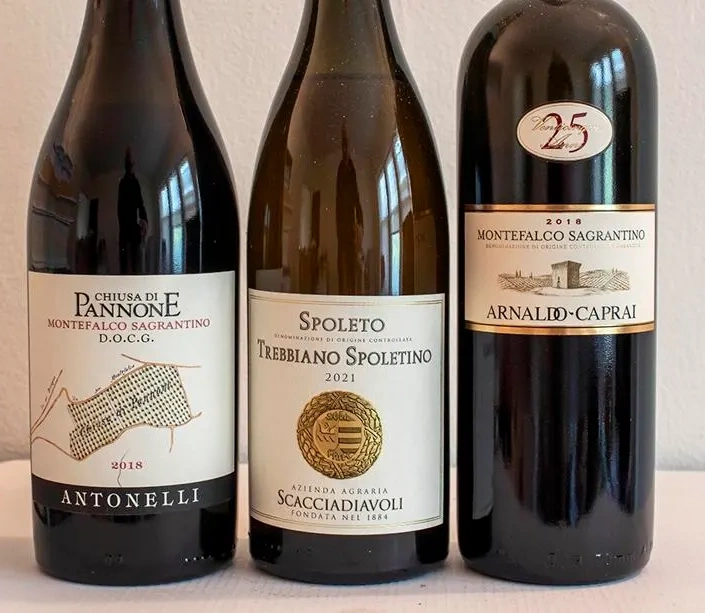
10 Amazing Things to See in Orvieto – Explore St. Patrick’s Well and Relax Nearby!

Wondering what to see in Orvieto? Explore St. Patrick’s Well, medieval treasures, and even enjoy a private villa tennis court experience just an hour away! Full travel guide here.

Introduction to Orvieto: A Hilltop Gem in Umbria

Perched dramatically on a tufa cliff, Orvieto is one of Italy’s most breathtaking towns. Rich in history, art, and architecture, it offers visitors a perfect blend of medieval charm and timeless beauty. Wondering what to see in Orvieto? From ancient wells to Gothic cathedrals and hidden underground tunnels, every corner of this Umbrian gem will leave you enchanted.

The Marvel of Orvieto’s Underground World

Hidden beneath Orvieto’s surface lies a mesmerizing labyrinth of caves, wells, and secret passageways. Dug out over centuries, these underground structures reveal the town’s strategic ingenuity and enduring spirit. Exploring Orvieto underground is like stepping into another world, where every tunnel has a story.

St. Patrick’s Well (Pozzo di San Patrizio) – A Must-See Wonder

History Behind St. Patrick’s Well

Commissioned by Pope Clement VII in 1527, St. Patrick’s Well was constructed to guarantee access to water during sieges. Designed by Antonio da Sangallo the Younger, this masterpiece combines Renaissance aesthetics with practical military engineering.

Architectural Brilliance: A Double-Helix Masterpiece

The well features a double-helix staircase — two spirals winding independently so that mules could descend and ascend without colliding. Illuminated by 70 windows carved into the stone, the descent into the well is both a breathtaking and eerie experience.

Feature Measurement
Depth 53 meters (174 feet)
Diameter 13 meters (43 feet)
Steps 248
Staircases 2, separate (double helix)

Tips for Visiting St. Patrick’s Well

  • Timing: Early mornings or late afternoons are ideal for avoiding crowds.
  • Footwear: Wear sturdy shoes — the stone steps can be a bit slick.
  • Tickets: You can buy tickets directly on-site — no reservation needed. Prefer to plan ahead? You can also purchase online via this link: ? Buy Tickets Here.
  • Photography: Capture the dramatic light streaming through the windows for unforgettable shots.
  • Pro Tip: Toss a coin at the bottom for good luck!

Other Historical Sites You Shouldn’t Miss in Orvieto

Orvieto Cathedral (Duomo di Orvieto)

One of Italy’s greatest Gothic masterpieces, the Duomo di Orvieto stuns visitors with its intricate facade adorned with mosaics and sculptures. Inside, Luca Signorelli’s frescoes in the Chapel of San Brizio will leave you speechless.

Torre del Moro: The City’s Watchful Eye

For panoramic views of Orvieto and the surrounding countryside, climb Torre del Moro. At 47 meters tall, the tower offers one of the best viewpoints in Umbria.

Orvieto’s Etruscan Necropolis

Dating back to the 6th century BC, the Crocifisso del Tufo Necropolis reveals the town’s Etruscan roots. Explore these ancient tombs and imagine life thousands of years ago.

Orvieto’s Enchanting Streets and Piazzas

Lose yourself in the magic of Orvieto’s winding alleys, elegant piazzas, and artisan workshops. Every corner is a postcard, from Piazza della Repubblica to the tiny vicoli lined with colorful flowers.

Delicious Umbrian Cuisine to Try While Visiting

  • Wild Boar Ragù Pasta
  • Umbrichelli (hand-rolled thick pasta)
  • Porchetta (slow-roasted pork with herbs)
  • Orvieto Classico DOC Wine (world-famous white wine)

Pair a hearty meal with a local wine for the perfect end to your day!

Relax and Recharge: Tennis Court Experience in a Private Villa Setting Near Orvieto

Just a scenic one-hour drive from Orvieto, in the charming town of Spoleto, you can indulge in a unique private villa tennis court experience.

While accommodations aren’t provided, you can reserve access to the court and enjoy a luxurious game in the midst of Umbria’s stunning landscapes. It’s the perfect way to relax after exploring Orvieto’s historic treasures, blending sport and elegance into your Umbrian adventure.

? Discover more: What to See in Spoleto

Practical Travel Tips for Orvieto Visitors

  • Getting There: Trains run regularly from Rome and Florence.
  • Getting Around: Walking is the best way to enjoy the old town — everything is within a 20-minute stroll.
  • Language Tips: A few Italian phrases will make your experience even more enjoyable.
  • Local Events: Don’t miss the Umbria Jazz Winter festival or the medieval Corpus Christi celebrations.

Best Times of the Year to Explore Orvieto

The ideal months to visit are May–June and September–October, offering mild weather and fewer crowds. Spring and autumn bring out the very best in the landscape, with vineyards and olive groves at their most vibrant.

FAQs About Visiting Orvieto

Is St. Patrick’s Well accessible?

Not wheelchair accessible.

How much time to visit the well?

30–60 minutes recommended. We did it in 30 minutes up and down. We advise you to spend more time there.

Are guided tours available?

Yes, including underground tours of Orvieto.

Can I visit Orvieto and Spoleto in one day?

Yes, they are only about an hour apart, but to truly enjoy both, consider at least two days.

Where to try Orvieto wines?

Several local wineries and enotecas in the city center offer tasting sessions — don’t miss them!

Conclusion: Why Orvieto Should Top Your Italy Travel List

With its breathtaking scenery, fascinating underground world, and iconic landmarks like St. Patrick’s Well, Orvieto is a must-visit for anyone exploring Italy. Add the chance to relax in a luxurious villa tennis court setting nearby, and your Umbrian adventure becomes truly unforgettable. Pack your curiosity — Orvieto is calling!

[metaslider id=”3138″]

Stay Connected

For more updates, photos, and stories from Adagio Umbro, follow us on our social media channels:
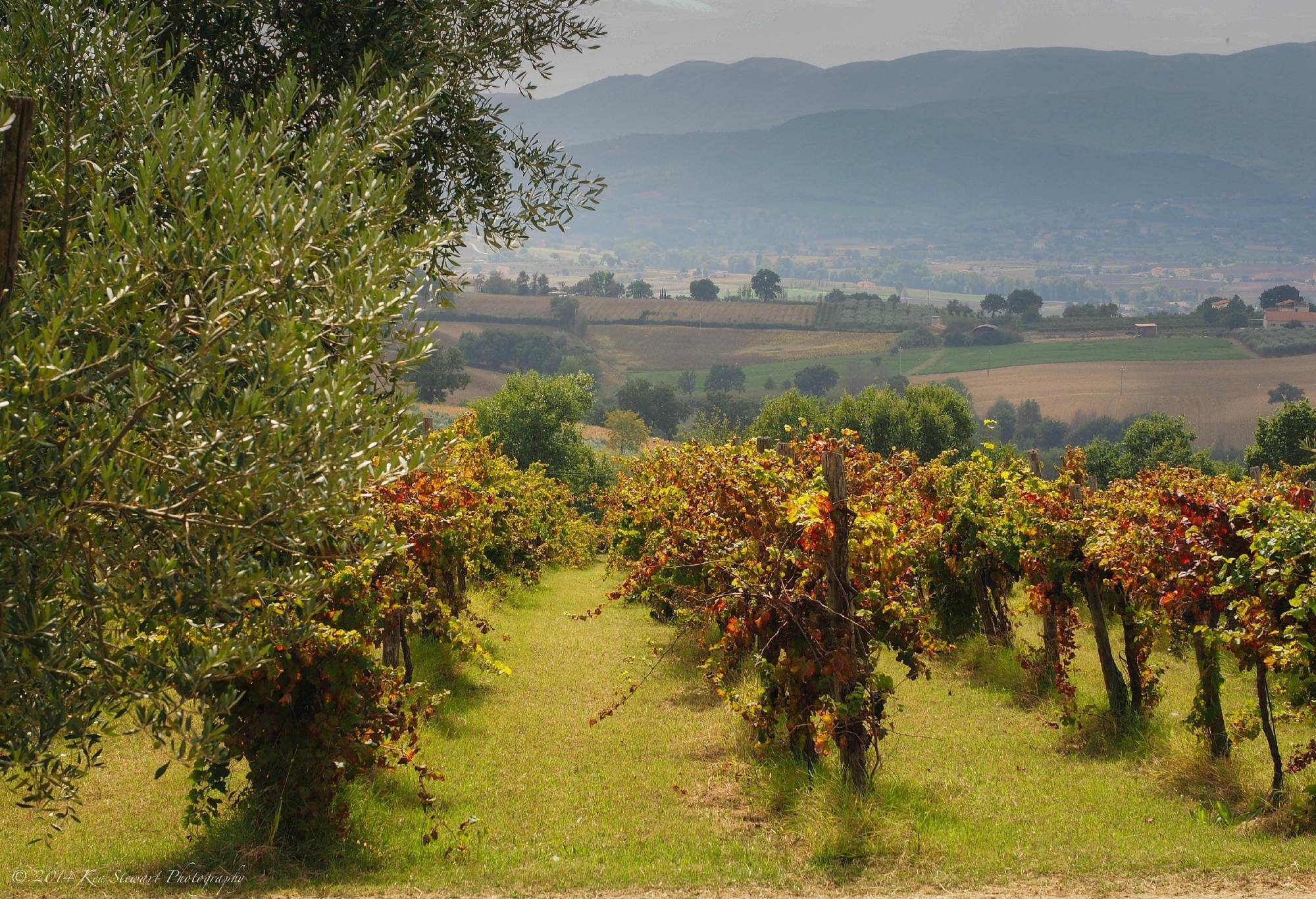
Discover the Beauty of Bevagna

Bevagna, a charming town located near Spoleto, is steeped in history and rich in cultural traditions.

This picturesque Italian town dates back to Roman times, when it was known as Mevania. Bevagna flourished during the Middle Ages, and its well-preserved medieval architecture offers a fascinating glimpse into its storied past.

What to See in Bevagna

One of the highlights of Bevagna is the Roman Mosaic Museum, which showcases exquisite mosaics that reflect the town’s ancient Roman roots. Visitors can also admire the impressive 12th-century Romanesque Church of San Michele Arcangelo, a stunning example of medieval architecture.

Local Events and Traditions

Bevagna is famous for its traditional events, such as the Mercato delle Gaite, a medieval festival held in June. During this event, locals dress in period costumes and recreate life as it was in the Middle Ages. Around Christmas, the town hosts the Cribs Exhibition, featuring elaborate Nativity scenes crafted by local artists.

A Unique Experience with Adagio Umbro

Immerse yourself in the history and charm of Bevagna during your stay at Adagio Umbro Tennis and Picnic, located a short drive from Spoleto. Discover the town’s historic sites, savor traditional Umbrian cuisine, and create unforgettable memories in this enchanting town.

Easy Access from Adagio Umbro

Bevagna is easily accessible by car from Adagio Umbro, making it a perfect destination for a day trip. Enjoy the convenience of exploring the surroundings of Spoleto, while experiencing the beauty and culture of Bevagna, one of the most captivating towns in Umbria.


Stay Connected

For more updates, photos, and stories from Adagio Umbro, follow us on our social media channels:

Rasiglia – a little Venice in Umbria

Rasiglia is a hidden gem in the heart of Umbria that is easily accessible by car from Spoleto. The scenic drive offers breathtaking views of the Umbrian countryside, with every corner providing a new and unique perspective of this beautiful region.

Upon arriving in Rasiglia, visitors are greeted with a sight that is reminiscent of Venice, as the town is crisscrossed by small canals and bridges. However, Rasiglia is more than just a Venetian lookalike – it is a town-museum under the open sky, offering a glimpse into the rich history and culture of Umbria.

Wandering through the cobblestone streets, visitors can admire the well-preserved medieval architecture and immerse themselves in the charming atmosphere of this historic town. From the picturesque waterfalls to the quaint boutiques and cafes, Rasiglia offers a truly memorable experience for those looking to explore the beauty of Umbria.

For a unique and unforgettable day trip from Spoleto, make sure to include Rasiglia on your itinerary. Whether you’re a history buff, a nature lover, or simply looking to relax and unwind in a beautiful setting, Rasiglia has something for everyone. So pack your bags, hit the road, and get ready to discover the hidden treasures of Umbria.


Stay Connected

For more updates, photos, and stories from Adagio Umbro, follow us on our social media channels: