Discover Foligno and Spello: Art, History, and Unexpected Wonders in the Heart of Umbria

Foligno and Spello are two lesser-known Umbrian towns that reward curious travelers with art, history, and a slower rhythm of life.

From the contemporary installation Calamita Cosmica in Foligno to the flower-lined streets of Spello, this area offers authentic experiences without crowds.

Umbria is often described as Italy without the noise. But to truly understand it, you need to step beyond the famous names and explore towns that Italians quietly love—and international visitors are just starting to discover. Foligno and Spello are exactly that kind of place. They sit close to each other, perfectly connected by road and train, and make an ideal cultural stop if you are staying in or around Spoleto. This article is designed for travelers who value meaningful experiences, not rushed checklists—and who want practical advice they can trust.

Why Foligno and Spello Work So Well Together

From a hosting perspective, travelers rarely visit only one Umbrian town. They move in short cultural loops, usually by car, staying 2–3 nights in one base location and exploring nearby towns during the day.

Foligno and Spello complement each other perfectly:

FolignoSpello
Lively, urban, culturalIntimate, medieval, romantic
Contemporary art & museumsRoman roots & flower traditions
Great aperitivo cultureSlow walks & panoramic views

Together, they offer contrast without distance – a key factor in traveler satisfaction.


Foligno: Contemporary Art, History, and a Living City

Housed in the former church of the Santissima Trinità in Annunziata, Calamita Cosmica is not something you expect to find in Umbria.

A monumental skeleton holding a golden beak lies across the floor. It’s unsettling. And memorable.

Why travelers talk about it

  • It breaks expectations of “medieval Umbria”
  • It creates emotional impact
  • It sparks conversation long after the visit

From a hospitality point of view, experiences like this increase perceived trip value. Guests feel they discovered something unexpected—and that builds trust in recommendations.

Foligno is often overlooked because it feels real. It is not staged. And that’s exactly why experienced travelers appreciate it.

What to See in Foligno (Beyond the Obvious)

Palazzo Trinci

One of Umbria’s most important civic palaces, Palazzo Trinci hosts fresco cycles that quietly rival those of larger cities. The rooms dedicated to humanist culture explain how medieval Umbrian cities governed themselves – valuable context before visiting Assisi or Spoleto.

Piazza della Repubblica

This is not a postcard square; it’s a working square. Locals meet here in the evening for aperitivo, families pass through, life happens. Travelers who stop here feel instantly less like tourists.

Calamita Cosmica: Why This Artwork Matters (and Surprises)

Walking through Foligno, many buildings look like ordinary churches or silent stone walls. Nothing announces what is inside. Only if you slow down and notice the banners hanging outside do you realise that some of the most unexpected experiences in Umbria are hidden behind doors that seem almost anonymous.

Calamita Cosmica installation by Gino De Dominicis inside a historic church in Foligno, Umbria

Hidden inside a former church in Foligno, Calamita Cosmica by Gino De Dominicis is one of the most unexpected art experiences in Umbria. From the outside, nothing prepares you for what you will see: a monumental skeleton stretched across the floor, holding a golden beak that points toward the sky. The contrast between the quiet exterior and the powerful interior installation is deliberate. This is not an artwork you stumble upon by chance – you have to know where to look. And that is exactly what makes the visit so memorable for travelers who enjoy discovering places beyond the obvious.

Eating in Foligno: Honest Food, No Performance

Foligno doesn’t chase trends. That’s good news.

  • Lunch: look for trattorie near the historic center offering primi piatti with seasonal ingredients.
  • Aperitivo: bars around Piazza della Repubblica offer relaxed, local energy.
  • Dinner: avoid menus translated into five languages – follow where locals go.

This is the kind of city where meals are calm, affordable, and consistent – something travelers often underestimate.

After visiting Calamita Cosmica, it’s easy to continue the experience nearby. Just a short walk or drive away, Winner is a convenient stop for an aperitivo in Foligno. It’s appreciated by both locals and travelers for its relaxed atmosphere and, importantly, easy access and large parking, which makes it a stress-free option if you’re exploring the area by car.

For those arriving by car, one of the most convenient options is Parking Parcheggio Frantoi. It’s a large, well-located parking area that allows easy access to Foligno’s historic center and the former church hosting Calamita Cosmica. From here, you can comfortably explore the area on foot without dealing with limited traffic zones or narrow streets.


Spello: Stone, Flowers, and Roman Roots

Spello is one of those places that doesn’t announce itself loudly. From the outside, it looks like a compact stone village leaning against Mount Subasio. Once inside, it unfolds step by step. Roman walls, medieval streets, and flower-filled balconies guide you through a town that rewards slow walking rather than rushed sightseeing.

What makes Spello special is not a single monument, but the continuity of history. Roman gates such as Porta Consolare still mark the entrance, while quiet alleys reveal views over the Umbrian valley with almost no effort. The town is famous for its flower culture, yet even outside festival periods, plants and small details soften the stone architecture and give Spello a lived-in, authentic feel.

Spello is ideal for travelers who enjoy calm atmospheres, short walks, and visual harmony. There is no pressure to “see everything.” Instead, the experience comes from wandering, stopping for coffee, noticing light on stone walls, and understanding why Umbria is often described as Italy’s most balanced region.

A Flower Festival That Transforms the Streets

Every year in late spring, Infiorate di Spello turns the historic center into an open-air artwork. During the night before the feast of Corpus Domini, local residents create large floral carpets directly on the stone streets using thousands of fresh flower petals.

What makes the Infiorate special is the collective effort. Families, neighbors, and volunteers work through the night, designing detailed images inspired by religious, artistic, and symbolic themes. By morning, Spello becomes a temporary gallery where flowers replace paint and the streets themselves become the canvas.

The event lasts only a few hours before the procession passes and the petals slowly scatter, which is exactly why many travelers find it so memorable: it’s a celebration of beauty meant to exist briefly, not permanently.

Narrow stone street with flower decorations in Spello historic center, Umbria

Infiorate di Spello – 2026 dates

In 2026, the Infiorate di Spello will take place during the night of 6–7 June, with the flower carpets visible early on Sunday morning, 7 June.

  • Night of preparation: Saturday → Sunday (6–7 June 2026)
  • Best time to visit: early morning on Sunday, 7 June
  • Location: historic center of Spello (entire old town involved)

This is when the floral carpets are at their peak, before the religious procession passes through and the petals begin to disperse.

Practical note (important for travelers)

This weekend is one of the busiest of the year in Spello. Visitors who want to enjoy the town calmly usually stay nearby and arrive early in the morning rather than during midday.

After walking through Spello’s historic center, a simple and reliable option for dinner is Pizzeria Il Grottino. Located just outside the busiest streets, it’s known for freshly made pizza and quick service, making it a convenient stop for travelers who want to eat well without a long wait after a day of exploring.

Foligno and Spello are best experienced with time, curiosity, and a quiet base nearby—allowing the journey to unfold naturally rather than rushing from one highlight to the next.


A Calm Base Between Foligno and Spello

When exploring Foligno and Spello, choosing the right base can shape the entire experience. Staying slightly outside historic centers often means less noise, easier parking, and more space to slow down, while still remaining within short driving distance of key Umbrian towns.

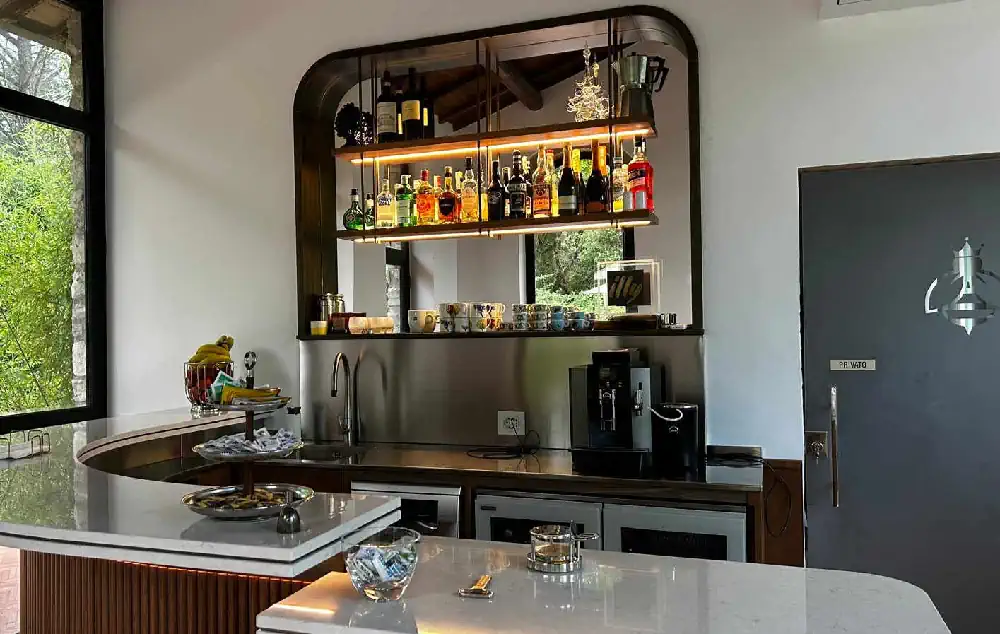
Adagio Umbro is located near Spoleto and is designed for travelers who value calm surroundings after a day of cultural visits. The property is surrounded by greenery and offers a relaxed atmosphere that works well for itineraries combining nearby towns rather than changing accommodation every night.

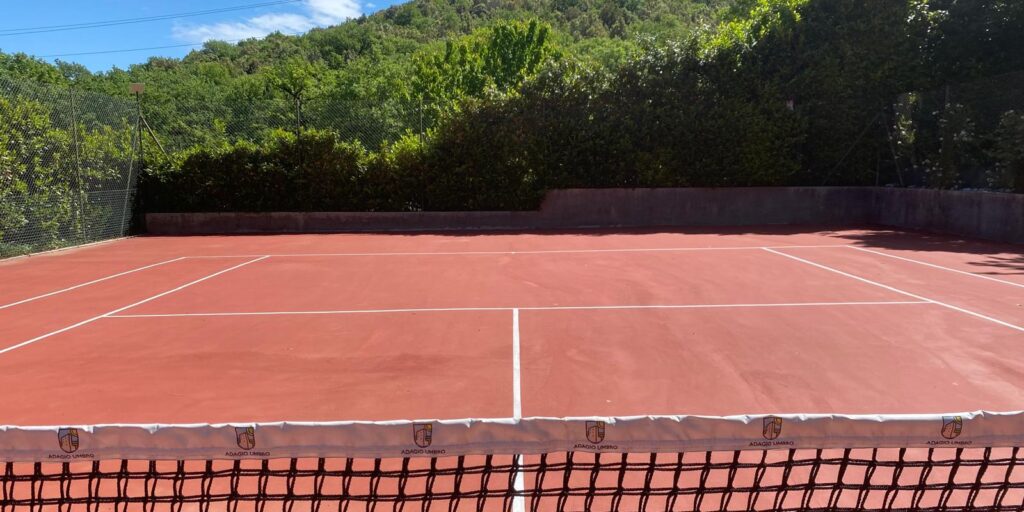
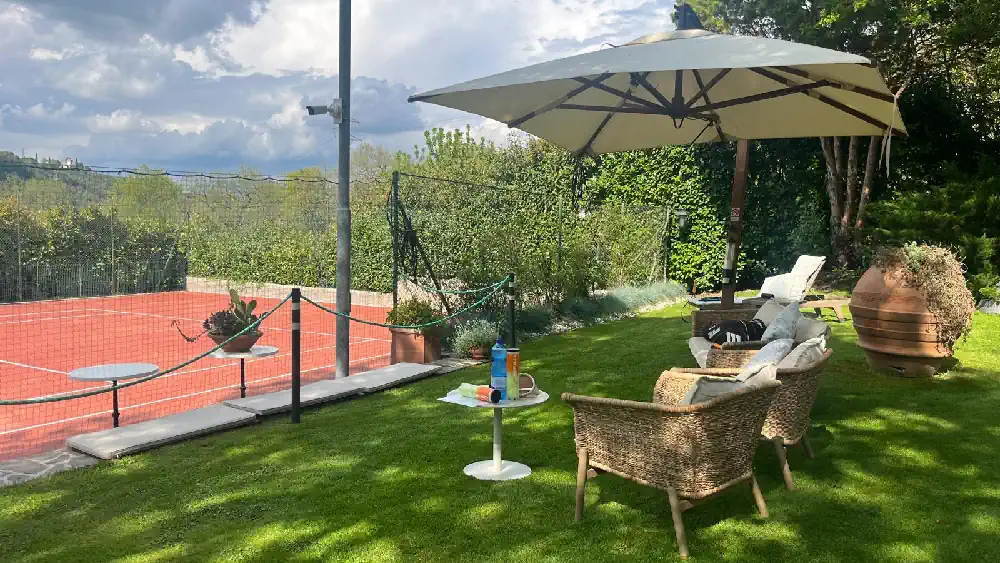
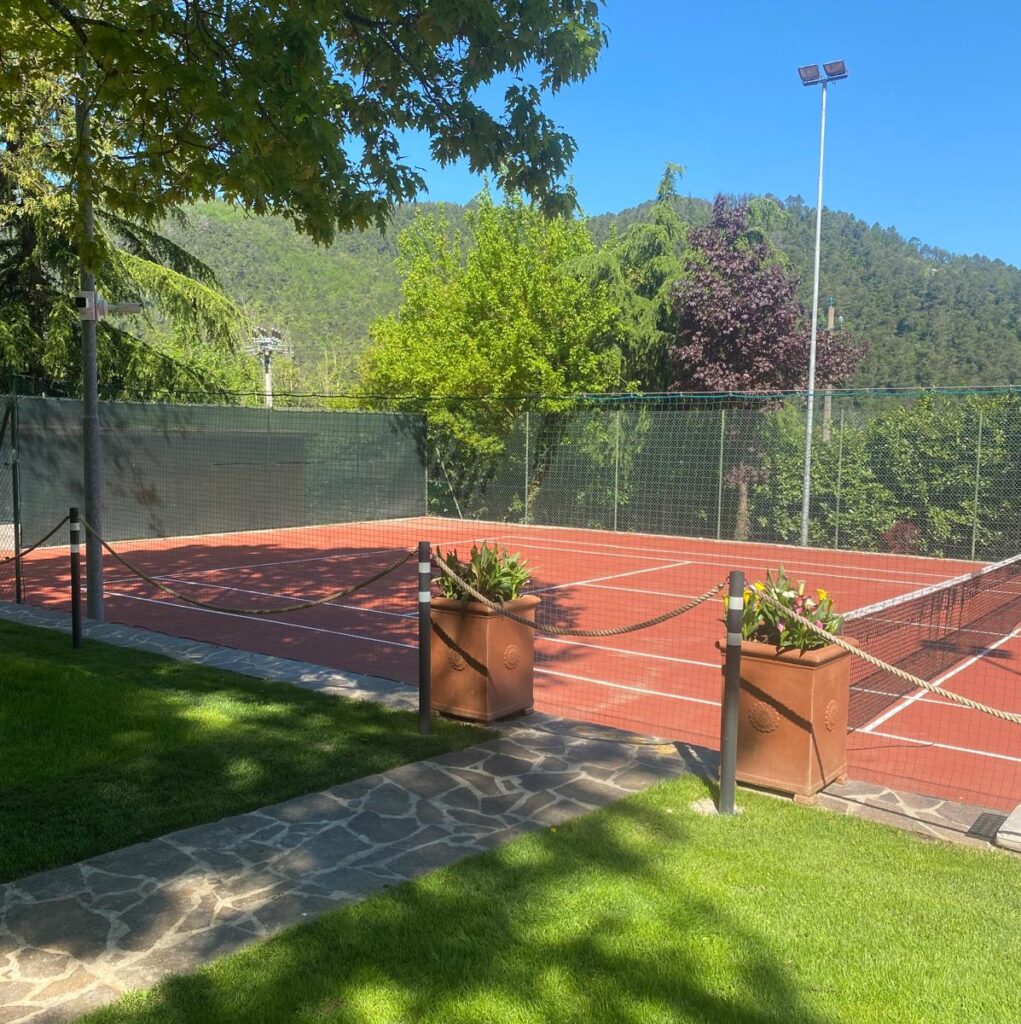
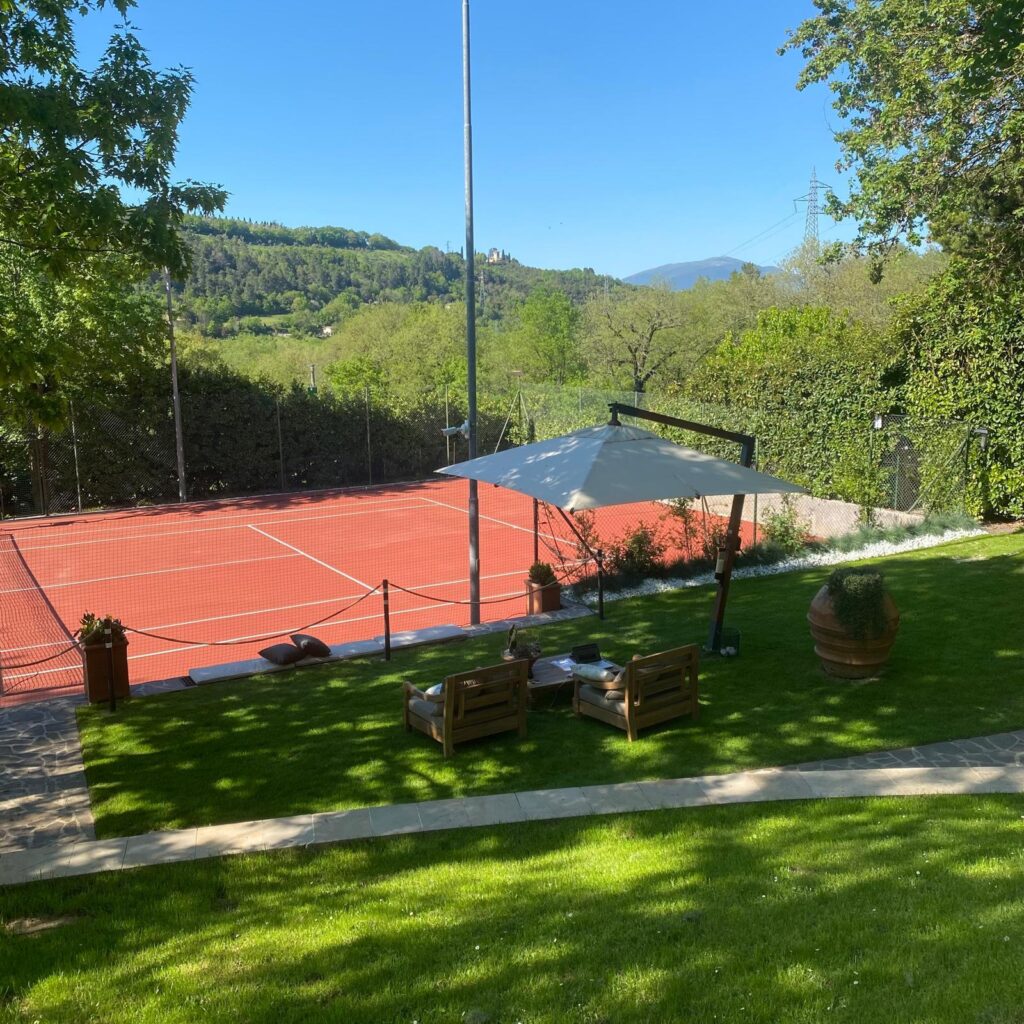
Guests who enjoy balancing sightseeing with gentle activity can also make use of the Tennis & Relax area, an option that fits naturally into a slow Umbrian stay—especially after walking through hill towns like Spello or spending time in Foligno’s historic center.

To learn more about the philosophy and setting, you can visit the About Adagio Umbro page

If you’re planning your stay and want a quiet base with easy access to Foligno, Spello, and Spoleto, you can check availability here: Book your stay at Adagio Umbro

For travelers building a flexible itinerary in Umbria, staying in one calm location and exploring the region day by day often allows for a more authentic and less rushed experience.


Frequently Asked Questions about Foligno and Spello

1. Is Foligno worth visiting compared to more famous Umbrian towns?

Yes. Foligno offers a more authentic, lived-in atmosphere compared to places like Assisi. It combines contemporary art, historic palaces, and everyday local life, making it especially appealing to travelers who prefer culture without crowds.

2. What is Calamita Cosmica and why is it famous?

Calamita Cosmica is a large contemporary artwork by Gino De Dominicis installed inside a former church in Foligno. Its unexpected setting and symbolic impact make it one of the most talked-about modern art installations in Umbria.

3. How much time do you need to visit Foligno?

Half a day is usually enough to explore Foligno’s historic center, visit Palazzo Trinci, see Calamita Cosmica, and enjoy an aperitivo. Many travelers combine it with Spello on the same day.

4. Is Spello easy to walk around?

Yes, but Spello has slopes and stone streets. It’s best explored slowly and on foot, with comfortable shoes. Distances are short, but the terrain is not completely flat.

5. What makes Spello different from other Umbrian hill towns?

Spello stands out for its Roman origins, flower traditions, and compact layout. Rather than focusing on one major monument, it offers a continuous sense of harmony between architecture, history, and daily life.

6. What are the Infiorate di Spello?

The Infiorate di Spello is an annual flower festival held around Corpus Domini, when residents create large floral carpets on the streets using fresh petals. It’s one of the most visually striking events in Umbria.

7. When is the best time to see the Infiorate di Spello?

The best moment is early in the morning on the Sunday of the festival, before the religious procession passes and the flower carpets begin to disperse.

8. Is it better to visit Foligno and Spello by car or train?

Both towns are connected by train, but traveling by car offers more flexibility—especially for parking, timing, and combining visits with nearby towns like Spoleto.

9. Where should you stay when visiting Foligno and Spello?

Many travelers prefer staying just outside historic centers, near Spoleto, to enjoy quieter evenings, easier parking, and the possibility of exploring multiple towns without changing accommodation.

10. Can you visit Foligno and Spello in one day?

Yes, especially if you start early and move at a relaxed pace. However, staying nearby allows you to experience both towns more calmly and avoid rushing through key sites.

You might also like:
Driving in Italy: Essential Tips Every Tourist Must Know Before Renting a Car Read more →

Stay Connected

For more updates, photos, and stories from Adagio Umbro, follow us on our social media channels:

What to See in Perugia: Underground Etruscan Secrets and Medieval Power

Perugia is a historic hilltop city in Umbria where ancient Etruscan engineering and medieval civic life still shape the urban landscape.

This guide focuses on two key landmarks: the Etruscan Well, built in the 3rd century BC and open to visitors for a small fee, and the Sala dei Notari, a monumental medieval hall with free access.

It is an ideal destination for travellers interested in history, architecture, and authentic Italian cities beyond the main tourist routes.


Perched on a hilltop in the heart of Umbria, Perugia is one of those Italian cities that quietly rewards curious travellers. It doesn’t shout like Rome or Florence. Instead, it invites you to look closer—under the streets, inside medieval halls, and behind centuries-old stone walls.

If you enjoy history that feels tangible, spaces that still echo with civic life, and destinations that are culturally rich yet walkable and human-sized, Perugia deserves a full day (or two) on your Italy itinerary.

This guide focuses on two extraordinary highlights that define the city’s identity across millennia: the Etruscan Well, carved more than 2,300 years ago, and the Sala dei Notari, a monumental medieval hall that still hosts public events today. Around them, you’ll discover how Perugia connects ancient engineering, medieval politics, and modern Italian life.

Perugia at a Glance: Why It’s Different

Perugia is not a museum city frozen in time. It is a living university town, home to the University of Perugia and the University for Foreigners, with a strong international presence. You’ll hear English, German, French, and Spanish spoken casually in cafés—yet the city remains deeply Italian in rhythm and daily life.

What makes Perugia special for international visitors:

  • A layered city: Etruscan, Roman, medieval, Renaissance, and modern all coexist vertically.
  • Compact historic center: Most major sights are within walking distance.
  • Authentic atmosphere: Less mass tourism than Tuscany’s hotspots.
  • Excellent food culture: Chocolate (Perugina), truffles, Umbrian wines, and simple local cuisine.

And then there’s what lies beneath your feet.


The Etruscan Well (Pozzo Etrusco): A Masterpiece Underground

Etruscan Well in Perugia seen from above, showing the ancient stone structure and deep vertical shaft
Interior view of the Etruscan Well in Perugia, an underground water system built in the 3rd century BC
Stone beams supporting the upper structure of the Etruscan Well seen from the bottom in Perugia
Massive stone beams forming the upper structure of the Etruscan Well, viewed from the bottom
Exterior view of the Etruscan Well in Perugia showing the stone opening used to draw water
Exterior view of the Etruscan Well in Perugia, where water was traditionally drawn from the ancient underground reservoir

Why This Site Is Exceptional

The Pozzo Etrusco, also known as the Etruscan Well, is one of the most impressive examples of ancient hydraulic engineering in Italy—and surprisingly, many visitors miss it.

Built around the 3rd century BC, when Perugia was a powerful Etruscan city, this monumental well ensured water supply during sieges. It is entirely underground, carved deep into the bedrock and lined with enormous travertine blocks, some weighing several tons.

This is not a reconstructed site. What you see is original.

Practical Information

  • Entrance fee: €5
  • Location: Historic center, near Piazza IV Novembre
  • Visit duration: 15-20 minutes
  • Accessibility: Narrow stairs; not suitable for visitors with mobility issues

What You’ll Experience

You descend through a stone staircase into a cool, echoing chamber. The temperature drops, the noise of the city disappears, and suddenly you are face to face with ancient engineering logic.

The scale is striking:

  • The well itself is over 37 meters deep
  • Stone blocks perfectly fitted without mortar
  • Still holding water after more than two millennia
Information panel explaining the history and structure of the Etruscan Well in Perugia
Information panel describing the history and construction of the Etruscan Well in Perugia
Tourist walking down the stone stairs inside the Etruscan Well in Perugia
visitor walking down the stone staircase inside the Etruscan Well in Perugia
Close view of the side of a stone beam inside the Etruscan Well in Perugia
Detail of a stone beam inside the Etruscan Well, showing the ancient construction technique

Subtle lighting reveals tool marks, stone textures, and the vertical shaft disappearing into darkness. Informational panels explain Etruscan techniques, but the emotional impact comes from standing inside something built before Rome dominated the peninsula.

Why It Matters for Visitors

For travellers from the USA, UK, and Northern Europe, the Etruscan Well offers something rare:

  • A non-Roman ancient site
  • An immersive, physical experience—not just ruins to look at
  • A reminder that advanced urban engineering existed long before modern states

It’s also an excellent stop in summer: naturally cool and uncrowded like Florence or Rome.

Guided walking tour including the Etruscan Well

For travellers who prefer to explore Perugia with a local guide, there is a weekly guided walking tour every Sunday that offers an excellent overview of the historic center. The tour lasts approximately 2 hours, starts at 3:30 pm, and costs €15 per person, with entrance to the Etruscan Well included in the price. It’s a practical option for visitors who want historical context without committing to a full-day tour, and it works well even for short stays in Umbria. You can find updated schedules, meeting points, and booking details on the official website of Gran Tour Perugia.


Sala dei Notari: Medieval Power in Painted Stone

What Is the Sala dei Notari in Palazzo Dei Priori?

Palazzo dei Priori is one of Perugia’s most important historic buildings, rising between 1293 and the mid-1400s in the heart of Piazza IV Novembre. It was originally built as the seat of the city’s government — where the Priori, elected magistrates representing local guilds, administered justice and civic life during the medieval commune. Today it still houses part of the Municipality of Perugia and the Galleria Nazionale dell’Umbria, and contains spectacular halls such as the Sala dei Notari, frescoed chapels, and historic chambers of the Collegio del Cambio and Collegio della Mercanzia. Architecturally it’s one of the finest examples of communal Gothic in Italy, with a richly decorated façade overlooking the main square.

Tourist taking a photo from the stairs toward the entrance of the Sala dei Notari in Perugia
A visitor taking a photograph from the staircase toward the entrance of the Sala dei Notari in Palazzo dei Priori
Interior stained glass window inside the Sala dei Notari in Perugia
Interior view of a stained glass window inside the Sala dei Notari in Palazzo dei Priori, Perugia
Interior view of the Sala dei Notari in Perugia showing the large medieval hall and frescoed walls
Interior view of the Sala dei Notari, a medieval civic hall inside Palazzo dei Priori in Perugia

Sala dei Notari located inside the Palazzo dei Priori, overlooking the main square, and is one of the finest examples of civic medieval architecture in Umbria.

Built in the late 13th century, it was originally the meeting hall of the notaries’ guild – an elite professional class responsible for contracts, laws, and public administration.

Today, the hall is still used for:

  • Cultural events
  • Conferences
  • Exhibitions
  • Official civic ceremonies

Entrance Information

  • Entrance fee: Free
  • Location: Palazzo dei Priori, Piazza IV Novembre
  • Time needed: 15–25 minutes

What You’ll See Inside

The moment you enter, you notice the scale: a vast rectangular hall with a high wooden ceiling supported by massive beams.

The walls are covered with fresco cycles depicting:

  • Biblical scenes
  • Allegorical figures
  • Moral lessons and virtues
  • Symbols of justice and civic responsibility
Close view of medieval frescoes painted on stone walls inside the Sala dei Notari in Perugia
Detail of medieval frescoes painted on the stone walls of the Sala dei Notari in Perugia

These paintings were not decorative. They were visual reminders of ethical duty for those governing the city.

Why It’s Worth Your Time

Unlike many medieval halls closed to the public, Sala dei Notari is:

  • Free to enter
  • Centrally located
  • Quiet, even during peak hours

For travellers interested in European history, this space explains how Italian city-states functioned long before modern democracies. Power here was legal, contractual, written—and displayed on walls for everyone to see.


Piazza IV Novembre and the Heart of Perugia

Step outside Sala dei Notari and you are immediately in Piazza IV Novembre, the city’s symbolic center.

Key elements include:

  • Fontana Maggiore (13th century)
  • Perugia Cathedral (San Lorenzo)
  • Views over the Umbrian valley
Fontana Maggiore in Piazza IV Novembre in the historic center of Perugia
Fontana Maggiore in Piazza IV Novembre, one of the main landmarks of Perugia’s historic center

This square is ideal for observing daily life: students chatting, locals passing through, small events unfolding naturally.

From here, Corso Vannucci—the main pedestrian street—leads you through shops, cafés, and historic buildings toward the Rocca Paolina.


A Walk Through Rocca Paolina: History Under Your Feet

Though not the main focus of this article, no visit to Perugia is complete without walking through Rocca Paolina, a 16th-century fortress built by Pope Paul III.

Today, escalators and corridors pass through:

  • Buried medieval streets
  • Former houses
  • Vaulted stone passageways

It’s another example of Perugia’s vertical history—layers of power literally built on top of each other.


How to Plan Your Visit to Perugia

Best Time to Visit

  • Spring (April–June): Ideal weather, fewer crowds
  • Autumn (September–October): Cultural events, food festivals
  • Summer: Lively evenings, but explore underground sites midday

How Much Time You Need

  • Half day: Main highlights
  • Full day: Etruscan Well, Sala dei Notari, Rocca Paolina, relaxed meals
  • Two days: Add museums, countryside, and food experiences

Getting There

Perugia is well connected by train and car. If you’re exploring Umbria by car, it pairs well with Assisi, Spello, and the countryside around Spoleto.


Where This Fits into an Umbria Itinerary

Perugia works perfectly as:

  • A cultural stop between Rome and Florence
  • A base for exploring central Umbria
  • A contrast to more tourist-heavy Tuscan cities

If you’re already exploring Umbria, you may enjoy browsing travel inspiration and slow itineraries on our blog ? See & Do.

And if you’re interested in quieter experiences surrounded by nature, sport, and countryside rhythms, you can learn more about who we are here ? About us.

Driving in Perugia: where to park and how to reach the historic center easily

Travelling through Umbria by car is one of the most flexible ways to explore the region, but parking in historic Italian cities requires planning. In Perugia, we recommend Parcheggio Piazza Europa (Piazza Europa 7), a large underground paid parking strategically located near the city center. It allows easy access to Perugia’s historic area on foot and helps visitors avoid ZTL restricted traffic zones, narrow medieval streets, and steep uphill roads. The parking also provides free public toilets and changing rooms for those who park there—an uncommon but very practical service for travellers arriving after a long drive or continuing their journey through Umbria. If this is your first time driving in Italy, we recommend reading our complete guide on driving in Italy, which explains road rules, ZTL areas, parking signs, and what international visitors should know before entering historic city centers.

?Frequently Asked Questions about visiting Perugia

Is Perugia worth visiting?

Yes. Perugia is one of Umbria’s most historically layered cities, combining Etruscan, medieval, and modern life in a compact historic center. It’s especially appealing to travellers interested in history, architecture, and authentic Italian cities beyond mass tourism.

How much time do you need to visit Perugia?

You can see Perugia’s main highlights in half a day, but one full day allows time for the Etruscan Well, Sala dei Notari, Rocca Paolina, and a relaxed walk through the historic center. Two days are ideal if you want to add museums and nearby countryside.

What are the main things to see in Perugia?

Key sights include the Etruscan Well (Pozzo Etrusco), Sala dei Notari in Palazzo dei Priori, Piazza IV Novembre, Fontana Maggiore, Rocca Paolina, and Corso Vannucci.

What is the Etruscan Well in Perugia?

The Etruscan Well is an underground water reservoir built in the 3rd century BC, showcasing advanced Etruscan hydraulic engineering. It is one of the most important ancient structures in Perugia and still contains water today.

How much does it cost to visit the Etruscan Well?

The entrance fee to the Etruscan Well is €5

Is the Etruscan Well suitable for everyone?

No. Access is via narrow stairs, so it is not suitable for visitors with mobility limitations or severe claustrophobia.

Is there a guided tour that includes the Etruscan Well?

Yes. Every Sunday there is a 2-hour guided walking tour starting at 3:30 pm, costing €15, with entrance to the Etruscan Well included.

What is the Sala dei Notari?

The Sala dei Notari is a large medieval civic hall located inside Palazzo dei Priori. Built in the late 13th century, it was used by the notaries’ guild and is decorated with frescoes illustrating moral, religious, and civic themes.

Is the Sala dei Notari free to visit?

Yes. Entrance to the Sala dei Notari is free.

Where is the historic center of Perugia located?

The historic center is centered around Piazza IV Novembre, with most major attractions reachable on foot within a short walking distance.

Is Perugia easy to visit on foot?

Yes. Perugia’s historic center is compact and pedestrian-friendly, though it includes hills and stairs, so comfortable walking shoes are recommended.

Is it easy to visit Perugia by car?

Yes, but driving into the historic center is restricted by ZTL (limited traffic zones). Parking outside the ZTL and walking in is recommended.

Where is the best place to park in Perugia?

A convenient option is Parcheggio Piazza Europa (Piazza Europa 7), a large underground paid parking area that provides easy access to the historic center and includes free toilets and changing rooms for users.

What is the best time of year to visit Perugia?

Spring and autumn offer the best balance of weather and crowds. Summer is lively, but visiting underground sites like the Etruscan Well is best done during the hottest hours.

Is Perugia a good base for exploring Umbria?

Yes. Perugia works well as a base for visiting Assisi, Spello, Spoleto, and the surrounding Umbrian countryside.


Stay Connected

For more updates, photos, and stories from Adagio Umbro, follow us on our social media channels:

What Nobody Tells You About Italian B&Bs: A Practical Guide for First-Time Travellers

Italian B&Bs are very different from hotels and often very different from what travellers expect.

This guide explains how Italian bed and breakfasts really work, from breakfast and privacy to check-in rules and parking, so you can choose the right place and avoid common mistakes.

Italian bed and breakfasts are often described as charming, authentic, and more “real” than hotels. Travel platforms show sunlit terraces, rustic furniture, homemade cakes, and smiling hosts.

Sometimes that image is accurate.
Very often, it’s incomplete.

If you are planning your first stay in an Italian B&B, there are important details that are rarely explained clearly. Not by booking platforms, not by social media, and not even by many travel blogs, which tend to romanticise the experience instead of explaining how it actually works.

The goal is to explain how Italian B&Bs really work, so expectations match reality from the start.

What “B&B” Really Means in Italy (And Why It Matters)

In many countries, a B&B follows an informal but recognisable standard: daily cleaning, flexible check-in, and a host who works in hospitality full time.

In Italy, “B&B” is first of all a legal category, defined by regional laws. Those laws allow huge differences in how a B&B operates.

Two Italian B&Bs with the same label may be completely different:

  • one may be run like a small boutique hotel
  • another may simply be a private home with two guest rooms

Legally, many Italian B&Bs can:

  • operate with limited reception hours
  • provide very simple breakfast
  • clean rooms less frequently than hotels
  • be managed by someone who has another full-time job

This is not a problem, but it means one thing:
the word “B&B” alone does not tell you what kind of experience you will get.


Breakfast Expectations vs Italian Reality

For many international travellers, breakfast is the first shock.

In a large number of Italian B&Bs, breakfast means:

  • espresso or moka coffee
  • packaged croissants or biscuits
  • bread, butter, jam

That’s all.

No eggs.
No savoury food.
No hot buffet.

This reflects Italian breakfast culture, which is light, quick, and sweet. Italians generally do not eat heavy breakfasts at home, and many hosts do not cook in the morning.

Some B&Bs do offer richer breakfasts with fresh products, but this is not automatic and should never be assumed.

If breakfast is important to you:

  • check guest photos, not just descriptions
  • read reviews that mention food specifically
  • look for clear wording, not vague promises

Breakfast quality varies widely, even within the same town.


Privacy in Italian B&Bs: What You Should Know

Many Italian B&Bs are located inside the owner’s primary residence.

That can feel warm and authentic, or uncomfortable and intrusive, depending on what you expect.

Possible situations include:

  • sharing the same entrance
  • seeing the host several times per day
  • hearing family life, phone calls, or TV
  • hosts freely using common areas

Some travellers love this and feel “at home”.
Others feel they are constantly being observed.

Neither reaction is wrong. The problem is expectation mismatch.

If privacy is important to you:

  • look for “independent entrance” or “separate guest area”
  • avoid listings that are vague about shared spaces
  • read negative reviews carefully; privacy complaints are often indirect

A simple rule: if a listing does not clearly explain shared spaces, assume they exist.


Check-In Rules: Why Flexibility Is Not Guaranteed

Hotels operate with reception desks and staff.
Most Italian B&Bs do not.

Typical check-in rules include:

  • fixed time windows (for example 16:00–19:00)
  • late arrival only by prior agreement
  • extra fees for late check-in

This is not rudeness. It is logistics. Many hosts:

  • live off-site
  • work another job
  • manage the B&B alone

If you arrive late without warning, you may:

  • have to wait
  • create serious inconvenience
  • in extreme cases, miss check-in

Always:

  • communicate your arrival time clearly
  • inform the host if your train or flight is delayed
  • ask what happens if plans change

In Italy, flexibility is often personal, not institutional.


Parking in Italy: Why “Free Parking” Can Be Misleading

Parking is one of the most misunderstood details in Italian accommodation.

When a B&B says “free parking”, it may mean:

  • free street parking nearby
  • a public area with no guarantee
  • a shared space

It rarely means:

  • reserved
  • gated
  • private inside the property

In historic towns, parking can be complicated by:

  • limited traffic zones (ZTL)
  • narrow streets
  • local permits

If you are travelling by car, always ask:

  • where exactly is parking
  • is it inside the property or on the street
  • can you reach it without risking fines

Parking details matter more than decoration — especially in Italy, where many historic towns enforce ZTL (Limited Traffic Zones). Entering a ZTL without authorisation can result in automatic fines sent months later, even if the road looks open or unmarked to foreign drivers.

If you are renting a car, it is essential to understand how ZTLs work, how they are enforced, and why “free parking” near a historic centre can still lead to penalties. We explain this clearly in our guide on driving and parking rules in Italy, including how to recognise ZTL signs, where tourists usually make mistakes, and how to avoid fines altogether.
? Read more: Driving and ZTL zones in Italy: what tourists must know.


Cleaning, Towels, and Housekeeping: What Is Normal in Italian B&Bs

One important difference between Italian accommodation types is how cleaning and linen service are regulated.

However, this rule does not automatically apply to other accommodation types, such as room rentals (affittacamere) or holiday apartments (case vacanza), where cleaning during the stay is often limited, scheduled less frequently, or not included at all unless explicitly stated.

In Italy, daily cleaning of guest rooms is mandatory in B&Bs. This is a legal requirement and one of the key elements that distinguishes a B&B from other types of accommodation. Guests can therefore expect rooms to be cleaned regularly during their stay, even if the structure is small or family-run.

When it comes to linen, most Italian B&Bs follow a standard practice:

  • bed linen and towels are usually changed every three days
  • additional changes may be available on request, often for an extra fee

This is normal and should not be confused with hotel-style service.

Understanding these differences helps travellers avoid misunderstandings and choose the accommodation type that best suits their expectations. We explain the practical differences between B&Bs, room rentals, holiday apartments, and hotels in more detail in our guide to Types of tourist accommodation in Italy.
? Read more: Types of accommodation in Italy: B&B, casa vacanza, affittacamere explained

It is also important to note that room service as understood in hotels is not common in B&Bs. B&Bs are designed to offer accommodation and breakfast, not continuous in-room services such as daily towel replacement on demand or evening turndown service.


Language and Communication: Don’t Assume Fluent English

Many Italian B&B listings look fluent in English because booking platforms translate them automatically.

In reality:

  • some hosts speak excellent English
  • others rely mainly on translation tools
  • phone communication may be difficult
  • instructions may be given only in Italian

This is normal and not dishonest, but it can create stress if you are unprepared — especially when discussing arrival times, parking, or local rules.

A simple and effective test is to send a message before booking and see how clear and responsive the reply is. Good communication before arrival usually means fewer problems later.

A Note About Umbria and Language

In regions like Umbria, many small, non-professional or family-run B&Bs operate primarily for the domestic market. As a result, it is quite common for hosts to speak only Italian or have limited confidence in other languages. This does not reflect a lack of hospitality, but rather the local, informal nature of many accommodations in the region.

At Adagio Umbro, we communicate in English and make a point of providing clear, practical information before and during your stay. This includes guidance on arrival, parking, local rules, and how to navigate the area comfortably — particularly helpful for travellers visiting Italy for the first time.


Countryside B&Bs vs City B&Bs: Pros and Cons

“Countryside” in Italy can mean very different things.

City B&Bs

  • closer to attractions
  • easier without a car
  • smaller rooms
  • parking difficulties
  • more noise

Countryside B&Bs

One of the main advantages of staying in a countryside B&B in Italy is access to outdoor space, something that is often limited or completely unavailable in historic city centres.

Many countryside B&Bs are located in former farmhouses, villas, or rural properties and may offer:

  • gardens or green parks
  • outdoor seating areas
  • barbecue or picnic spaces
  • swimming pools (seasonal)
  • sport facilities such as tennis courts or walking paths

These features are not guaranteed and vary widely from one property to another, but they are far more common in rural settings than in urban B&Bs. For travellers who value quiet surroundings, fresh air, and time spent outdoors, countryside accommodation often provides a more relaxed and flexible experience, especially for longer stays.

It is important to note that these facilities are usually part of the property itself, not shared public amenities, and their availability, rules of use, and seasonality should always be checked in advance.

Countryside Hospitality with Clear Structure

A well-organised countryside B&B combines outdoor freedom with clear hospitality rules. This balance is particularly important for international travellers who may not be familiar with informal Italian accommodation models.

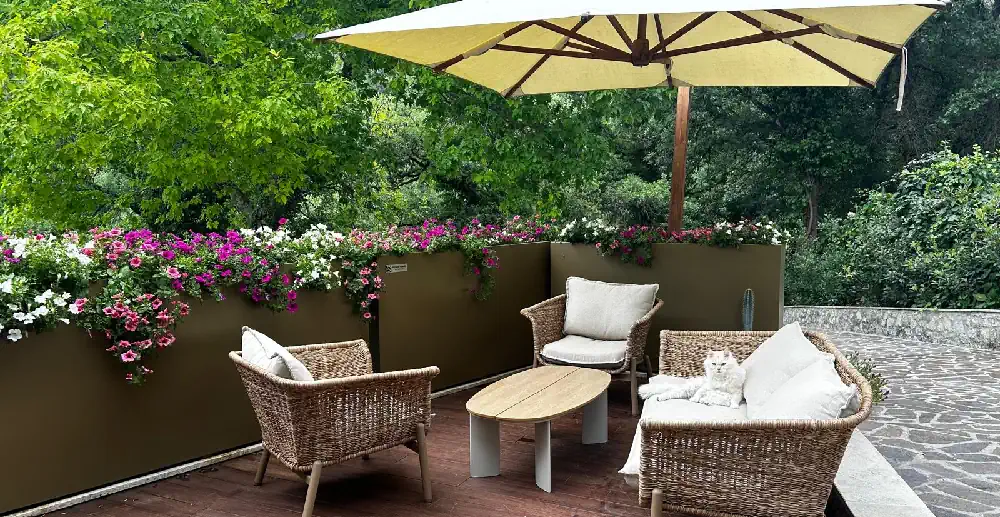
At Adagio Umbro, the countryside setting is part of the experience: guests have access to green outdoor areas, quiet spaces to relax, and on-site facilities designed for slow travel and well-being, including a swimming pool, a private tennis court, and dedicated outdoor areas.

At the same time, guests receive clear information in English about how the property works, what services are included, and how to make the most of their stay in the surrounding area. This combination of space, nature, and structured communication is often what international travelers look for when choosing a countryside B&B in central Italy.


A Good Italian B&B Is About Fit, Not Ratings

Italian countryside B&B with pool near Spoleto, Umbria

There is no universal definition of a “perfect” Italian B&B. Unlike hotels, B&Bs are not designed around star ratings or standardised services, but around specific travel needs and personal comfort.

A good B&B is the one that fits:

  • your expectations of privacy
  • your pace of travel
  • your need for quiet or social interaction
  • your comfort level with shared spaces

This is also why women-only accommodation has become increasingly relevant for certain travellers. Some women prefer spaces designed exclusively for women, especially when travelling alone or with friends. These accommodations often prioritise privacy, safety, calm atmospheres, and a more respectful use of shared areas — elements that cannot be measured by ratings alone.

Smaller B&Bs with a limited number of rooms also tend to offer a more personalised experience. Fewer rooms usually mean:

  • more attention to individual needs
  • quieter common areas
  • clearer rules and expectations
  • a less crowded, more relaxed environment

At Adagio Umbro, the accommodation is intentionally limited to three guest rooms, allowing for a calm, women-focused environment where comfort and clarity take priority over volume. This type of setup is particularly appreciated by travellers looking for a slower, more mindful stay rather than a hotel-style experience.

Ultimately, choosing the right Italian B&B is not about chasing ratings, but about understanding who the place is designed for — and whether that matches the way you want to travel.


Practical Checklist Before Booking an Italian B&B

Before you click “reserve”, take a moment to check a few essential details:

  • privacy and shared spaces
  • breakfast type
  • check-in window
  • parking details
  • communication clarity

In addition to this, it is often useful to check whether the B&B has its own official website. In Italy, more professionally managed B&Bs usually maintain a website where services, rules, photos, and location details are explained more clearly than on booking platforms alone. A website also allows you to verify consistency, understand the hosting style, and, in many cases, book directly.

Direct booking can offer advantages such as clearer communication, more flexible arrangements, and more transparent information about what is included in the stay. It also reduces misunderstandings that sometimes arise from automatically translated listings.

At Adagio Umbro, guests can consult the official website to find detailed explanations about the property, facilities, house rules, and the surrounding area, and to book directly with clear, upfront information in English. This approach helps travellers make informed decisions and arrive with realistic expectations.

Reading carefully and verifying information in advance saves stress later — and often leads to a much better stay.


Final Advice for First-Time Travellers to Italy

Italian B&Bs are not hotels, and they are not meant to be. They reflect local habits, rhythms, and limitations.

When expectations match reality, the experience is often excellent.
When they don’t, disappointment follows — unfairly, on both sides.

Understanding how Italian B&Bs actually work is the difference between frustration and a great stay.

For this reason, choosing a B&B is less about finding the “best-rated” place and more about finding one that clearly explains who it is for, how it works, and what it offers. Transparent communication, well-defined services, and realistic descriptions are often stronger indicators of a good experience than photos or star scores.

Travellers who take the time to understand accommodation types, regional habits, and hosting styles tend to enjoy Italy more — not because everything is perfect, but because nothing comes as a surprise. In the end, the most successful stays are not those without limitations, but those where expectations and reality are aligned from the start.

A Note for Travellers Exploring Central Italy

If you value quiet surroundings, clear rules, and a slower pace, countryside B&Bs near historic towns such as Spoleto often offer a more balanced experience than dense city centres, especially for longer stays.

Staying just outside historic towns allows travellers to enjoy more space, easier access by car, and a calmer daily rhythm, while still being close enough to explore cultural sites, restaurants, and events. This type of accommodation is particularly well suited to slow travel, extended weekends, and travellers who prefer to plan their days without the pressure of crowds, traffic restrictions, or constant noise.

In central Italy, countryside B&Bs are often chosen not for luxury, but for comfort, clarity, and quality of rest — elements that make a noticeable difference over several nights and contribute to a more authentic and sustainable travel experience.

?FAQs – Italian B&Bs: What Travellers Often Ask

What is the main difference between an Italian B&B and a hotel?

An Italian B&B is usually smaller, less standardised, and often part of a private home. Unlike hotels, B&Bs may have limited reception hours, simpler breakfast, and more personalised but informal hospitality.

Is daily cleaning included in Italian B&Bs?

Yes. In Italy, daily cleaning of guest rooms is legally required in B&Bs. This rule does not always apply to holiday apartments or room rentals, where cleaning during the stay may be limited or excluded.

What kind of breakfast should I expect in an Italian B&B?

Most Italian B&Bs serve a light, sweet breakfast such as coffee, croissants, biscuits, bread, butter, and jam. Hot or savoury options are not standard unless clearly stated.

Are Italian B&Bs private or shared with the host?

Many Italian B&Bs are located inside the owner’s primary residence. Guests may share entrances or common areas unless the listing explicitly mentions an independent entrance or separate guest space.

Do Italian B&Bs allow late check-in?

Late check-in is not guaranteed. Most Italian B&Bs have fixed check-in windows and require prior agreement for late arrivals, sometimes with an additional fee.

What does “free parking” usually mean in Italy?

“Free parking” often means street parking or a nearby public area, not a reserved private space. In historic towns, parking can be complicated by ZTL (Limited Traffic Zones) and local restrictions.

Do hosts in Italian B&Bs usually speak English?

English proficiency varies widely. Some hosts speak fluent English, while others rely on translation tools. It is recommended to contact the host before booking to assess communication clarity.

Are countryside B&Bs better than city B&Bs in Italy?

Countryside B&Bs often offer more space, outdoor areas, and quieter surroundings, while city B&Bs are closer to attractions and easier without a car. The best choice depends on travel style and length of stay.

What is women-only accommodation, and who is it for?

Women-only accommodation is designed exclusively for female guests. It is often chosen by solo women travellers or groups of women seeking a calm, respectful, and more private environment.

Is it better to book an Italian B&B directly or through a platform?

Booking directly through a B&B’s official website often provides clearer information, better communication, and more transparent conditions than third-party platforms, especially for small, professionally managed B&Bs


Stay Connected

For more updates, photos, and stories from Adagio Umbro, follow us on our social media channels:

Tuscany vs Umbria: Why You Should Add Spoleto to Your Italy Itinerary

Tuscany needs no introduction. It is one of the most famous regions in the world, known for Florence, Siena, Chianti wine, and the classic postcard landscapes of rolling hills and cypress-lined roads.
But that fame has a cost: crowds, higher prices, difficult parking, long queues, and a level of tourism that often feels more international than Italian.

Umbria, Tuscany’s quieter neighbour, offers something different — a more authentic, balanced and slower version of central Italy, where landscapes are just as beautiful, medieval towns are just as impressive, and the atmosphere is genuinely peaceful.
And within Umbria, Spoleto stands out as one of the region’s cultural and historical capitals, without ever feeling overcrowded.

This guide compares Tuscany and Umbria across the things travellers care about most: landscapes, culture, food, prices, driving, and the overall travel experience.
By the end, you will understand why adding Spoleto to your itinerary makes your Italian trip richer, calmer, and more complete.

Landscapes: Tuscany’s Iconic Views vs Umbria’s Natural Balance

Tuscany gives you the cinematic images you see in movies: perfectly aligned cypress trees, sunlit vineyards, long golden hills. These landscapes are world-famous — and often photographed by crowds.

Umbria gives you a different charm. The region is greener, more mountainous and more varied. Instead of carefully manicured hills, Umbria offers deep forests, olive groves, natural springs and medieval villages that look almost untouched.

Why travellers prefer Umbria

  • More nature, fewer crowds
  • Better conditions for hiking and outdoor activities
  • Views that feel authentic, not staged
  • More wildlife and protected areas

Spoleto’s landscape is particularly striking: the Monteluco forest, the Clitunno springs nearby, mountain paths, medieval bridges, and panoramic viewpoints everywhere.
If Tuscany is the perfect postcard, Umbria is the perfect reality — beautiful, raw and not over-edited.


Culture & History: Renaissance Icons vs Ancient Layers

Tuscany is rich in Renaissance art: Michelangelo, Brunelleschi, Botticelli. You visit Florence or Pisa to see the masterpieces you studied in school, but you also face queues and timed entrances.

Umbria, on the other hand, feels more “narrative”: the history is layered — Roman, medieval, Lombard, Gothic, and Renaissance all together. The cultural identity is older and more diverse.

Why Spoleto stands out

Spoleto is one of Italy’s oldest cities, with:

  • A Roman amphitheatre
  • The medieval Duomo with frescoes by Filippo Lippi
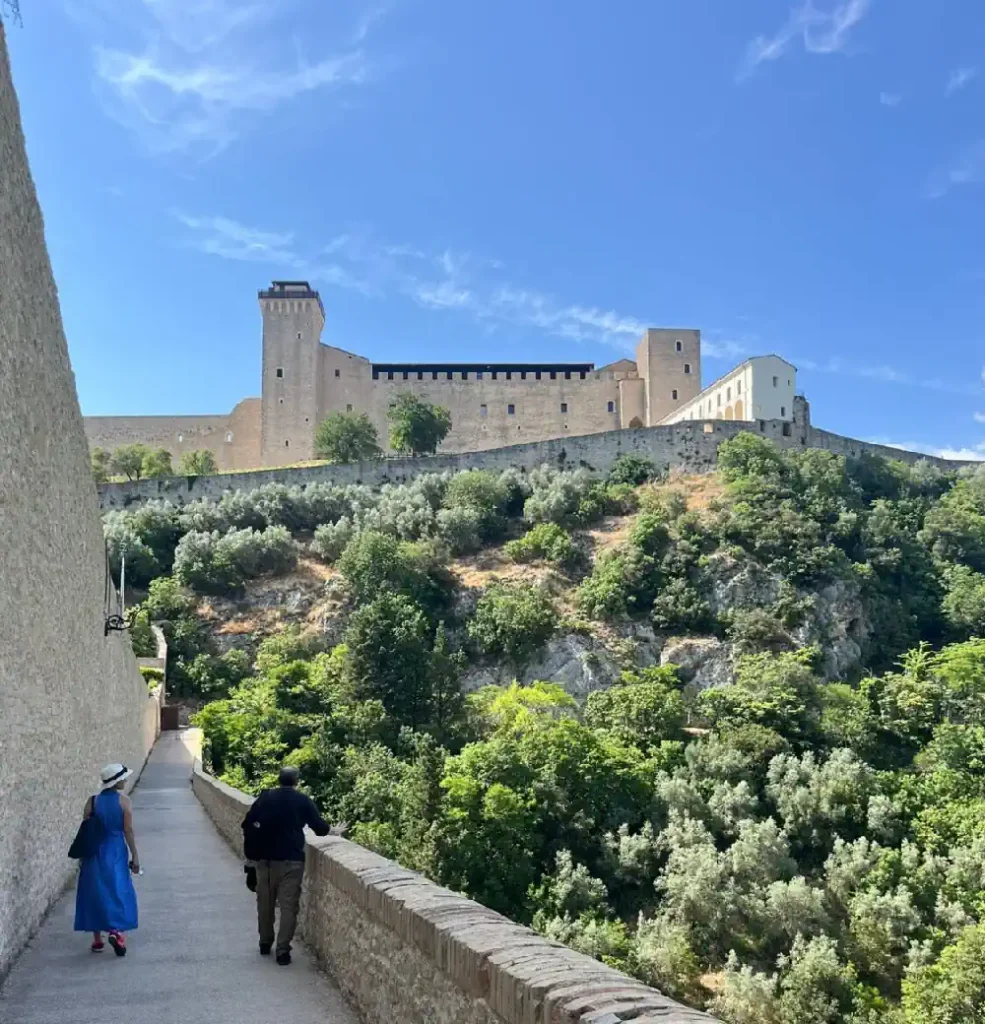
  • The Rocca Albornoziana fortress
  • One of Italy’s most iconic bridges: the Ponte delle Torri
  • A historic centre that feels alive and not commercial

The atmosphere is cultural but relaxed. You explore freely, without lines or pressure.


Food & Wine: Iconic Tuscan Labels vs Umbrian Authenticity

Tuscany is globally famous for wine — Chianti, Montalcino, Bolgheri — but because of its fame, wine tastings and restaurants can be expensive and heavily touristic.

Umbrian food is less known internationally, but often more surprising for travellers: truffle dishes, saffron, olive oil, handmade pasta, lentils, cacciagione (game meat), and traditional slow-cooked recipes.

Price comparison

  • Tuscany: Higher prices, especially in Chianti, Val d’Orcia, and Florence.
  • Umbria: Better quality-to-price ratio, more local ingredients, smaller family-run trattorias.

In Spoleto, you can eat extremely well without paying “tourist-level” prices. Umbrian wine regions like Montefalco (Sagrantino) are world-class yet still reasonably priced and less crowded.

Did you know?

  • Vineyard surface area in Umbria: 13,000 hectares, of which 30% is in mountainous areas and 70% on hillsides.
  • Wine production in Umbria: 900,000 hectolitres, consisting of 45% DOP wines, 44% IGP wines, 53% red and rosé wines, and 47% white wines.
  • Wine designations of origin in Umbria: 2 DOCG, 13 DOC, and 6 IGT.
Map of Umbria’s wine regions including Montefalco, Torgiano, Orvieto, Trasimeno and Colli Martani.
The main wine regions of Umbria, from Montefalco Sagrantino to the Orvieto hills.

Travel Experience: Tuscany’s Fame vs Umbria’s Peace

Tuscany gives you a glamorous, high-energy trip: world-famous museums, luxury hotels, and busy cities.

Umbria gives you serenity: slow travel, authentic connections, and towns that don’t feel like attractions.
Travellers who want a more human, personal Italian experience almost always prefer Umbria after visiting both.

Why Umbria is more relaxing

  • Fewer tourists year-round
  • Quiet medieval villages still lived in by locals
  • Nature everywhere
  • Easier to park, walk and explore
  • More value for money

Spoleto represents this balance perfectly — cultural yet calm.


Prices: Tuscany’s Premium Cost vs Umbria’s Smart Alternative

Tuscany is beautiful, but also expensive:

  • Hotels often priced for luxury or international demand
  • Parking costs multiply quickly
  • Entry fees increase year after year
  • Restaurants charge more because they can

Umbria remains refreshingly accessible:

  • Better hotel rates
  • More free parking
  • Lower restaurant prices
  • Less “tourist economics”

For travellers planning a longer Italy trip, Umbria allows you to enjoy more while spending less.

In recent years, Umbria has also begun to receive more attention from international travellers. According to official regional data, 2025 recorded the highest number of visitors ever registered in the region, with a +24% increase in foreign arrivals and over +32% in foreign overnight stays compared to the previous year. This trend confirms what many travellers have already discovered: Umbria offers the same beauty and historical depth as Tuscany, but in a more authentic and affordable way.

What makes this growth remarkable is that it’s not driven by mass tourism, but by a new type of traveller — people looking for quiet landscapes, genuine food, smaller cultural cities, and better value for money. As prices continue to rise sharply in the most famous Italian destinations, Umbria feels increasingly attractive: the region combines space, nature and history without the inflated costs.

So while Tuscany remains a classic choice, Umbria is becoming Italy’s “hidden gem” that is no longer so hidden. The rising numbers show that travellers are finally recognizing its balance between beauty and affordability. For anyone planning a longer trip, this shift makes Umbria a smarter, calmer and more rewarding base from which to explore central Italy.


Driving & Accessibility: The Tuscany Challenge vs Umbria Comfort

Driving in Tuscany can be stressful, especially in high season:

  • ZTL zones everywhere (fines for entering restricted areas)
  • Narrow streets
  • Limited parking
  • Heavy traffic around Florence and Siena

Umbria offers a more manageable driving experience:

  • Far fewer ZTL traps
  • Wider country roads
  • Less traffic
  • Parking usually simple and affordable

Spoleto is particularly easy: a modern system of escalators, parking, and clear routes makes the historical centre accessible without stress.

Because of Tuscany’s strict ZTL rules and limited parking, many visitors prefer to learn the basics before picking up the car. This detailed guide on driving in Italy helps travellers avoid fines and understand road markings, making the transition to quieter Umbrian roads much more relaxed.


Crowd Levels: Global Fame vs Local Charm

Tuscany’s popularity means:

  • Long queues
  • Overbooked restaurants
  • Museums requiring advance reservations
  • Difficulty finding authentic spaces

Umbria is the opposite:

  • You rarely wait in line
  • Restaurants welcome you without pressure
  • You meet locals, not crowds
  • The atmosphere feels real, not curated for tourism

Spoleto is one of the few cultural cities in Italy where “high season” still feels pleasant.


Why Add Spoleto to Your Itinerary — Even If You Already Chose Tuscany

Most travellers do a classic Italian trip: Rome → Florence → Venice.
Adding Spoleto is the best way to experience Italy with balance. You get artistry, history, nature and calm — a combination Tuscany often cannot offer anymore due to its popularity.

Spoleto offers:

  • A real medieval city untouched by mass tourism
  • Beautiful landscapes but quieter than Tuscany
  • UNESCO-level history
  • Great food without inflated pricing
  • Easy logistics for drivers
  • A central position perfect for day trips (Assisi, Trevi, Montefalco, Marmore Falls)
Duomo di Spoleto Cathedral with Romanesque façade and bell tower overlooking Piazza del Duomo in Umbria

It is a destination where travellers breathe, slow down and experience Italy with their senses, not just their cameras.

When comparing Tuscany and Umbria, accommodation style is often overlooked. Many travellers staying in Umbria choose small B&Bs rather than hotels, especially in and around towns like Spoleto. These stays can be rewarding, but they follow local rules and habits that are not always obvious to first-time visitors.
Before booking, it’s worth reading what nobody tells you about Italian B&Bs, so expectations match reality.


Who Should Choose Tuscany, Who Should Choose Umbria?

Choose Tuscany if you want:

  • Renaissance art and iconic museums
  • Luxury hotels and famous restaurants
  • International environments
  • Iconic bucket-list spots

Choose Umbria if you want:

  • Peace, nature and slow travel
  • Medieval towns without crowds
  • Authentic food and wine
  • A more intimate Italian experience

Most travellers benefit from mixing the two — but staying at least a few nights in Umbria changes the trip completely.

One of the greatest advantages for travellers is that you don’t need to choose between Tuscany and Umbria at all. The regions are neighbours, and many of Tuscany’s most iconic destinations — Siena, Cortona, Montepulciano, Val d’Orcia and even Florence — are within comfortable driving distance from central Umbria. This means you can stay in Umbria, enjoy lower prices, quiet landscapes and easier parking, while still exploring Tuscany’s famous cities and vineyards on relaxed day trips. It’s the perfect combination for visitors who want culture without stress.

Basing yourself in Umbria also gives you more flexibility. Instead of staying in heavily touristic areas, you sleep in a calm countryside setting, eat authentic food, and experience a more genuine Italian atmosphere. Then, when you decide to visit Tuscany, you reach it rested, unhurried and without fighting for parking spaces at dawn.

Many travellers who try this approach end up saying the same thing: staying in Umbria gives you the beauty of both regions, but with a calmer rhythm and better value. It’s an ideal strategy for longer trips, road trips, or anyone who wants to enjoy the Renaissance highlights of Tuscany while returning each evening to the peace and authenticity of Umbrian life.


Final Verdict: Tuscany vs Umbria

Tuscany is famous.
Umbria is unforgettable.

Tuscany gives you beauty everyone knows.
Umbria gives you beauty only you truly experience.

And Spoleto is the perfect introduction to that quieter, deeper Italy — a place where the landscape is green, the history is ancient, and the rhythm is slow. For many travellers, it becomes the unexpected highlight of their entire itinerary.

Another advantage of choosing Umbria — or even simply staying here while exploring Tuscany — is the region’s incredible access to outdoor activities. Umbria is known as the “Green Heart of Italy”, and it truly lives up to the name: the region is covered with forests, protected parks, rivers, lakes and gentle hills ideal for slow outdoor travel. Visitors can hike the famous Monteluco Forest above Spoleto, explore the panoramic trails of the Via di Francesco (the Saint Francis Way), or walk through ancient olive groves along the Spoleto–Assisi Path, one of the most scenic routes in central Italy.

For nature lovers, Umbria offers cycling routes through vineyards, peaceful lakeside walks at Lago Trasimeno, and one of Italy’s most impressive natural attractions — the Marmore Waterfall, among the tallest man-made waterfalls in Europe. Unlike Tuscany’s busier rural areas, Umbrian trails are quiet, well-marked, and accessible to all levels, making it easy to enjoy nature without crowds.

This combination of culture, nature and tranquillity is one of the main reasons travellers increasingly choose Umbria as their base for a balanced, restorative Italian holiday.

You might also like:
From Hotels to Farm Stays, Discover the Best Options. Read more →

Stay Connected

For more updates, photos, and stories from Adagio Umbro, follow us on our social media channels:
Ponte delle Torri: The Iconic Bridge That Defines Spoleto

Few sights in Umbria are as unforgettable as Ponte delle Torri, the dramatic bridge that appears in nearly every panoramic photograph of Spoleto. Towering above the green Tessino valley and connecting the medieval fortress to the sacred mountain of Monteluco, it is one of central Italy’s most iconic pieces of architecture. For centuries, travelers, writers and engineers have described it with the same reaction: awe.

Today, after years of structural restoration, Ponte delle Torri is open again — and for many visitors, it has instantly become the highlight of their trip to Umbria.

This guide offers only verified facts, a clean storyline, and practical travel advice for international visitors.

A Landmark with Ancient Roots

The origins of Ponte delle Torri are partly hidden in time, but several facts are firmly established.

1. The structure visible today is medieval (13th century).

Most historians date the current bridge to the late 1200s, when Spoleto was an important strategic town between Rome and the Duchy of Spoleto’s mountain territories.

2. It was likely built on top of a Roman aqueduct.

Findings of Roman stonework, alignment, and the typical Roman practice of combining aqueduct and defensive elements strongly support this theory. However, the Roman origin is partly hypothetical — the exact Roman structure has not survived in full, but archaeological evidence makes it highly probable.

3. It served a dual function: aqueduct + defensive connection.

The upper channel brought water from Monteluco into Spoleto. Meanwhile, its elevated walkway allowed soldiers to cross quickly without descending into the valley.

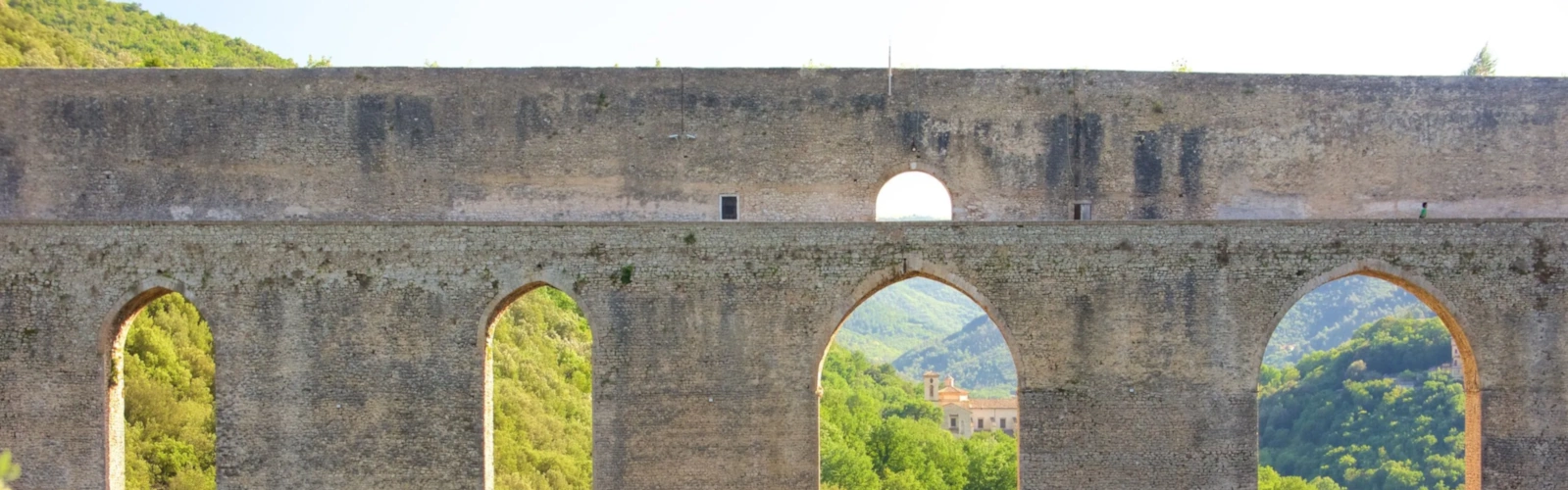
Bridge of Towers in Spoleto – medieval aqueduct and fortress bridge in Umbria, Italy

4. The bridge survived earthquakes but required modern restoration.

Umbria is seismic, and although the bridge has resisted centuries of earthquakes, closures were necessary after the 2016 events for safety checks and major consolidation works. These works were completed, allowing a safe reopening.


Understanding the Architecture: Why the Bridge Looks So Unique

Ponte delle Torri is striking because of its proportions and engineering clarity. Here are the verified architectural facts:

• Length: approx. 230 meters (755 ft)

• Height: approx. 80 meters (262 ft)

• Number of arches: 10

• Material: limestone blocks from local quarries

• Function: aqueduct + pedestrian/defensive route

The ten arches are not uniform: they increase in size as the valley deepens. This gives the bridge its dramatic “stair-like” rhythm and creates perfect photographic symmetry from any vantage point.

The structure is massive — its walls are extremely thick — but its proportions are elegant, creating the illusion of lightness when seen from a distance.

Interestingly, despite its size, the bridge has no decorative elements. Everything is structural, functional, and purposeful. That’s why architects admire Ponte delle Torri: it is medieval engineering at its most rational and modern.


Historical Visitors and Famous Mentions

The bridge has fascinated writers and travelers for centuries. One of the most notable descriptions comes from Lord Byron, who called it “sublime”. His reference cemented Ponte delle Torri in the European cultural imagination as a bridge worth traveling to see.

Other documented visitors included 19th-century scholars and Grand Tour travelers who often compared the bridge to ancient Roman aqueducts such as those near Rome or Segovia — yet noted that its vertical drop and single-span height made it incomparable.


The Bridge and Spoleto’s Landscape

Ponte delle Torri sits between two equally important landmarks:

1. The Rocca Albornoziana

A 14th-century papal fortress dominating Spoleto’s skyline. From its terraces, you get the classic postcard photo: the full arches of the bridge floating above the trees.

2. Monteluco Forest

A sacred mountain covered with holm oaks, historically inhabited by hermits and monks. The bridge gave direct access to the monastic area.

The setting is part of the attraction: the combination of stone architecture, deep valley, and untouched greenery is genuinely breathtaking.


The Bridge Today: Reopened and Safe to Visit

Ponte delle Torri is fully open to the public, free of charge.

The reopening followed years of engineering work to reinforce the stone structure and guarantee safety for pedestrians.

You can now:

  • walk across at any time
  • take dogs on a leash
  • cycle (slowly and with respect for pedestrians)
  • enjoy one of the most scenic passages in Umbria

The crossing takes about 10–15 minutes at a relaxed pace, but most people spend more time photographing the views.

Lighting

In the evening, Ponte delle Torri is gently illuminated along its pedestrian walkway, creating a safe and pleasant atmosphere for visitors. At the same time, the full structure is clearly visible from a distance — especially from the main Terni–Perugia road, where the bridge stands out against the hillside. Thanks to this balanced lighting, the bridge remains impressive both up close and from afar, making sunset and early evening excellent times to admire and photograph it.

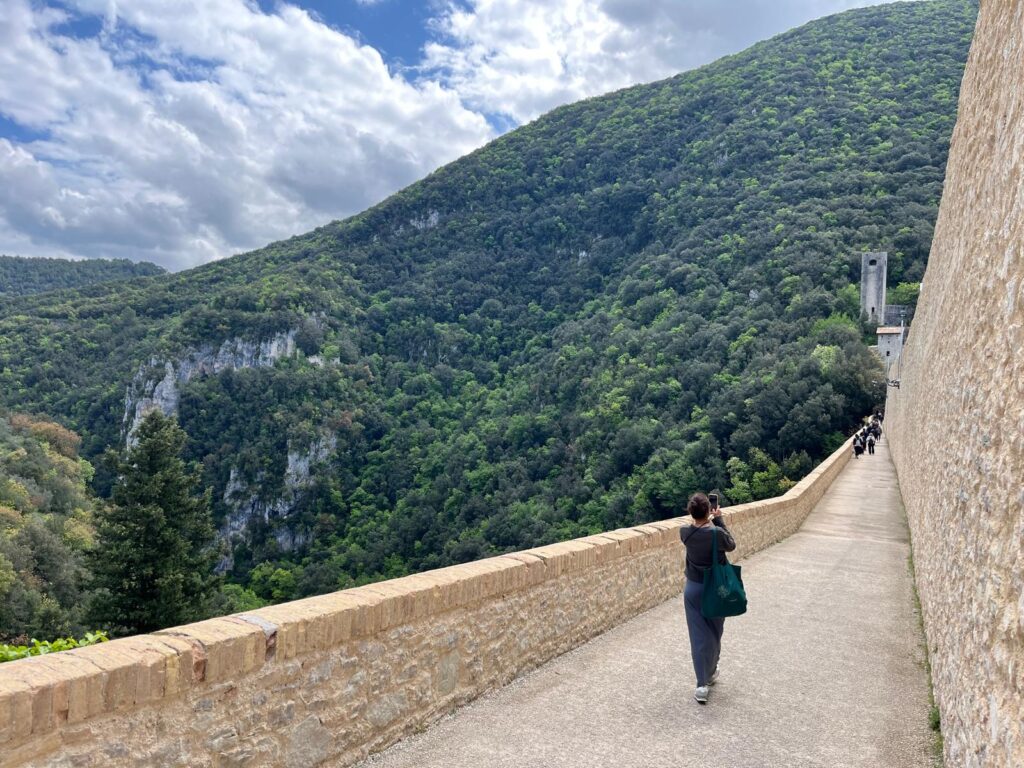
Two tourists walking on Ponte delle Torri, the medieval bridge in Spoleto, Umbria.

Is the Bridge Difficult to Walk?

The walk is flat, straightforward, and accessible to most visitors.
However, the approach from Spoleto’s center includes uphill medieval streets or escalators leading to the fortress level.

Wear comfortable shoes — the stones can be slightly uneven, as expected for medieval pathways.


What Else to See in Spoleto (Curated for International Tourists)

• Spoleto Cathedral (Duomo)

One of Italy’s most beautiful Romanesque façades, with frescoes by Fra Filippo Lippi.

• Roman Theater & Archaeological Museum

Still used for summer performances; excellent preservation.

• Basilica of San Salvatore (UNESCO)

A remarkable early-Christian church from the 4th–5th century.

• Rocca Albornoziana

Magnificent views and a fascinating interior courtyard.

• Monteluco Forest

Perfect for hiking, meditation, and panoramic walks.

Why Ponte delle Torri Matters for Modern Tourism

1. It is one of the tallest medieval bridges in Italy.

Verified by architectural data — very few medieval aqueduct-bridges reach this height.

2. It is a symbol of Spoleto’s identity.

Local tourism boards consistently use it in branding.

3. It attracts both international and domestic visitors.

Recent regional statistics show strong growth in foreign tourism in Umbria, especially in nature, heritage, and slow-travel segments. Spoleto benefits directly from these trends.

4. It connects urban culture with nature.

Few cities in Italy have such a dramatic natural gateway only minutes from the historic center.

When to Visit (Accurate Seasonal Breakdown)

Spring (April–June)

Best weather, clear skies, ideal for photography. Wildflowers bloom in Monteluco.

Summer (July–August)

Hot but lively; the Festival dei Due Mondi brings concerts and international visitors.

Autumn (September–October)

Golden light, mild temperatures, excellent for walking.

Winter (November–March)

Quiet and atmospheric; the bridge can be misty in the mornings, offering dramatic photos.


Best Photo Spots (Verified by Local Photographers)

Tourists often miss the best angles. These are the confirmed top 3 locations:

1. Rocca Albornoziana terraces

The full view of all arches — the classic shot.

2. The path descending toward the valley (Sentiero dei Condotti)

A side angle showing the height and symmetry of the arches.

3. Monteluco viewpoint

A higher viewpoint for wide landscape photos.

Tourist photographing Ponte delle Torri on the medieval bridge in Spoleto, Umbria.

Useful Travel Tips

  • No ticket needed: the bridge is always free.
  • No barriers or long security lines: easy, informal access.
  • Bring water in summer: there are no fountains on the bridge itself, but Spoleto has many public drinking fountains along the walking routes leading toward Ponte delle Torri. Just bring your bottle with you — you’ll be able to refill it easily before reaching the bridge.
  • Parking: best to park at the closest available parking and then take the Spoleto escalators from the lower city.
  • Food nearby: try strangozzi alla spoletina, black truffle dishes, or local cured meats in restaurants near Piazza del Duomo or at Valle Rosa

?FAQs (Fact-Checked)

Is Ponte delle Torri safe?

Yes. It reopened only after structural reinforcement and safety evaluations.

Is it suitable for children?

Yes, but watch them closely due to the height and stone walkways.

Can you bike across it?

Yes, but slowly and yielding to pedestrians.

Are drones allowed?

Only with authorization. The area around the Rocca is regulated.

Can you visit it at night?

Yes, it remains accessible 24/7.


Why Ponte delle Torri Should Be on Every Umbria Itinerary

Because it offers something rare:
a combination of untouched nature, medieval engineering, ancient history, and unforgettable views — all in one walk.

Spoleto is already a jewel of Roman, medieval, and Renaissance heritage, but Ponte delle Torri adds a spectacular outdoor experience that no photo fully captures.

For travelers exploring Tuscany and Umbria by car, for hikers seeking meaningful landscapes, or for culture-lovers following the Grand Tour routes, Ponte delle Torri feels like a discovery — even if thousands have crossed it before.

If you’re planning a trip to central Italy, don’t miss it.
And if you’re already in Umbria, make Spoleto your next stop.


Where to Stay in Spoleto and Umbria: Practical Tips for Choosing the Right Accommodation

If you are exploring the wider region, you’ll find a large variety of accommodation in Umbria: B&Bs, agriturismi, boutique hotels, country houses, and holiday apartments. Choosing the best option depends on your travel style. Staying in the historic center gives you quick access to churches, museums, and restaurants. Staying in the countryside provides views, quiet spaces, and easier parking — a major advantage for travelers arriving by car.

If you want to understand the difference between Italian accommodation categories — hotels, B&Bs, guesthouses, holiday homes, agriturismi — read our complete guide here:
? Types of Tourist Accommodation in Italy

Whichever option you choose, Spoleto and the Umbrian countryside offer authenticity, nature, and a peaceful atmosphere — ideal for travelers looking to experience central Italy at a slower, more meaningful pace.

You might also like:
Driving in Italy: Essential Tips Every Tourist Must Know Before Renting a Car Read more →

Stay Connected

For more updates, photos, and stories from Adagio Umbro, follow us on our social media channels:

What to Do in Umbria in Autumn:
Olive Oil, Nature, and Timeless Villages

The Magic of Autumn in the Green Heart of Italy

When the heat of summer fades, Umbria reveals its most enchanting season. Autumn paints the hills in shades of gold, amber, and olive green. The air fills with the scent of wood smoke, chestnuts, and freshly pressed olive oil.

For travellers seeking authentic Italian experiences — without crowds — autumn is the perfect time to explore the Green Heart of Italy. Hidden between Tuscany and Lazio, Umbria offers a slower rhythm, genuine hospitality, and a deep connection to nature and tradition.

Whether you’re drawn by art, food, or outdoor adventures, this region transforms into a living postcard from October to November — and makes for an unforgettable journey.


Discover the Olive Harvest: The Essence of Umbria

Autumn in Umbria means one thing above all — the olive oil harvest. This is when families gather in the groves, olives are handpicked, and local frantoi (olive mills) come alive with activity.

If you visit during this season, you’ll experience the unique fragrance of freshly pressed olio nuovo — the new extra virgin olive oil — a vibrant green nectar that tastes of artichoke, herbs, and history.

Don’t miss the Frantoi Aperti® Festival (October 18 – November 16, 2025) — a month-long celebration across Umbrian villages, open olive mills, and medieval towns.

Here you can:

  • Watch the olive oil pressing process.
  • Taste warm bread dipped in the new oil.
  • Join guided tours and cultural events among the olive trees.
  • Enjoy concerts, art exhibitions, and traditional dinners known as Cene Oleocentriche

Take a Journey on the Olive Oil Train

A new and unforgettable experience arrives this autumn — the Espresso Assisi – Frantoi Aperti® , Italy’s special tourist train dedicated to the olive oil harvest. Please note that this special tourist service is organized by FS Treni Turistici Italiani, part of the official Trenitalia Group. The Espresso Assisi – Frantoi Aperti® train may not appear among the standard Trenitalia routes, as it operates as a dedicated seasonal experience.

Running every Sunday from October 19 to November 16, 2025, this scenic route connects Rome to Arezzo, stopping in Terni, Spoleto, Foligno, Spello, Assisi, and Perugia.

It’s not just a train — it’s a moving festival. You’ll travel through landscapes of olive groves and hilltop towns, meet local producers, and discover the art of olive oil along the way.

Map of Umbria showing DOP olive oil production areas and main towns including Spoleto, Trevi, Assisi, Giano dell’Umbria, and Lake Trasimeno.
Map of Umbria highlighting the five DOP olive oil subzones — Colli Assisi–Spoleto, Colli Martani, Colli Amerini, Colli del Trasimeno, and Colli Orvietani.

Travellers can enjoy onboard tastings, guided visits to mills, and cultural stops in historic towns.

? Travel Tip: Travel tip: Book early to benefit from the TTI SPECIAL 25 offer — a 25% discount for limited seats on the FS Treni Turistici Italiani website

? Explore Umbria’s Timeless Villages

Umbria’s villages are jewels of stone and silence. In autumn, they glow under soft light, surrounded by misty hills and vineyards turning red. Here are some of the most evocative places to visit:

Spoleto

Ponte delle Torri, admire the Cathedral of Santa Maria Assunta, and enjoy quiet evenings filled with local flavors.

Adagio Umbro, located near Spoleto, offers the perfect base to explore the heart of Umbria while enjoying peace and nature.

Assisi

Spiritual and serene, Assisi shines even brighter in autumn. Visit the Basilica of St. Francis, wander the medieval lanes, and enjoy panoramic views of the Umbrian Valley glowing in gold.

Trevi

Known as the “City of Olive Oil,” Trevi is surrounded by endless terraces of Moraiolo olives. Visit in early November for olive-themed walks, tastings, and traditional feasts.

Spello

Famous for its stone-paved alleys and pink limestone houses, Spello is one of Italy’s most picturesque towns. The views of olive groves from its medieval walls are unforgettable.

Montefalco

Home to the rich Sagrantino wine and host of the opening event for Frantoi Aperti®. Don’t miss the “Visioni Oleocentriche” art exhibition and concert at the Church of San Francesco.


The Taste of Umbria’s Heritage: From Grove to Gold

In Umbria, olive oil is more than a product — it’s a way of life deeply rooted in the region’s hills and traditions. Every autumn, as olives turn from green to gold, over 5.5 million olive trees paint the landscape in shimmering silver tones. Across 27,000 hectares of olive groves, farmers have tended their trees for generations, creating an oil so distinct it earned the DOP Umbria (Protected Designation of Origin) label — a mark of quality recognized throughout Europe.

Producing olive oil in Umbria is a meticulous craft that blends tradition with nature’s rhythm. Depending on the season, the region yields between 30,000 and 60,000 tons of olives, pressed in more than 270 family-run mills scattered across valleys and hill towns. Each bottle of DOP Umbria oil tells a story of landscape and labor — of early mornings in the groves, hands stained with fruit, and the unmistakable fragrance of freshly pressed olive oil that fills the air each November

To preserve its authenticity, the DOP Umbria designation divides the region into five subzones, each with its own identity and flavor. The Colli Amerini and Colli Orvietani produce delicate, balanced oils; the Colli Martani, near Giano dell’Umbria and Bevagna, are known for their herbal notes; around Lake Trasimeno, the rare Dolce Agogia olive gives a soft, fresh aroma; while the expansive Colli Assisi–Spoleto area — home to Trevi, Spoleto, and Assisi — yields a bold, peppery oil rich in antioxidants. Together, they form a mosaic of taste that reflects Umbria’s landscapes and centuries of passion for olive cultivation.

Did you know? In Trevi you can visit the Museum of the Olive Civilization (Museo della Civiltà dell’Ulivo), dedicated to olive cultivation and DOP Umbria EVO oil. Read our guide →


Enjoy Autumn Flavors: From Truffles to Chestnuts

Umbria’s autumn table is a celebration of nature’s bounty. Every town offers a chance to taste local delicacies:

  • Black truffles from Norcia and Spoleto
  • Chestnuts and mushrooms from the Monti Martani and Valnerina forests
  • Red wines like Montefalco Sagrantino and Rosso di Torgiano
  • Pecorino cheese, strangozzi pasta, and hearty lentil soups from Castelluccio

Visit local food markets or small osterie to experience real Umbrian cuisine — rustic, seasonal, and deeply satisfying.


Walk, Hike & Breathe the Landscape

For nature lovers, autumn is the best time to explore Umbria’s countryside. The weather is mild, the trails quiet, and the views spectacular.

  • Via di Francesco: Follow the footsteps of Saint Francis on the ancient pilgrim trail connecting Spoleto to Assisi. This section of the route winds through olive groves, cypress-lined paths, and small sanctuaries where the saint once prayed. It’s one of Umbria’s most spiritual and scenic walks, offering moments of silence, panoramic views, and a deep sense of peace.
  • Valnerina: Discover hidden monasteries, waterfalls, and ancient forests along the Nera River valley — a paradise for hikers and photographers.
  • Monti Martani Trails: Gentle hills covered with vineyards and olive trees — ideal for slow hiking, photography, and enjoying the changing autumn colors.

You can also join guided walks during Frantoi Aperti®, where art, music, and nature blend into unique outdoor experiences celebrating the olive harvest.


Stay in the Heart of the Olive Hills

Choosing where to stay in Umbria can define your entire experience. If you’re looking for peace, nature, and authenticity — the countryside near Spoleto is one of the most beautiful and strategic areas.

Framed by oak forests and medieval hill towns, Adagio Umbro offers a calm and authentic stay in the heart of Umbria.

Imagine waking up to birdsong, enjoying breakfast under the trees, and visiting villages only minutes away. Even while the B&B is currently being renovated, Adagio Umbro’s website already welcomes travellers with stories, itineraries, and local insights — helping you plan your next Umbrian escape.

? Bookmark Adagio Umbro — your future home in Umbria, where authenticity meets comfort.

Capture the Soul of Slow Travel

Autumn in Umbria isn’t about rushing between attractions — it’s about living the moment. It’s walking through quiet streets at sunset, talking to olive farmers, and tasting oil that was pressed just hours before.

This is slow travel at its finest — where experiences matter more than checklists. Every path leads to something real: a conversation, a flavor, a memory.


Plan Your Autumn Escape to Umbria

Whether you arrive by car, by train, or someday aboard the Espresso Assisi, autumn in Umbria offers everything the modern traveller seeks — authenticity, beauty, and connection.

As you explore, let your senses guide you: the golden light, the earthy aroma of olive oil, and the sound of church bells in the distance.

And when the day ends, remember — this land rewards those who slow down and listen.

You might also like: Types of Accommodation in Italy | Hotels, B&Bs, Holiday Homes, Guesthouses & Farm Stays Read more →

Stay Connected

For more updates, photos, and stories from Adagio Umbro, follow us on our social media channels:

Don Matteo in Spoleto: Discover the Filming Locations and the Best Things to Do in Autumn 2025 in Umbria

Piazza del Duomo in Spoleto, the main square often featured in Don Matteo
Piazza del Duomo, Spoleto — the series’ most iconic backdrop.

Spoleto, Umbria — There is a special thrill in turning a corner and recognizing a view you have seen on screen. In Spoleto, that happens often. Italy’s beloved TV series Don Matteo made the city’s stone streets, sunlit piazzas, and medieval silhouettes famous well beyond Italy. Whether you are already a fan or you have never heard of the show, this guide will help you walk the filming locations and plan the best things to do in September in Umbria — from wine tastings to scenic hikes and slow afternoons in historic squares.

What Is Don Matteo — and Why Do Italians Love It?

Don Matteo is a long-running Italian series that blends detective stories with warmth, humor, and community life. For two decades the role of the wise, bicycle-riding priest was played by Terence Hill; in recent seasons the story continues with Raoul Bova, keeping the heart of the series intact. The result is comfort viewing with a moral core — equal parts mystery-of-the-week and portraits of everyday kindness, set against the beauty of Umbrian towns. Episodes often begin with a crime or misunderstanding, but they end with clarity, compassion, and a gentle reminder that small choices matter.

For international travelers, the appeal is twofold: the Italian atmosphere (morning coffee at the bar, neighbors chatting in the piazza, narrow streets where everyone knows your name) and the visual poetry of places like Spoleto. The landscapes are real; you can visit them, walk them, and stand exactly where a scene unfolded. This article shows you where to go and how to weave those places into an autumn umbrian itinerary.

Why Spoleto?

Beginning with Season 9, the production moved from Gubbio to Spoleto, whose historic center gives the series a luminous stage. Spoleto seems made for cinema: a Roman amphitheater, medieval lanes that rise and fold, stone staircases, and wide squares where golden light gathers at sunset. Here, architecture does not just appear in the background — it feels like a character with its own personality. Directors love how arches frame faces, how staircases create movement, and how pale stone reflects the Umbrian sky.

Filming Locations You Can Actually Visit

1) Piazza del Duomo: The Open-Air Set

Many scenes unfold in Piazza del Duomo, an elegant square framed by the Cathedral and palazzi. It is the pulsing heart of the Spoleto you will recognize from the screen. The square’s natural slope and dramatic staircase create camera-ready angles in every direction; visit late afternoon for soft light and a gentle breeze that carries the city’s evening chatter. Sit for an espresso, watch families drift across the stones, and imagine the crew setting up a dolly shot at dawn.

Scalinata and Piazza del Duomo steps in Spoleto
The grand staircase down to Piazza del Duomo — a favorite establishing shot.

2) Don Matteo’s Church: Sant’Eufemia

In the series, the parish church is Chiesa di Sant’Eufemia, a 12th-century Romanesque gem tucked a short stroll from the Duomo. Its sober stone, narrow windows, and quiet courtyard give scenes an intimate, timeless mood. Step inside to admire the austere nave, then step back out and look carefully at the walls and tiny arches. It is easy to imagine microphones hidden just out of frame and the whispered “Action” that transformed the church into a set.

Façade of Sant’Eufemia church in Spoleto used as Don Matteo’s parish
Sant’Eufemia — a Romanesque sanctuary that doubles as the parish in the series.
Façade of Sant’Eufemia church in Spoleto used as Don Matteo’s parish

3) Palazzo Bufalini: Carabinieri (Exterior)

Look across Piazza del Duomo to Palazzo Bufalini. In the show, this elegant façade stands in for the Carabinieri station. It is a beautiful coincidence: a 16th–17th-century residence repurposed on screen as a hub of investigations, gossip, and Cecchini’s quips. You will spot it in wide shots where the square opens like a stage.

4) Ponte delle Torri & Rocca Albornoziana

When the camera pulls back, it often lingers on Spoleto’s skyline: the Ponte delle Torri, a towering medieval bridge, leading the eye to the fortress of Rocca Albornoziana. Today, the bridge is a spectacular place for a stroll with valley views and photo opportunities at every step — a reminder that in Umbria, nature and architecture perform together. If you enjoy photography, aim for the warm light just before sunset.

Ponte delle Torri in Spoleto with dramatic valley views
Ponte delle Torri — a dramatic walkway to the Rocca and a frequent cutaway shot.

5) Streets You Will Recognize on Foot

Bring this list along for a self-guided stroll. You may catch a déjà vu moment on Corso Garibaldi, Via dell’Arringo, Via delle Mura, Via del Visiale, or Vicolo della Basilica. They thread the historic center like backstage corridors between scenes. Do not rush. Spoleto rewards slow walking, short pauses, and looking up.

How to Recreate the TV Walk (90 Minutes)

  • Start at Rocca Albornoziana for a panorama that orients you.
  • Descend to the Ponte delle Torri and cross for valley views.
  • Continue to Piazza del Duomo via the scenic staircase.
  • Slip into Sant’Eufemia for a quiet pause.
  • Finish with a slow wander along Vicolo della Basilica and coffee in the square.

Tip: film crews love early mornings and late afternoons. If you chance upon a set, keep a respectful distance and enjoy the atmosphere — Spoleto residents are used to sharing their city with cameras.

Behind the Scenes & Fun Facts

  • The baton pass: After two decades as Don Matteo, Terence Hill made his final on-screen bow and the story continued with Raoul Bova, bringing fresh energy while preserving the series’ gentle spirit.
  • The bike: The priest’s bicycle is almost a supporting character — a symbol of humility, mobility, and small-town closeness. Spotting it leaning against stone walls is part of the fun.
  • Spoleto as a co-star: The city is not just a backdrop. Directors frame long shots to let arches, staircases, and sunlit stone do emotional storytelling.
  • From Gubbio to Spoleto: The move in Season 9 refreshed the show’s look without losing its Umbrian identity — proof that one region can offer many faces.

Autumn in Umbria: Why This Month Is Perfect

September-November bring that sweet travel balance: golden weather, calmer streets after August, and the start of the wine harvest. Days are warm, evenings are pleasantly cool — perfect for outdoor lunches and evening strolls. Vineyards stir with activity, hill towns glow in soft light, and local calendars fill with harvest weekends and open-cellar tastings.

Wine-Harvest Weekends (Vendemmia)

Across Umbria, wineries host special open-cellar days in September. In the valley between Spoleto, Montefalco, and Bevagna, producers of Sagrantino and Grechetto invite visitors for tours, grape-picking experiences, and sunset tastings. It is the ideal way to add a rural chapter to your Spoleto city break. Book ahead for weekends and ask about designated drivers or transfer options if you plan multiple tastings.

Glasses and bottles of Montefalco Sagrantino wine from Umbria
Montefalco Sagrantino, Trebbiano Spoleto — powerful, deeply colored, and proudly Umbrian.

Scenic Walks & Easy Hikes

With summer heat easing, September is ideal for nature walks. From Spoleto you can trace forest paths around the Rocca, follow aqueduct lines above the valley, or drive 30–40 minutes to rolling trails near Trevi’s olive groves and the Montefalco vineyards. Pack light layers, water, and a small picnic — in Umbria, the best table is often a stone wall with a view. If you are traveling with friends, choose loop routes so everyone can walk at their own pace and still end together in the piazza.

Culture, Food, and Evening Piazzas

Spoleto’s cultural rhythm never really stops. Between major festivals, you will find opera, chamber music, and visiting exhibitions. The everyday rituals are just as rewarding: the evening passeggiata, espresso at the counter, a plate of stringozzi with local oil, and a glass of Sagrantino or Trebbiano Spoletino. Reserve dinner outdoors if the forecast is clear and enjoy the soft light reflected off limestone facades. Ask for seasonal specials: figs, late-summer tomatoes, pecorino with honey, and early new-press olive oils in tastings.

Things to Do in September in Spoleto (Shortlist)

  • Walk the Don Matteo route (Duomo → Sant’Eufemia → historic streets → Ponte delle Torri).
  • Plan a winery afternoon in Montefalco or Bevagna — tastings, cellar tours, vineyard views.
  • Climb to the Rocca for a history hit plus sunset photos of the city.
  • Try seasonal flavors — figs, pecorino, honey, Sagrantino and Trebbiano Spoletino.
  • Take a slow tennis break at Adagio Umbro — a peaceful reset between sightseeing days.

Practical Tips for International Travelers

  • Getting there: Spoleto sits on the Rome–Perugia rail line (about 1h45 from Rome by regional train). A rental car is handy if you plan winery visits or countryside walks.
  • Weather & packing: Expect warm days and cooler nights. Bring breathable layers, comfortable walking shoes for cobbles, a light jacket, and sun protection.
  • Timing: Vineyards are liveliest on September weekends; book tastings ahead. Weekdays are quieter in town squares and museums.
  • Respect on set: If filming is in progress, follow crew directions and enjoy the magic from the sidelines.

A Movie Moment, Then a Real One

The charm of Don Matteo is not just the cases solved but the sense of belonging — neighbors who wave from balconies, baristas who know your order, a city that welcomes you as if you have lived here for years. Spoleto turns that feeling into a real itinerary: a morning at the Duomo, a shaded lane to Sant’Eufemia, a slow coffee, then a walk to the bridge with a pocket of grapes from the market. In September, when the countryside hums with harvest, it is especially easy to feel the soft rhythm of Umbrian days.

View across Montefalco vineyards near Spoleto in Umbria
Vineyards near Montefalco — perfect for a harvest-season afternoon from Spoleto.

Plan Your Day: Map It Out

Drop pins for: Piazza del Duomo, Sant’Eufemia, Palazzo Bufalini, Rocca Albornoziana, and Ponte delle Torri. Add a winery stop near Montefalco or Bevagna. If you are short on time, limit yourself to the historic center and the bridge — you will still recognize the show’s signature angles everywhere you turn.


Stay Slow, Stay Local

After a day of filming locations and vineyard horizons, choose a base that keeps you close to nature. At Adagio Umbro, you can pause in a green garden, stretch after travel on the tennis court, and plan tomorrow’s wander through Umbria’s hill towns. It is not a hotel lobby scene — it is your quiet chapter in the story.

Image credits: Piazza del Duomo & staircase, Sant’Eufemia, Ponte delle Torri, Montefalco vineyards, Sagrantino wine — photos from Wikimedia Commons (CC or permitted use). All images are used for editorial purposes to illustrate locations and travel inspiration.

Map Your Don Matteo Walk

Use this mini map to follow the most recognizable filming spots in Spoleto — from Piazza del Duomo and Sant’Eufemia to the Rocca and the stunning Ponte delle Torri.

Quick Pins (Open in Google Maps)

When you plan what to see in Spoleto, think beyond the iconic Piazza del Duomo, the Ponte delle Torri and the Rocca Albornoziana. This Umbrian town is a perfect starting point for day trips, especially if you are coming from Rome by car or train — Spoleto is less than two hours away, making it one of the most rewarding places near Rome for culture and slow travel. Here you can balance history with leisure: stroll the medieval streets, taste local wines, then relax in the green hills just outside the city. If you are wondering what to do in Spoleto between visits to churches, museums, and small trattorie, add a break of sport and nature to your itinerary. At Adagio Umbro, our tennis court with picnic service offers the chance to pause in a peaceful setting surrounded by Umbrian countryside. We welcome curious travelers who want to experience the region at a slower rhythm — whether you play a friendly match, enjoy a picnic with fresh air, or simply rest after sightseeing. Booking is simple, and once you reserve your time we will provide all the details: from easy parking information to confirmation of opening hours and tips for nearby walks or hidden spots in the hills. Our aim is to make your stay stress-free, so you can focus on discovery and enjoyment. With Spoleto’s treasures at your feet and the Umbrian landscape around you, the best memories often come from mixing local culture with quiet outdoor moments. Plan your September trip now and let us help you create the balance between sightseeing and relaxation.

Tip: For the best light and fewer crowds, start late afternoon at the Rocca, walk the Ponte delle Torri, then descend to Piazza del Duomo and Sant’Eufemia.

Chiesa, Duomo, Cathedral or Basilica? Learn the real meaning of Italy’s sacred sites and explore the most iconic churches from Spoleto to Assisi. Read more →


Stay Connected

For more updates, photos, and stories from Adagio Umbro, follow us on our social media channels:

What You Should Know About Umbria: 17 Reasons to Visit Spoleto

What You Should Know About Umbria:
17 Reasons to Visit Spoleto

Introduction to Umbria – The Green Heart of Italy

Tucked in the center of Italy, far from the coastal crowds and clamor of tourist hubs, lies Umbria, often lovingly referred to as “Italy’s green heart.” With its rolling hills, medieval towns, and untouched countryside, this landlocked gem offers a more tranquil, authentic Italian experience. While other regions like Tuscany or Lazio steal the spotlight, Umbria quietly captivates with ancient charm and natural beauty that beckons explorers, foodies, and spiritual seekers alike. So, what is Umbria famous for? It turns out—quite a lot. From truffles to hilltop towns, sacred basilicas to centuries-old oak trees in Spoleto, this article unveils 17 stunning reasons to fall in love with this region—especially if you’re lucky enough to visit Adagioumbro, home to 30 magnificent oaks.

Why Umbria Stands Out Among Italian Regions

Unlike its more touristed neighbors, Umbria boasts the serenity of less-developed landscapes while preserving rich artistic and cultural heritage. It shares Tuscany’s beauty but with fewer crowds and more intimacy. You get the vineyards, olive groves, Roman ruins, and rustic villages—without the tourist price tag.

What truly makes Umbria unique is its authentic Italian soul: untouched nature, warm hospitality, and deep-rooted traditions that have remained intact for centuries. As the only region entirely landlocked within the Italian peninsula—surrounded by other regions and without a coastline—Umbria has historically developed a more self-contained character. This geographical isolation has shaped a strong local identity, with residents often perceived as more reserved compared to those in coastal regions. It’s a place where history isn’t just preserved—it’s lived, quietly and proudly.

Ancient Cities and Medieval Hill Towns

Umbria’s landscape is dotted with timeworn hilltop towns, each with its own history:

  • Assisi: The birthplace of St. Francis, brimming with spiritual energy.
  • Perugia: The lively capital, home to historic universities and jazz festivals.
  • Orvieto: Perched on volcanic rock with a majestic Gothic cathedral and undeground well.
  • Spoleto: A cultural hub with Roman relics and Renaissance vibes.
  • Trevi: A hilltop gem surrounded by olive groves, known for its medieval charm and world-class olive oil.
  • Todi: An elegant town of winding alleys and sweeping views, blending Etruscan roots with Renaissance grace.
  • Montefalco: The “Balcony of Umbria,” famous for Sagrantino wine and frescoed churches with panoramic views.

These towns are more than postcard-perfect—they tell stories etched in stone, fresco, and cobblestone.

Food and Culinary Traditions of Umbria

Umbria is a paradise for lovers of slow food and earthy flavors. Its cuisine celebrates local produce:

  • Black truffles from Norcia and Spoleto.
  • Castelluccio lentils, known as Italy’s finest, perfect option for vegetarians and vegans.
  • Cured meats like Prosciuto di Norcia and cheese Cacciotone di Norcia.
  • Olive oil pressed from ancient groves visitors often compare it to scenes from epic medieval films.

Meals in Umbria are hearty, seasonal, and soul-warming. Every bite whispers tradition.

Umbrian Wines That Rival Tuscany

While Tuscany gets more press, Umbrian wines are quietly winning awards and hearts:

  • Sagrantino di Montefalco: a bold red with deep tannins and aging potential.
  • Grechetto: a crisp white that pairs beautifully with Umbrian fare.
  • Torgiano Rosso Riservafull-bodied and rich.

Many family-run wineries in Umbria offer tastings and intimate vineyard experiences.

Festivals and Celebrations Unique to Umbrias

Umbria celebrates its identity through vibrant festivals:

These events transform historic streets into joyful stages.

Religion and Spiritual Pilgrimage in Umbria

Home to saints, monasteries, and sacred sites, Umbria is a haven for spiritual travelers:

This spiritual dimension adds depth to Umbria’s already profound charm.

Oak Trees in Umbria – An Emblem of Strength and Heritage

Why Oak Trees Are Protected in Spoleto?

In Spoleto, oak trees are more than just trees—they’re monuments of nature. Protected under regional forestry laws, these oaks are recognized for their ecological and cultural value. Their massive trunks and sprawling canopies have shaded pilgrims, shepherds, and poets alike for centuries.

Spoleto’s local authorities actively safeguard these oaks due to:

  • Their biodiversity support
  • Their contribution to soil and water conservation
  • Their deep roots in local folklore

These trees are living testaments to Umbria’s respect for the natural world. When an oak tree reaches a certain age or size, or is linked to a historic site, it may be officially registered. These trees are protected like cultural artifacts—because they are. A centuries-old oak in Umbria is treated with the same reverence as a Roman column or a medieval fresco.

Historical Significance of Oaks in Italian Culture

Across Italy, and especially in Umbria, oaks have long symbolized wisdom, endurance, and sacredness. In Roman times, oak leaves crowned victors. In medieval legends, oaks were seen as homes of spirits and divine messengers. Even today, these trees evoke awe and serenity.

Spotlight on Adagioumbro – Home to 43 Majestic Oaks

A Natural Haven in the Hills of Spoleto

At Adagio Umbro, nestled in the rolling Umbrian hills just minutes from Spoleto, we care for 43 majestic oak trees—living symbols of strength and serenity. These trees are not just part of the landscape; they shape the experience here, offering cool shade, fresh air, and a timeless presence that many visitors describe as deeply calming. Whether you’re enjoying a tennis match surrounded by nature or pausing for a picnic under the canopy, Adagio Umbro invites you to slow down and enjoy authentic moments outdoors.

Activities in Umbria: Tennis in the Green Hills of Spoleto

Looking for relaxing activities in Umbria that combine nature, movement, and privacy? At Adagio Umbro, you don’t need to be a tennis expert to enjoy the game. Our scenic tennis court in Spoleto is nestled in peaceful hills, offering a refreshing and energizing experience. Rackets are available upon request, making it perfect for couples, friends, or families who simply want to play and unwind surrounded by greenery and silence.

Picnic in Umbria: Private and Peaceful Moments in Nature

Searching for outdoor activities near Spoleto or a peaceful lunch spot during your Umbrian trip? Our picnic area at Adagio Umbro is a quiet oasis. Bring your own snacks or a full meal (please note: no alcohol allowed), relax on a blanket or use our outdoor furniture, and enjoy the clean air of the Umbrian countryside. This is a wonderful choice for travelers looking to avoid the crowds while soaking up authentic Italian nature.

Private Reservation: Your Time, Your Space

Unlike public parks or busy resorts, here you reserve the entire space—just for you and your group. Whether you’re playing tennis, enjoying a picnic, taking photos, or simply napping under a tree, you’ll experience one of the most tranquil and exclusive things to do in Umbria.

Opening Hours & Easy Booking of Adagio Umbro

Friday to Sunday: 8:00 AM – 9:00 PM. Booking is required in advance via our website.
Monday to Thursday: available only by appointment that you can easily reserve by WhatsApp, email, or phone. It’s a flexible option for those planning outdoor activities in Umbria or spending the day in Spoleto.

What’s Included in Your Visit

Your booking gives you full access to the tennis court and the picnic area with shade and outdoor seating. There are also nature paths to explore, a bathroom, a water fountain, and Starlink Wi-Fi (rare in the Italian countryside). Board games and outdoor games are available to make your time more enjoyable. This is a relaxed way to experience Spoleto and enjoy one of the many peaceful activities in Umbria.

Spoleto is not only known for its history and architecture, but also for its peaceful natural settings. Spending a few hours playing tennis, walking through the hills, or enjoying a quiet picnic is one of the most relaxing things to do in Umbria. It’s an ideal break for anyone exploring Spoleto, whether you’re interested in culture, nature, or just a calm moment outdoors.

You might also like: History of villa Adagio Umbro: from medieval church to nowadays Read more →


Stay Connected

For more updates, photos, and stories from Adagio Umbro, follow us on our social media channels:

The Story of Le Palazze:
From Medieval Church to Adagio Umbro

Along the ancient Via Flaminia, just beyond the city of Spoleto, lies Sustrico—a quiet rural locality with a rich and layered past. First recorded in 1296 in Spoleto’s municipal statutes, Sustrico was officially recognized as a “villa,” with local residents required to appoint their own bailiff and fiscal officer. These records reveal not only Sustrico’s medieval significance but also the enduring legacy of its civic and spiritual life.


At the heart of Sustrico stands Le Palazze, a centuries-old estate whose twin towers hint at a defensive origin. One of them, now a dovecote, may once have been a watchtower, positioned strategically with views toward Terni. But it is not the towers alone that reveal the past—it’s the building’s sacred core. The current home of Adagio Umbro was once the church of San Nicolò “de Publica,” as documented in the 14th-century Codice Pelosius. The name “de Publica” reflected the original church entrance, which opened directly onto the public road—an entrance still visible today, though long since sealed.


Though heavily restructured over the centuries, the former church still carries traces of its spiritual heritage. According to historian Carlo Pietrangeli, its facade once faced the Via Flaminia, with its corners built from Roman funerary stones—one bearing the inscription “Q. XV.” Inside stood a painting of Saint Nicholas, framed with the Leti family crest, and a medieval holy water font. A small bell tower crowned the roof, its bell inscribed: “IN HONOREM S. NICOLAI EPI. ET CONFESS. A. D. 1664.” Today, only fragments remain, but the soul of the space endures, now transformed into a home of hospitality and memory.


The land was never fortified, but always valuable. In the 1500s, it passed to the noble Leti family of Spoleto, whose presence shaped the local landscape. Nicola Leti, a bishop and reformer, and his nephew Gregorio Leti, a prolific historian, left their mark on Italian intellectual life. Their estate in Sustrico remained in the family until the early 1800s, when—after periods of change—it was acquired by the Antonelli family in 1851.


The Antonelli family honored the estate’s rural roots and, in a gesture of quiet reverence, dedicated the former church as their family memorial space—extending its sacred role with dignity and care. A local record from 1859 described the area as a parish of just 64 souls, spread across eight homes—remote, self-sufficient, and deeply rooted in tradition. Through this period, the estate supported vineyards, olive groves, granaries, and threshing floors—hallmarks of Umbrian rural life.


By the early 1900s, Le Palazze had become a communal baking site. Families from surrounding homes, most without ovens of their own, would bring their bread dough to bake in the estate’s large timber oven—a structure that still survives today as a symbol of nourishment and community.

After World War II, the main building served briefly as a rural school. In the 1980s, the estate was purchased and lovingly restored by Italian footballer Stefano Tacconi. In 1996, he passed the torch to new caretakers who continue to steward the land with a blend of reverence and vision.


Today, the estate is divided into two residences. One of them is Adagio Umbro — a home that embraces its sacred past while offering visitors a peaceful connection to Umbrian heritage. Locals still believe that land once blessed carries protection and good fortune. Here, that belief isn’t just folklore—it’s a living promise, felt in every brick, every oak tree, and every quiet sunrise.


Why Visit Adagio Umbro Today?

Adagio Umbro isn’t a hotel or retreat—yet. Today, it offers guests the rare chance to enjoy a scenic tennis court and picnic area, surrounded by centuries of history and nature, while the property is lovingly restored into a future B&B.

Adagio Umbro: A Base to Explore Umbria

Located just minutes from the heart of Spoleto, and within easy reach of Montefalco, Trevi, and Todi, Adagio Umbro offers both rural calm and cultural access. Whether you’re in search of wine trails, Roman ruins, medieval towns, or panoramic hikes, our eastate provides the perfect balance—secluded yet central, rooted yet connected.

Preserving the Past with Purpose

At Adagio Umbro, we are more than caretakers of a house—we are stewards of history. Every restoration decision, from salvaging ancient beams to respecting the original tower line, is made with care. This is not a place that was rebuilt in haste. It is a place rebuilt with soul, memory, and intention.

A Place in Progress, Rooted in Soul

Adagio Umbro currently offers select tennis and picnic experiences, as we continue the careful transformation of this sacred space into a future B&B. Using only sustainable, high-quality materials, we are creating a place not just to sleep—but to feel, to connect, and to belong. We’re not building fast. We’re building forever.

How to Reach Adagio Umbro in Sustrico, Spoleto

Adagio Umbro is located in Località Sustrico, accessible via a small country road off the Via Flaminia, crossing two modest bridges. Surrounded by the natural beauty of the Spoletan countryside and marked by twin towers, Roman stones, and a tranquil spirit, the estate is easy to reach—but impossible to forget.

Want to see more behind-the-scenes moments, renovation updates, and countryside inspiration? Join us on social media to follow our journey in real-time. You’ll find the links just below, in the right-hand corner of the page.

✨ Imagine waking up where centuries of Umbrian history meet quiet landscapes and soft morning light. At Adagio Umbro — a women-only retreat in the hills of Spoleto — ancient stone walls, oak trees, and peaceful views create a stay rooted in heritage and calm. If you’re looking for a place to rest, reflect, and reconnect with nature, this is where your journey begins. Book your room at Adagio Umbro →

Want to explore more historical sites in Umbria? Visit the official tourism portal at UmbriaTourism.it .


Stay Connected

For more updates, photos, and stories from Adagio Umbro, follow us on our social media channels:

What to Do in Spoleto in One Day:
The Ultimate 2025 Guide for Art, Nature & Relaxation

“Spoleto is the most beautiful discovery I made in Italy […], there is such a wealth of beauty almost unknown, mountains, valleys, forests of oaks, monasteries, waterfalls!”
— Hermann Hesse (1911)

Spoleto is one of Umbria’s most atmospheric towns — a place where Roman arches, medieval streets, forest trails, and panoramic views blend into one unforgettable day. If you have only 24 hours, this guide gives you the perfect itinerary: a mix of art, history, nature, food, and a relaxing tennis-and-picnic escape just 3 km from the city centre.

Whether you’re coming from Rome, Florence, Perugia, or travelling across Umbria by car, this itinerary helps you enjoy Spoleto without rushing, discovering its soul step by step.

Morning: Art, History and Quiet Streets

Start at Spoleto’s Duomo – A Romanesque Jewel

Begin your morning at the Cathedral of Santa Maria Assunta, one of the most impressive Romanesque churches in central Italy. Standing in its elegant piazza, with the surrounding hills framing the view, you immediately feel the calm beauty of Umbria.

Inside, don’t miss the cycle of frescoes by Filippo Lippi — a rare masterpiece that attracts art lovers from all over Europe. The rose window, mosaics, and the soft light entering from the nave make this church a peaceful start to your Spoleto day.

Visit the Roman Theatre & Archaeological Museum

The adjoining National Archaeological Museum completes the visit: mosaics, artefacts, sculptures, and everyday objects show the life of ancient Spoletans. It’s a compact, well-organised museum — perfect for a morning cultural stop.

Just a short walk from the Duomo lies the Roman Theatre, still used for cultural events and concerts. Standing among its ancient stones gives a real sense of how important Spoleto was in Roman times.

A visit here also gives you a deeper understanding of Spoleto’s strategic importance in central Italy. The museum displays items recovered from necropolises, ancient villas and sanctuaries across the region, making it one of the most fascinating archaeological stops in Umbria. For travellers who love Roman history but prefer compact, curated collections instead of large overwhelming museums, this is the ideal place to spend 30–45 minutes discovering the everyday life, beliefs and craftsmanship of ancient Umbria.

Roman Theatre of Spoleto – ancient archaeological site in Umbria, Italy
The Roman Theatre of Spoleto, one of Umbria’s most important archaeological sites, dating back to the 1st century AD
Torre dell’Olio Spoleto medieval tower boiling oil legend
The Torre dell’Olio, Spoleto’s tallest medieval tower, famous for the legend of boiling oil used to defend the city.

Torre dell’Olio – The Tower of Boiling Oil

Continue your walk towards Torre dell’Olio, Spoleto’s tallest tower (45.5 metres) and one of the town’s most intriguing landmarks. The tower is privately owned and cannot be visited inside, but the exterior and its legend are reason enough to stop.

The story goes back to the Second Punic War in 217 BC, when Hannibal’s troops attempted to storm Spoleto. Defenders are said to have poured boiling oil from this very tower, forcing the army to retreat through Porta Fuga — today still known as the “Escape Gate.”

International travellers love this stop:

  • US visitors describe it like a scene from medieval films
  • British tourists compare it to castle defences in Wales
  • German visitors call it the Ölturm
  • Dutch visitors say Olietoren, appreciating its strategic design

According to local tradition, the Torre dell’Olio played a crucial role during Spoleto’s defence in the Second Punic War in 217 BC. When Hannibal and his Carthaginian army attempted to break into the fortified town, the defenders reportedly poured boiling oil from the top of this tower, forcing the invaders to retreat towards Porta Fuga — a gate that still carries the name “Escape Gate” today. This legendary episode has made the Torre dell’Olio one of Spoleto’s most fascinating historic landmarks, linking the medieval skyline with one of the most dramatic moments in ancient Italian history.

Coffee Break at Pasticceria Tebro

After exploring Spoleto’s historic core, reward yourself with an espresso and a pastry at Pasticceria Tebro, the oldest pastry shop in town. Try a slice of crostata, seasonal biscuits, or a classic cornetto. It’s a simple Umbrian moment — and a very good one.


Midday: Spoleto’s Most Iconic Views

Walk Up to Rocca Albornoz

The Rocca Albornoz, Spoleto’s fortress, sits on a hill overlooking the entire valley. The walk up is gentle, scenic, and fully worth the effort.

Inside the fortress you’ll find centuries of history: papal rooms, courtyards, and a view that stretches from the city rooftops across the Umbrian countryside. This is one of the best panoramic spots in Spoleto.

Cross the Ponte delle Torri

From the Rocca, follow the path to the Ponte delle Torri — a dramatic stone aqueduct suspended between two wooded hills. Even though interior access is restricted for safety reasons, the exterior view is breathtaking and remains one of Umbria’s most photographed sights.

The bridge connects the town to the Monteluco forest area, inviting you to continue exploring if time allows.

Nature Walk Around the Bridge

Take a short walk along the trails surrounding the Ponte delle Torri. These paths are peaceful, shaded, and ideal for nature lovers. You’ll hear birds, see old stone walls, and feel the tranquillity of Umbrian landscapes.

This peaceful moment is the perfect bridge (literally) between the cultural part of the day and the relaxing afternoon ahead.


Afternoon: Tennis, Nature & Picnic at Adagio Umbro (3 km from Spoleto)

After sightseeing, it’s time to slow down. Just 3 km from Spoleto’s centre lies Adagio Umbro — a private countryside oasis where you can enjoy a tennis session, quiet picnic, or a gentle break among greenery.

Why Choose Adagio Umbro?

Set among hills and oak trees, Adagio Umbro offers a mix of sport, nature and privacy — ideal for couples, families with teens, and travellers who want a quiet, premium experience. There are no crowds, no noise, just space to relax at your own pace.

Tennis in Nature

The on-site Mapei tennis court is surrounded by views and silence. Even beginners love it, and rackets are available upon request. It’s a refreshing Umbrian experience — and a great way to reset the mind after a morning of walking.

Picnic in a Private Area

Bring your own picnic lunch or snacks and enjoy:

  • shaded seating
  • outdoor furniture
  • board games
  • Starlink Wi-Fi
  • a peaceful green park

Alcohol is not encouraged, keeping the atmosphere calm.

Reserved Time = Total Privacy

When you book, the tennis court and picnic area are reserved just for you.
This makes the experience far more intimate than a typical tourist stop.

Useful Booking Info

Adagio Umbro is open Friday–Sunday from 8:00 to 21:00, and on weekdays by appointment. Free parking is available on site. Booking is easy through WhatsApp, email or the online system.


Evening: Back to Spoleto for Food, Walks & Gelato

Evening Walk in the Historic Centre

As the day cools down, head back to Spoleto for a quiet walk among its medieval streets. The city becomes soft and golden, with lanterns lighting up the stone buildings — a perfect moment for photos.

Aperitivo with a View

For aperitivo, Terrace Gattapone offers one of the nicest atmospheres in the centre. Order a Spritz, wine or a non-alcoholic drink and enjoy the view of the valley.

Gelato Under the Stars

Finish your day with artisanal gelato from one of Spoleto’s traditional gelaterias. Flavours like pistachio, stracciatella and nocciola are always popular.


Where to Eat: Best Local Cuisine

If you’re staying near Adagio Umbro or exploring the peaceful countryside just outside Spoleto, Ristorante Valle Rosa is an excellent choice for authentic Umbrian dishes. Conveniently located only 5 minutes by foot from Adagio Umbro, it’s the perfect place to enjoy a comforting meal after tennis or a nature walk. Expect black truffle pasta, seasonal antipasti, locally sourced meats and a curated selection of Umbrian wines served in a warm, rustic atmosphere.

Need help booking a table? Adagio Umbro can assist you with reservations.

Getting to Spoleto

Spoleto is well connected by:

  • Train: from Rome, Florence, Perugia
  • Car: via the SS3 Flaminia road
  • Bus: regional routes across Umbria

The historic centre is walkable, but expect hills and stone paths. Renting a car is recommended for exploring the countryside at your own pace.

What to Pack for Your Day in Spoleto

Bring comfortable walking shoes, a refillable water bottle, sunscreen, a light jacket for evening, and a positive mood. Spoleto is easy-going, safe and perfect for spontaneous exploration.

If You Have More Time

Add one of these Umbrian gems to your trip:

  • Montefalco — wine and panoramic streets
  • Trevi — olive groves and hillside charm
  • Campello sul Clitunno — UNESCO-listed Tempietto
  • Bevagna — medieval squares and excellent food

For dinner near Clitunno, Ristorante Benedetti is a favourite for warm hospitality and traditional Umbrian dishes.


FAQs: Visiting Spoleto in One Day

Can you really see Spoleto in one day?

Yes. With the right itinerary, you can enjoy art, history, nature and great food in 24 hours.

Best season to visit?

March–June and September–November offer ideal weather and fewer crowds.

How far is Adagio Umbro from Spoleto centre?

Only 3 km — less than 10 minutes by car. Parking is free.

Can I bring food to Adagio Umbro?

Yes. Feel free to bring your own snacks or picnic meal.

Is Spoleto worth visiting?

Yes. Spoleto is one of Umbria’s most atmospheric towns, known for its Roman monuments, medieval streets, panoramic views and easy access to nature trails. It’s ideal for travellers who enjoy history, food and quiet scenic walks.

How many days do you need in Spoleto?

One full day lets you see the main highlights, but two days allow you to enjoy more museums, churches, local food, panoramic walks and nearby villages like Trevi or Montefalco.

What is Spoleto famous for?

Spoleto is known for its Roman Theatre, Duomo with frescoes by Filippo Lippi, Rocca Albornoz fortress, Ponte delle Torri aqueduct, medieval festivals and the world-famous Festival dei Due Mondi.

How do you get to Spoleto from Rome?

Train is the easiest option: regional trains take about 1h 45m from Roma Termini. By car, drive the A1 motorway and exit at Orte, then follow the SS3 Flaminia towards Spoleto.

Is Spoleto good for nature lovers?

Yes. Spoleto is surrounded by forests, hills and walking paths. You can hike around the Ponte delle Torri, visit Monteluco forest, or enjoy countryside experiences like picnics and outdoor sports.

Can you drive in Spoleto’s city centre?

The historic centre has restricted ZTL zones. Visitors should park outside the ZTL and walk or use escalators. Always check ZTL hours before entering with a car.

Are there good restaurants near Spoleto?

Yes. You’ll find excellent trattorias and restaurants both in the centre and around the countryside. Ristorante Valle Rosa, only 5 minutes on foot from Adagio Umbro, is a top choice for authentic Umbrian cuisine.

What are the must-see attractions in Spoleto?

Top highlights include the Duomo, Roman Theatre, Rocca Albornoz, Ponte delle Torri, Piazza del Mercato and the medieval streets leading up to Monteluco.

Can I visit Spoleto as a day trip from Rome or Florence?

Yes. Spoleto is a popular day trip destination thanks to its efficient train connections and easy walks between monuments.

Where to stay near Spoleto for a relaxing experience?

Travellers who prefer quiet nature, privacy and outdoor activities can stay at Adagio Umbro, a countryside retreat with a tennis court and picnic area just 3 km from the city centre.

What nearby Umbrian towns can I visit from Spoleto?

Within a short drive you can explore Trevi, Montefalco, Campello sul Clitunno, Bevagna, and the Valnerina valley — all beautiful and rich in culture, food and history.

Conclusion: A Perfect Day in Spoleto

Spoleto offers everything that travellers love about Umbria: timeless architecture, breathtaking landscapes, delicious food and a slower, more meaningful rhythm of life.

With this one-day itinerary, you’ll experience the best of the city — and end your day refreshed in the peaceful countryside of Adagio Umbro, where tennis and nature make the perfect pairing.

Whether you’re travelling solo, as a couple, or with friends, Spoleto delivers a beautiful Italian experience you won’t forget.

If you’re planning a longer stay in Umbria or travelling across Italy, choosing the right type of accommodation can make your trip even more enjoyable. From countryside B&Bs and boutique stays to agriturismi and small guesthouses, every option offers a different kind of experience. To understand the differences and pick the best solution for your holiday, explore ? our complete guide to Italian lodging. It’s a helpful resource for first-time visitors and international travellers looking for comfort, authenticity and clear explanations before booking.

You might also like:
Driving in Italy: Essential Tips Every Tourist Must Know Before Renting a Car Read more →

Stay Connected

For more updates, photos, and stories from Adagio Umbro, follow us on our social media channels: