Parking in Spoleto: Free & Paid Options + Where to Park and What to Do Nearby

Parking in Spoleto is simple once you know where to go. The best option is to park outside the historic center and use escalators to reach it easily.

This guide explains free and paid parking in Spoleto, where to leave your car, and what you can visit nearby without stress.

Parking in Spoleto is one of the first things to understand before visiting the historic center. This guide explains where to find free and paid parking in Spoleto and how to reach the city easily without stress. Once you park correctly, you can focus on exploring Spoleto, enjoying local food, and discovering activities in Umbria.

Understanding Parking in Spoleto: ZTL and How to Reach the Historic Center

Spoleto’s historic center is protected by a ZTL (Zona a Traffico Limitato), meaning that access by car is restricted for most visitors. If you try to drive directly into the center without authorization, you risk receiving a fine.

For this reason, the most practical solution is not to search for parking inside the historic center, but to leave your car in designated parking areas just outside it.

The city is designed to make this easy. From the main parking areas, you can reach the upper part of Spoleto using a system of escalators and pedestrian paths, known locally as the tapis roulant.

This approach is especially useful for visitors arriving by car who want to combine sightseeing with activities in and around Spoleto.

Most visitors spend between 4 and 6 hours in the historic center, making efficient parking an important part of the experience.

Free Parking in Spoleto: Where to Park and What to Expect

Free parking in Spoleto is available, but it is usually located outside the historic center. Most free parking areas are in the lower part of the city or in residential zones, requiring a short walk or the use of escalators to reach the main attractions.

In general, free parking in Spoleto works best in the following situations:


  • you arrive early in the day or during quieter hours, such as early afternoon (13:00–15:30)
  • you don’t mind walking 10–20 minutes
  • you are visiting during low or mid season or during the weekdays.

During weekends, events, or high season, free parking spaces can become limited and less predictable.

Free parking is a good option for longer visits, but it often requires more time and flexibility. For a faster and more direct access to the historic center, paid parking near the escalators is usually the most efficient choice.

Tennis court near Spoleto in the Umbrian countryside next to a historic villa

A different experience after visiting Spoleto

Once you’ve parked and reached the historic center, visiting Spoleto becomes simple and enjoyable. The city is compact, and most attractions can be explored on foot.

If you want to continue your day beyond sightseeing, you can step outside the city and enjoy a quieter experience in the countryside of Umbria.

At Adagio Umbro, just a few minutes from Spoleto, you can play tennis surrounded by nature – an easy way to combine culture, relaxation, and outdoor activity in one day.

No membership or registration required. Access is simple with direct online booking.

Best Paid Parking in Spoleto With Easy Access to the Historic Center

The most practical paid parking options in Spoleto are located close to the escalator system, allowing you to reach the historic center quickly without entering restricted traffic areas.

Three of the most convenient paid parking areas to visit Spoleto are:

  • Spoletosfera Parking – located near the lower part of the city, this underground parking offers direct access to the escalators and is one of the easiest options for visitors.
  • Posterna Parking – a large underground parking area with a direct connection to the tapis roulant, making it one of the most efficient ways to reach the historic center.
  • Ponzianina Parking – a strategic parking option in Spoleto located near the escalator system. While not directly connected, it is within a 5–10 minute walk from the access point, making it a practical choice for visitors who want to avoid the ZTL and still reach the historic center easily. From here, you can easily continue towards Rocca Albornoziana or the main historic areas.

These options allow you to park once and move comfortably on foot, avoiding narrow streets and ZTL restrictions in Spoleto.

If you are traveling by car, it’s useful to understand how driving works in Italy, including ZTL zones, road signs, and parking rules. Read our driving in Italy guide to avoid common mistakes and fines.

Best Parking in Spoleto Based on Your Visit

Choosing the right parking in Spoleto depends on how you plan to visit the city. Here are the most practical options based on different situations:

  • First-time visitors – choose parking close to the escalators, such as Spoletosfera or Posterna, for the easiest access to the historic center.
  • Short visits (2–3 hours) – paid parking near the escalators is the most efficient option, saving time and avoiding unnecessary walking.
  • Full-day visits – free parking areas can work well if you don’t mind walking 10–20 minutes and want to avoid parking costs.
  • Weekend or high season – avoid relying only on free parking, as availability becomes limited and less predictable.
  • Travelers by car exploring Umbria – choose parking with easy exit routes to continue your trip smoothly outside.

In most cases, parking near the escalators offers the best balance between convenience and time, especially if you are visiting Spoleto for the first time.

ZTL Spoleto ingresso Viale Giacomo Matteotti – accesso limitato auto

Common Parking Mistakes in Spoleto (and How to Avoid Them)

Parking in Spoleto is straightforward once you understand the system, but many visitors make the same mistakes. Avoiding these can save you time, stress, and potential fines.

  • Driving into the ZTL by mistake – the historic center is restricted to authorized vehicles only. Cameras monitor access, and fines are issued automatically if you enter without permission.
  • Following Google Maps directly into the center – navigation apps may guide you through restricted streets. It’s better to follow signs for Parcheggi and park outside the historic center.
  • Searching for parking inside the historic center – this often leads to narrow streets, limited access, and unnecessary stress. The system is designed for you to park outside and continue on foot.
  • Not validating or displaying the parking ticket – when using paid street parking, always validate your ticket and place it clearly on the dashboard.
  • Relying only on free parking during busy periods – weekends, events, and high season can make free parking difficult to find. Having a paid option as a backup is often the best strategy.
  • Using private or time-limited parking (supermarkets, etc.) – these areas are usually reserved for customers and may have strict time limits, making them unsuitable for visiting the historic center.

Understanding these common mistakes makes visiting Spoleto and Umbria by car much easier and helps you plan your visit with more confidence.

Frequently Asked Questions About Parking in Spoleto

Is Spoleto worth visiting for a short trip?

Yes, Spoleto is ideal for a short visit of 1–2 days, as most main attractions are within walking distance. The historic center is compact, allowing you to see key landmarks like the Duomo and Rocca in a few hours.

How do you get to Spoleto from Rome?

Spoleto is about 1.5 to 2 hours from Rome by train or car. Direct trains from Roma Termini run regularly, making it an easy day trip without needing a car.

Do you need a car to visit Spoleto?

A car is not necessary to explore the historic center, but it is useful for visiting the surrounding areas of Umbria. Many nearby villages and nature spots are difficult to reach by public transport.

Where should you park in Spoleto?

The best option is to park outside the historic center and use escalators (tapis roulant) to reach it. Paid parking areas like Posterna or Spoletosfera offer the easiest access within minutes.

Is parking in Spoleto free?

Yes, free parking is available, mainly in the lower part of the city and residential areas. However, it often requires a 10-20 minute walk or using escalators to reach the center.

What is the ZTL in Spoleto?

ZTL stands for “Zona a Traffico Limitato,” meaning restricted traffic zone. Entry is monitored by cameras, and unauthorized vehicles automatically receive fines. Important: ZTL access is controlled by cameras, and fines are issued automatically-even if you enter by mistake following GPS directions.

How much does parking cost in Spoleto?

Paid parking in Spoleto typically costs around €1.80-€2 per hour. In some areas, you can also purchase daily tickets, making it more convenient for longer stays.

What are the main things to see in Spoleto?

Top attractions include Rocca Albornoziana, Ponte delle Torri, and the Duomo. These can all be visited within a few hours on foot.

When is the best time to visit Spoleto?

Spring and early autumn are ideal, with mild temperatures and fewer crowds. Summer is popular but busier, especially during the Festival dei Due Mondi in June-July.

Can you combine Spoleto with other places in Umbria?

Yes, Spoleto is well located for exploring nearby towns like Assisi, Trevi, and Montefalco within 30–60 minutes by car. It works well as a base for a short Umbria itinerary.

Active holidays in Umbria include hiking in the Sibillini Mountains, cycling routes like the Spoleto–Norcia trail, and outdoor activities surrounded by nature. The area around Spoleto offers direct access to trails, quiet roads, and authentic countryside landscapes.

Explore hiking and cycling in Umbria →

You can also book a private outdoor activity near Spoleto: tennis court rental in a private villa setting →


Stay Connected

For more updates, photos, and stories from Adagio Umbro, follow us on our social media channels:

Historic Photographs & Forgotten Streets

Spoleto is a historic hill town in Umbria, Italy, shaped by Roman engineering, medieval fortifications, and centuries of daily life. This curated archive of rare photographs from the 1800s and early 1900s reveals how the city looked before modern tourism and restoration transformed its appearance. From the Rocca Albornoziana and Ponte delle Torri to its streets and piazzas, these historical images document how Spoleto evolved while preserving its cultural identity.

Historical reconstruction illustration of medieval Spoleto skyline with city towers
Historical reconstruction of ancient Spoleto showing the medieval skyline with tower houses.
Historic photograph of Piazza Garibaldi in Spoleto with early tram and horse carriage in the early 1900s
Historic photograph of Piazza Garibaldi in Spoleto showing an early tram and horse carriage at the beginning of the 20th century.
spoleto-panorama-1902-rocca-albornoziana-ponte-delle-torri-vintage-postcard
Spoleto, September 1902 — panoramic postcard showing the Rocca Albornoziana and the Ponte delle Torri.
Torre dell’Olio historic tower in Spoleto old photograph
Torre dell’Olio — historic photograph of one of Spoleto’s medieval towers.
Panoramic historic view of Spoleto with Torre dell’Olio tower
Torre dell’Olio – Panoramic Historic View of Spoleto
Historic photograph of Ponte delle Torri bridge in Spoleto with people walking along the medieval aqueduct
Historic photograph of the Ponte delle Torri, the medieval aqueduct bridge connecting Spoleto with Monteluco.
Panoramic historic print of Spoleto with Torre dell’Olio and surrounding hills
Torre dell’Olio and Spoleto Hills – Historic Panoramic View
Spoleto Porta Fuga historic city gate vintage postcard
Porta Fuga — historic postcard showing one of the old entrances to Spoleto.
Arco di Druso in Spoleto historic postcard 1903 with people in the street
Spoleto, 21 September 1903 — historic postcard showing daily life around the Arco di Druso.
Historical reconstruction illustration of the Arco di Druso in ancient Spoleto
Historical reconstruction illustration showing how the Arco di Druso appeared in ancient Spoleto.
Historic postcard of Chiesa di San Filippo in Spoleto with people in the square
Historic postcard of the Chiesa di San Filippo showing everyday life in Spoleto.
Historic view of Piazza del Mercato in Spoleto old photograph
Historic view of Piazza del Mercato, one of Spoleto’s traditional town squares.
Chiesa di San Gregorio Maggiore in Spoleto historic postcard 1906
Chiesa di San Gregorio Maggiore, 1906 – early 20th-century view of the church and bell tower in Spoleto.
Historic panoramic view of Piazza Garibaldi in Spoleto with people in the square
Panoramic historic view of Piazza Garibaldi showing everyday life in Spoleto.
Historic panoramic view of Spoleto valley with Rocca Albornoziana and Ponte delle Torri
Historic panoramic view of the Spoleto valley showing the Rocca Albornoziana and the Ponte delle Torri.
Historic postcard of the Morgnano mine near Spoleto with workers and rail tracks
Historic postcard of the Morgnano mining site showing workers and early industrial structures near Spoleto.
Historic panoramic view of Spoleto with Rocca Albornoziana fortress above the old town
Historic panoramic view of Spoleto rising toward the Rocca Albornoziana fortress.
Piazza della Vittoria in Spoleto historic photo 1940s 1950s
Piazza della Vittoria, 1940s–1950s — historic view of the square in post-war Spoleto.
Historic postcard of the Caprareccia railway viaduct near Spoleto with train crossing the arches
Historic postcard of the Viadotto di Caprareccia showing a train crossing the arches near Spoleto.
Historic postcard of the Fonti del Clitunno springs near Spoleto with reflections in the water
Historic postcard showing the Fonti del Clitunno springs in the Umbrian countryside near Spoleto.
Historic postcard of Spoleto partial view with riverside path, stone bridge and old town walls
Historic postcard showing a partial scenic view of Spoleto with riverside path and stone bridges.
Historic postcard of Viale Margherita in Spoleto with tree-lined avenue and pedestrians
Historic postcard showing Viale Margherita, the tree-lined promenade of Spoleto.
Historic postcard of Viale della Passeggiata in Spoleto with tree-lined promenade and people walking
Historic postcard showing Viale della Passeggiata, Spoleto’s traditional tree-lined promenade.
Historic postcard of the entrance to the Campo Sportivo in Spoleto with terraces and stairs
Historic postcard showing the entrance to Spoleto’s Campo Sportivo and landscaped terraces.
Historic postcard of Porta Ponzianina in Spoleto with stone bridge and city walls
Historic postcard showing Porta Ponzianina and the old stone bridge at the entrance to Spoleto.
Historic photograph of the Caprareccia railway viaduct near Spoleto with train crossing the arches
Historic photograph showing a train crossing the Viadotto di Caprareccia near Spoleto.
Vintage postcard of Distretto Militare di Spoleto with eagle emblem and scenes of the historic city
Historic postcard of the Distretto Militare di Spoleto showing symbolic military imagery and views of the historic town.
Historic photograph of a train and passengers at Spoleto railway station in early 20th century Italy
Historic photograph showing a train and passengers at the railway station of Spoleto in the early 20th century.
Historic panoramic photograph of Spoleto from the south with Rocca Albornoziana and the historic city
Vintage panoramic photograph of Spoleto showing the historic town and Rocca Albornoziana from the southern side.

FAQ

Where can I find historic photos of Spoleto?

Historic photographs of Spoleto can be found in public archives, vintage postcard collections, and regional historical databases. This page curates images from the late 19th and early 20th century.

How did Spoleto look in the 1800s?

In the 19th century, Spoleto was a quiet provincial town shaped by medieval architecture, early railway development, and agricultural life, long before modern tourism expanded.

When did Spoleto begin to modernize?

Major modernization occurred between the late 1800s and early 1900s with railway expansion, mining activities near Morgnano, and urban promenade development.

Are these historical images public domain?

Many early 19th and 20th century postcards and photographs are now part of public or shared archival collections, though rights remain with original owners when applicable.

Image Sources & Credits

TThis page includes modern and historical photographs, including vintage postcards, sourced from public archives, private collections, and publicly available materials. All rights remain with their respective owners.

These images are used for educational and informational purposes, with the aim of documenting the historical and cultural heritage of Spoleto and promoting interest in the city.

If you are the rights holder and wish to request attribution or removal, please contact us.


Stay Connected

For more updates, photos, and stories from Adagio Umbro, follow us on our social media channels:

Casa Romana (Roman House) in Spoleto: A Complete Guide to One of Umbria’s Most Fascinating Roman Sites

Casa Romana in Spoleto is one of the best-preserved Roman houses in central Italy. Hidden in the quiet streets of the historic centre, it reveals how wealthy Roman families lived two thousand years ago. With its mosaics, frescoes, and elegant layout, the site offers a captivating window into ancient domestic life. This guide explains its history, architecture, and why Casa Romana is an essential stop for travellers exploring Umbria.

Spoleto: A City Where Roman History Lives in Every Corner

Spoleto is often described as one of Umbria’s most atmospheric historic cities. Known for its Roman theatres, medieval fortresses, the Festival dei Due Mondi, and panoramic hills, it holds layers of history from every period of Italy’s past. Amid the churches, arches, and winding alleys stands one of its most remarkable treasures: the Casa Romana, a Roman aristocratic residence dating back to the 1st century AD.

For travellers who love archaeology, architecture, and quiet cities filled with stories, Casa Romana adds depth to any itinerary in Umbria. Unlike large archaeological parks, this villa is intimate, peaceful, and wonderfully preserved—ideal for visitors who appreciate culture without the crowds.


What Exactly Is Casa Romana?

Casa Romana is an ancient Roman domus, the type of residence reserved for the upper class of Roman society. These homes were more than simple dwellings—they were symbols of status, education, and wealth. The domus was designed to impress guests, host meetings, and showcase the family’s cultural refinement.

Who lived here?

Archaeologists believe the house may have belonged to Vespasia Polla, mother of Emperor Vespasian. Although not officially confirmed, inscriptions found nearby support this possibility, and it is widely accepted among local historians.

Why it matters

Casa Romana is considered one of the best-preserved domus in Umbria, featuring:

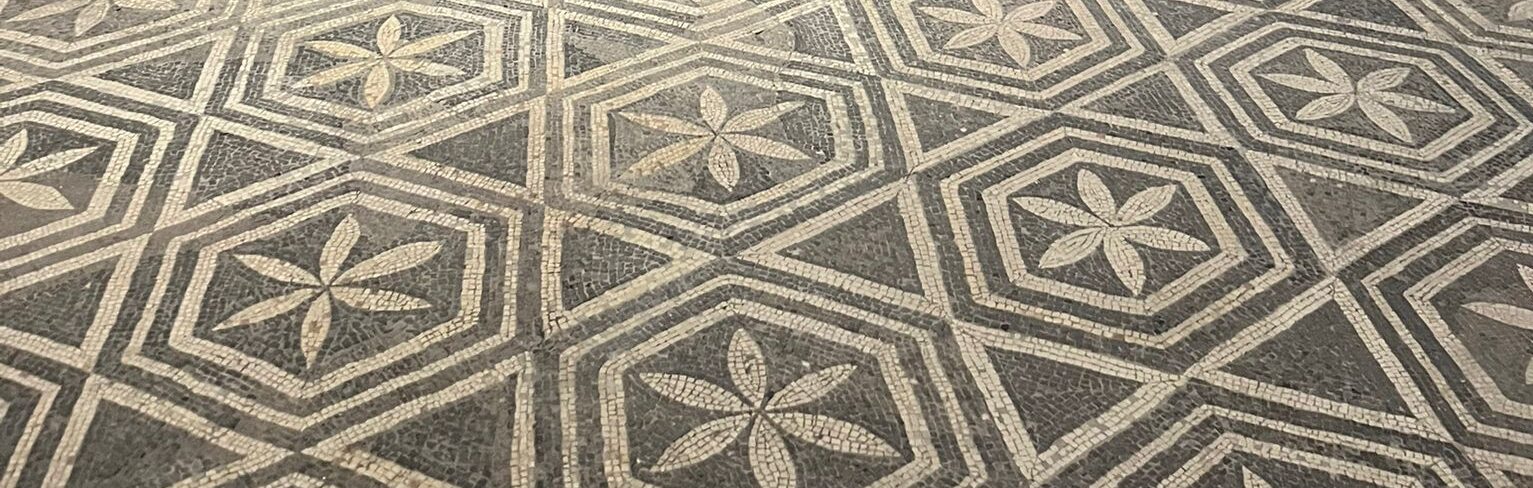
  • geometric black-and-white mosaic floors
  • a central atrium
  • a peristyle courtyard with columns
  • wall decorations and fresco traces
  • an elegant, symmetrical layout typical of high-status Roman homes

Walking through it feels like stepping inside a lived-in ancient world, where architecture reveals habits, rituals, and beauty standards of the Roman elite.


A Journey Through Time: History and Excavation

The Roman era

Built around the 1st century AD, the villa was part of Roman Spoleto (Spoletium), a thriving settlement along the Via Flaminia. Its location close to civic buildings suggests the owner was a person of influence.

Decline and rediscovery

Like many ancient structures, Casa Romana was abandoned, covered by later medieval buildings, and eventually forgotten.

It was rediscovered in the late 19th century, during archaeological work carried out by Giuseppe Sordini, one of Umbria’s most respected archaeologists. Through careful excavation, walls, mosaics, and the full floor plan emerged almost intact.

Restoration

Twentieth-century restorations focused on:

  • preserving mosaic floors
  • stabilizing columns and walls
  • reconstructing walkways
  • creating a clear visitor route

Today, Casa Romana is one of Spoleto’s archaeological jewels—small, accessible, and rich in detail.


Exploring the Architecture: What You’ll See Inside

A Roman domus was designed with function and symbolism. Casa Romana follows the classic layout:

• The Atrium

The heart of every Roman home.
Here guests were received, business was done, and household life was centered.
Casa Romana’s atrium still preserves:

  • geometric mosaic flooring
  • traces of wall decoration
  • the central opening (compluvium) where rainwater entered the house

• The Tablinum

A room facing the atrium where the family archived wealth records, contracts, and portraits of ancestors.
Its decoration suggests refined taste and education.

• The Peristyle Courtyard

A garden surrounded by columns—rare to see preserved in Umbria.
This was the private area of the house, where the family relaxed and hosted intimate gatherings.

• The Private Rooms

Several rooms feature mosaics with:

  • meanders
  • waves
  • checkerboard patterns
  • floral motifs

These artistic elements show the wealth and status of the owners.

• The Kitchens and Service Areas

More modest but historically important, these spaces reveal how daily life functioned in a wealthy Roman household.


Why Visitors Love Casa Romana

Casa Romana is not large, overwhelming, or crowded. It offers a calm and intimate experience, making it perfect for visitors who appreciate details.

Travellers often highlight:

  • the exceptional preservation of mosaics
  • the sense of “walking into someone’s home”
  • the quiet, meditative atmosphere
  • the proximity to other major attractions
  • the short visit time (20–40 minutes)
  • its educational value for kids and adults

Informative panels explain each room, making it easy to explore without a guide.


Location and How to Visit

Casa Romana is located in Spoleto’s historic centre, only a short walk from:

  • Piazza del Mercato
  • Arco di Druso
  • The Roman Theatre
  • The Cathedral (Duomo)

From Adagio Umbro, it is reachable in:

  • 2 minutes by car
  • 10–12 minutes on foot from the main parking areas

The visit takes less than an hour, making it an ideal cultural stop before or after exploring the upper city and the Rocca Albornoziana.


When to Visit Casa Romana

The best times to visit Spoleto and Casa Romana are:

Spring (April–June)

Perfect temperatures, green landscapes, long days.

Autumn (September–October)

Golden light, fewer tourists, ideal for photography.

Casa Romana is open daily from 10:30 to 18:30, without lunchtime closure, though hours may vary in winter.

Entrance: €5 per person.


The Perfect Day: Casa Romana + Tennis in the Umbrian Hills

Many travellers choose Spoleto for a mix of culture, nature, and wellness. At Adagio Umbro, guests and non-guests can book a tennis session on the Mapei hard court without any membership.

A perfect itinerary might look like this:

  1. Morning — Tennis session with panoramic views
  2. Lunch — Umbrian dishes in the historic centre
  3. Afternoon — Visit Casa Romana and the Roman Theatre
  4. Sunset — Aperitivo on the Gattapone terrace overlooking Ponte delle Torri
  5. Evening — Slow walk through Piazza del Duomo

This blend of ancient history and relaxed outdoor activity is the essence of Spoleto’s charm.


Other Nearby Attractions

Casa Romana is part of a rich cultural network. Don’t miss:

Ponte delle Torri

A breathtaking medieval aqueduct and panoramic viewpoint.

Rocca Albornoziana

A 14th-century fortress dominating Spoleto from above.

• The Roman Theatre

Used today for concerts during the Festival dei Due Mondi.

• San Salvatore (UNESCO)

One of Europe’s most important Early Medieval churches.

Each is within a walkable distance, making Spoleto ideal for a full day of exploration.

Practical Tips for Your Visit

Plan 30 minutes for the visit.

Wear comfortable shoes—the centre has slopes and steps.

Bring water in summer.

Photos without flash are usually allowed.

Pets are generally not permitted.

Expect mild crowds—Casa Romana is never too busy.


? FAQs about Roman house

What is Casa Romana in Spoleto?

Casa Romana is a well-preserved Roman aristocratic house from the 1st century AD, famous for its mosaics, fresco traces, and classical domus layout.

Why is Casa Romana important?

It is one of the best examples of a Roman domus in Umbria and may have belonged to Vespasia Polla, mother of Emperor Vespasian, giving it major historical significance.

How long does a visit to Casa Romana take?

Most visitors spend 15–30 minutes, making it an ideal cultural stop during a day of sightseeing in Spoleto.

What can you see inside Casa Romana?

Highlights include black-and-white mosaic floors, the atrium, peristyle courtyard, private rooms, preserved wall decorations, and typical Roman architectural features.

Where is Casa Romana located in Spoleto?

It is in the historic centre, a short walk from Piazza del Mercato, the Roman Theatre, the Cathedral, and other major attractions.

What are the opening hours of Casa Romana?

Casa Romana is usually open daily from 10:30 to 18:30, but hours may vary seasonally. Visitors should check updated times before arrival.

How much is the ticket for Casa Romana?

Entrance costs €5, making it one of Spoleto’s most affordable archaeological experiences.

Is Casa Romana suitable for children and families?

Yes. Its mosaics and small size make it enjoyable for kids, and the short visit time is ideal for families.

Is Casa Romana wheelchair-accessible?

Accessibility is limited due to ancient flooring, stairs, and uneven surfaces. Some areas may not be accessible for visitors with mobility challenges.

Can I combine a visit to Casa Romana with other attractions?

Absolutely. It pairs perfectly with the Roman Theatre, Piazza del Mercato, the Duomo, Ponte delle Torri, and the Rocca Albornoziana—all within walking distance.

You might also like:
What To See in Spoleto: History, Culture, and Timeless CharmTuscany vs Umbria: Why You Should Add Spoleto to Your Italy Itinerary Read more →

Stay Connected

For more updates, photos, and stories from Adagio Umbro, follow us on our social media channels:

Exploring the Roman Cisterns of Todi:
An Underground Journey into Ancient Umbria

Looking for what to see in Umbria in one day? Discover the Roman cisterns of Todi, a hidden underground gem, and explore nearby Spoleto for a complete Umbrian experience.

Todi in One Day: Discover Ancient Cisterns and Umbrian Charm

Welcome to Todi, a jewel in the heart of Umbria, where history flows not only through its cobbled streets but also beneath them. Ideal for those wondering what to see in Umbria or how to explore Todi in one day, this article offers an immersive itinerary that pairs well with a visit to Spoleto — allowing you to experience two stunning Umbrian sites in one unforgettable day.

?️ A Morning in Todi: Roman Cisterns and Underground Marvels

Start your day early in Todi, parking comfortably and for free just outside the town’s historic center near Porta Orvietana. This spot is ideal, as the entrance to the upper part of the town is regulated by ZTL (limited traffic zones), but a convenient lift takes you right into the heart of the city — Piazza del Popolo. Still, if you’re up for it, we suggest walking — it takes around 10 minutes and adds a bit of charm (and steps) to your day.

Begin your exploration beneath the surface. The Roman cisterns of Todi are among the most impressive underground structures in central Italy. Built around 100 BC, these water systems are a testament to Roman engineering mastery. Some were reopened in the 1960s, but the latest discoveries were made in 1994, unexpectedly unearthed during renovation works at a small tobacco shop (tabaccheria) right in the city center.

To visit the cisterns, go to the tourist information office located directly on Piazza del Popolo. The entry ticket is just €5, and tours are also available in English. You’ll descend into a network of tunnels, chambers, and preserved walls, walking where Romans once stored water for public and private use. Their archways, and intricate layouts are still visible and awe-inspiring.

?️ Exploring Piazza del Popolo and Surroundings

Once back above ground, give yourself time to enjoy the vibrant and historic Piazza del Popolo, considered one of the most beautiful medieval squares in Italy. The square is home to the Palazzo dei Priori, Palazzo del Capitano, and Palazzo del Popolo — each offering stunning photo opportunities and occasional temporary exhibitions. For architecture lovers, don’t miss the nearby Cathedral of the Annunciation (Duomo di Todi). Its Romanesque facade and rose window provide a scenic backdrop, especially when viewed from the top of the staircase that faces the piazza.

? A Bite at Dige’s Pizza

Feeling hungry but short on time? Stop at Dige’s Pizza, a local favorite for a quick, affordable, and delicious bite. Their fresh slices, classic Italian toppings, and friendly atmosphere make it perfect for refueling before more sightseeing

?️ Lunch with a View or More Time to Explore

If you have more time and want a seated lunch, Todi offers charming trattorias with terraces overlooking the Umbrian countryside. Try regional dishes like strangozzi al tartufo (truffle pasta), pigeon alla ghiotta, or local pecorino cheese with Umbrian olive oil.

? In the Afternoon: Spoleto Awaits

From Todi, Spoleto is about an hour’s drive through scenic hills and vineyards. Known for its massive fortress, aqueduct bridge, Roman theater, and charming lanes, Spoleto is the perfect counterpoint to Todi’s tranquility.

Start with a visit to the Rocca Albornoziana, the hilltop fortress with panoramic views. Then take the pedestrian path down toward the Ponte delle Torri, an awe-inspiring medieval bridge built atop Roman foundations. Spoleto’s Duomo, with its Renaissance frescoes by Filippo Lippi, is another must-see. You can easily walk through the main sites in 2–3 hours, making Spoleto a great afternoon complement to a morning in Todi.

? Extend the Experience at Adagio Umbro

If you’re not rushing back, stay nearby at Adagio Umbro, nestled between Todi and Spoleto. More than just a place to play tennis, Adagio Umbro offers a peaceful game surrounded by nature. Play tennis, enjoy the picnic area, or relax with a book under the trees. This hidden gem is ideal for couples, solo travelers, or small groups looking for a charming stop in the heart of Umbria.

? Useful Travel Tips

  • Parking in Todi: Free and comfortable parking at Porta Orvietana…
  • Cistern Entry: Tickets (€5) are available at the Tourist Information Point
  • Cistern Language Options: Tours are available in English.
  • ZTL Warning: Do not drive into the center without a permit.
  • Travel Time: Todi to Spoleto takes about 45 minutes by car.
  • Footwear: Wear comfortable shoes for cobbled streets and underground paths.
  • When to Go: Spring and autumn offer the best weather

If you’re planning to play tennis at Adagio Umbro, we’re happy to assist with more than just the court. Whether you want to book local attractions, find great restaurants, or explore Umbria like a local, we speak both Italian and English and are here to help you make the most of your time in the region. Your Umbrian escape starts with a game — and continues with unforgettable experiences.


Stay Connected

For more updates, photos, and stories from Adagio Umbro, follow us on our social media channels: