Casa Romana (Roman House) in Spoleto: A Complete Guide to One of Umbria’s Most Fascinating Roman Sites
Casa Romana in Spoleto is one of the best-preserved Roman houses in central Italy. Hidden in the quiet streets of the historic centre, it reveals how wealthy Roman families lived two thousand years ago. With its mosaics, frescoes, and elegant layout, the site offers a captivating window into ancient domestic life. This guide explains its history, architecture, and why Casa Romana is an essential stop for travellers exploring Umbria.
Spoleto: A City Where Roman History Lives in Every Corner
Spoleto is often described as one of Umbria’s most atmospheric historic cities. Known for its Roman theatres, medieval fortresses, the Festival dei Due Mondi, and panoramic hills, it holds layers of history from every period of Italy’s past. Amid the churches, arches, and winding alleys stands one of its most remarkable treasures: the Casa Romana, a Roman aristocratic residence dating back to the 1st century AD.
For travellers who love archaeology, architecture, and quiet cities filled with stories, Casa Romana adds depth to any itinerary in Umbria. Unlike large archaeological parks, this villa is intimate, peaceful, and wonderfully preserved—ideal for visitors who appreciate culture without the crowds.
What Exactly Is Casa Romana?
Casa Romana is an ancient Roman domus, the type of residence reserved for the upper class of Roman society. These homes were more than simple dwellings—they were symbols of status, education, and wealth. The domus was designed to impress guests, host meetings, and showcase the family’s cultural refinement.
Who lived here?
Archaeologists believe the house may have belonged to Vespasia Polla, mother of Emperor Vespasian. Although not officially confirmed, inscriptions found nearby support this possibility, and it is widely accepted among local historians.
Why it matters
Casa Romana is considered one of the best-preserved domus in Umbria, featuring:
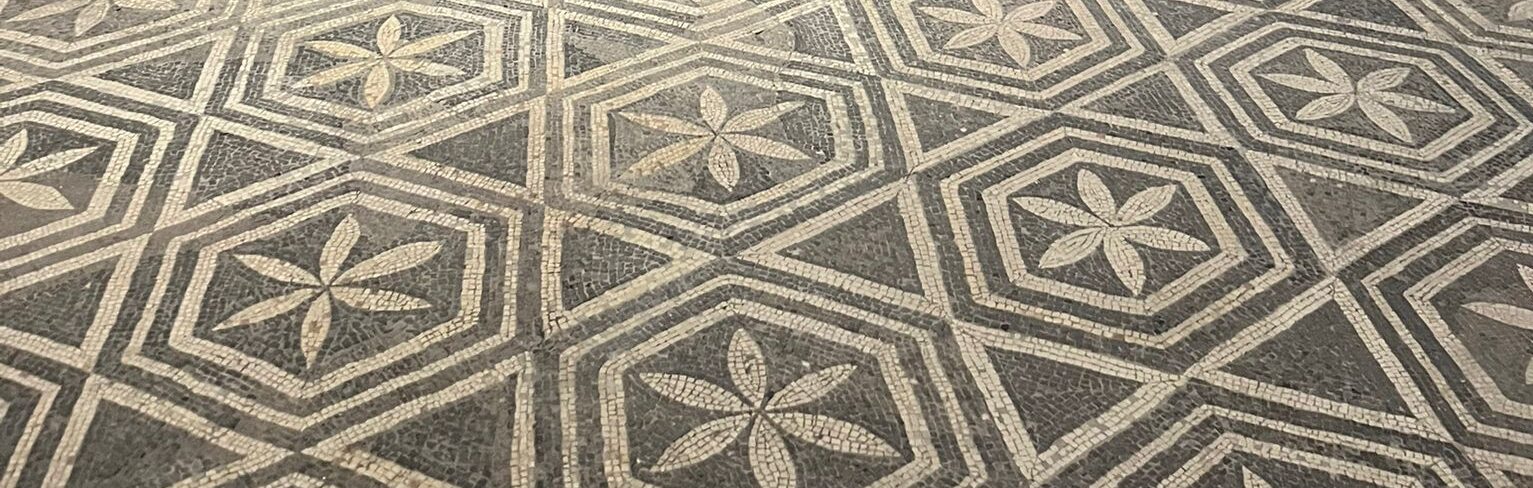
- geometric black-and-white mosaic floors
- a central atrium
- a peristyle courtyard with columns
- wall decorations and fresco traces
- an elegant, symmetrical layout typical of high-status Roman homes
Walking through it feels like stepping inside a lived-in ancient world, where architecture reveals habits, rituals, and beauty standards of the Roman elite.


A Journey Through Time: History and Excavation
The Roman era
Built around the 1st century AD, the villa was part of Roman Spoleto (Spoletium), a thriving settlement along the Via Flaminia. Its location close to civic buildings suggests the owner was a person of influence.
Decline and rediscovery
Like many ancient structures, Casa Romana was abandoned, covered by later medieval buildings, and eventually forgotten.
It was rediscovered in the late 19th century, during archaeological work carried out by Giuseppe Sordini, one of Umbria’s most respected archaeologists. Through careful excavation, walls, mosaics, and the full floor plan emerged almost intact.
Restoration
Twentieth-century restorations focused on:
- preserving mosaic floors
- stabilizing columns and walls
- reconstructing walkways
- creating a clear visitor route
Today, Casa Romana is one of Spoleto’s archaeological jewels—small, accessible, and rich in detail.
Exploring the Architecture: What You’ll See Inside
A Roman domus was designed with function and symbolism. Casa Romana follows the classic layout:
• The Atrium
The heart of every Roman home.
Here guests were received, business was done, and household life was centered.
Casa Romana’s atrium still preserves:
- geometric mosaic flooring
- traces of wall decoration
- the central opening (compluvium) where rainwater entered the house
• The Tablinum
A room facing the atrium where the family archived wealth records, contracts, and portraits of ancestors.
Its decoration suggests refined taste and education.
• The Peristyle Courtyard
A garden surrounded by columns—rare to see preserved in Umbria.
This was the private area of the house, where the family relaxed and hosted intimate gatherings.
• The Private Rooms
Several rooms feature mosaics with:
- meanders
- waves
- checkerboard patterns
- floral motifs
These artistic elements show the wealth and status of the owners.
• The Kitchens and Service Areas
More modest but historically important, these spaces reveal how daily life functioned in a wealthy Roman household.
Why Visitors Love Casa Romana
Casa Romana is not large, overwhelming, or crowded. It offers a calm and intimate experience, making it perfect for visitors who appreciate details.
Travellers often highlight:
- the exceptional preservation of mosaics
- the sense of “walking into someone’s home”
- the quiet, meditative atmosphere
- the proximity to other major attractions
- the short visit time (20–40 minutes)
- its educational value for kids and adults
Informative panels explain each room, making it easy to explore without a guide.
Location and How to Visit
Casa Romana is located in Spoleto’s historic centre, only a short walk from:
- Piazza del Mercato
- Arco di Druso
- The Roman Theatre
- The Cathedral (Duomo)
From Adagio Umbro, it is reachable in:
- 2 minutes by car
- 10–12 minutes on foot from the main parking areas
The visit takes less than an hour, making it an ideal cultural stop before or after exploring the upper city and the Rocca Albornoziana.
When to Visit Casa Romana
The best times to visit Spoleto and Casa Romana are:
Spring (April–June)
Perfect temperatures, green landscapes, long days.
Autumn (September–October)
Golden light, fewer tourists, ideal for photography.
Casa Romana is open daily from 10:30 to 18:30, without lunchtime closure, though hours may vary in winter.
Entrance: €5 per person.
The Perfect Day: Casa Romana + Tennis in the Umbrian Hills
Many travellers choose Spoleto for a mix of culture, nature, and wellness. At Adagio Umbro, guests and non-guests can book a tennis session on the Mapei hard court without any membership.
A perfect itinerary might look like this:
- Morning — Tennis session with panoramic views
- Lunch — Umbrian dishes in the historic centre
- Afternoon — Visit Casa Romana and the Roman Theatre
- Sunset — Aperitivo on the Gattapone terrace overlooking Ponte delle Torri
- Evening — Slow walk through Piazza del Duomo
This blend of ancient history and relaxed outdoor activity is the essence of Spoleto’s charm.
Other Nearby Attractions
Casa Romana is part of a rich cultural network. Don’t miss:
• Ponte delle Torri
A breathtaking medieval aqueduct and panoramic viewpoint.
• Rocca Albornoziana
A 14th-century fortress dominating Spoleto from above.
• The Roman Theatre
Used today for concerts during the Festival dei Due Mondi.
• San Salvatore (UNESCO)
One of Europe’s most important Early Medieval churches.
Each is within a walkable distance, making Spoleto ideal for a full day of exploration.
Practical Tips for Your Visit
Plan 30 minutes for the visit.
Wear comfortable shoes—the centre has slopes and steps.
Bring water in summer.
Photos without flash are usually allowed.
Pets are generally not permitted.
Expect mild crowds—Casa Romana is never too busy.
? FAQs about Roman house
Casa Romana is a well-preserved Roman aristocratic house from the 1st century AD, famous for its mosaics, fresco traces, and classical domus layout.
It is one of the best examples of a Roman domus in Umbria and may have belonged to Vespasia Polla, mother of Emperor Vespasian, giving it major historical significance.
Most visitors spend 15–30 minutes, making it an ideal cultural stop during a day of sightseeing in Spoleto.
Highlights include black-and-white mosaic floors, the atrium, peristyle courtyard, private rooms, preserved wall decorations, and typical Roman architectural features.
It is in the historic centre, a short walk from Piazza del Mercato, the Roman Theatre, the Cathedral, and other major attractions.
Casa Romana is usually open daily from 10:30 to 18:30, but hours may vary seasonally. Visitors should check updated times before arrival.
Entrance costs €5, making it one of Spoleto’s most affordable archaeological experiences.
Yes. Its mosaics and small size make it enjoyable for kids, and the short visit time is ideal for families.
Accessibility is limited due to ancient flooring, stairs, and uneven surfaces. Some areas may not be accessible for visitors with mobility challenges.
Absolutely. It pairs perfectly with the Roman Theatre, Piazza del Mercato, the Duomo, Ponte delle Torri, and the Rocca Albornoziana—all within walking distance.
What To See in Spoleto: History, Culture, and Timeless CharmTuscany vs Umbria: Why You Should Add Spoleto to Your Italy Itinerary Read more →
Stay Connected
For more updates, photos, and stories from Adagio Umbro, follow us on our social media channels: